
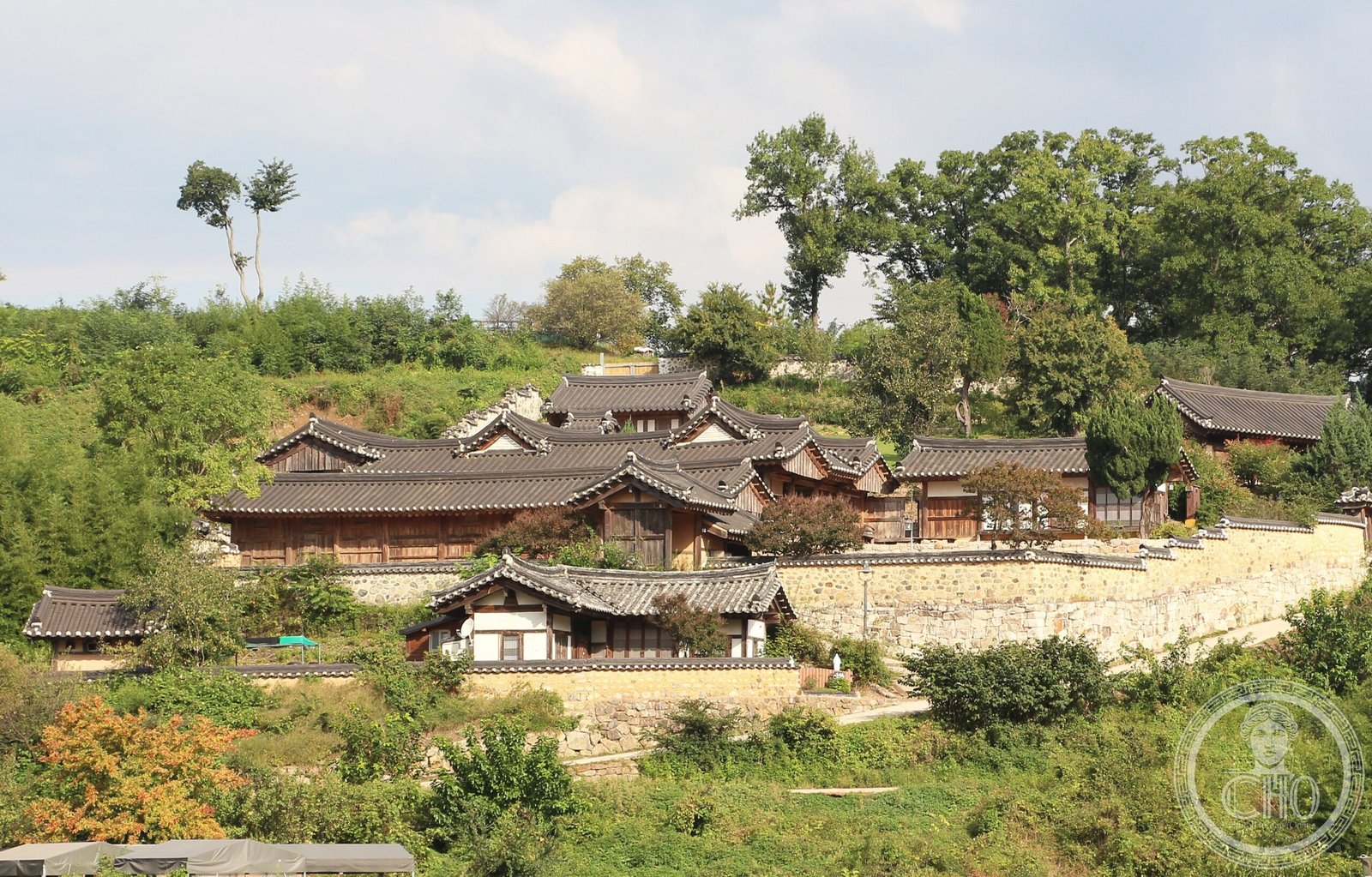
Yangdong Folk Village
A meticulously preserved yangban settlement revealing the aristocratic way of life and Neo-Confucian values of medieval Korea, set in the gentle landscape of the Hyeongsan River valley.
At a glance
Yangdong Folk Village preserves the architecture and social structure of Korea’s yangban class—the scholarly elite who dominated Joseon society. Located sixteen kilometers northeast of Gyeongju in Gangdong-myeon, the village retains its original layout, traditional houses, and cultural institutions. Mt. Seolchang rises to the north, anchoring the settlement within a natural landscape that has changed little in centuries.
History
The village dates to the Joseon period and was built as a yangban community—a settlement of the Korean aristocratic class whose power rested on scholarship, government service, and land ownership. Its continued occupation by yangban families has ensured remarkable continuity. The village’s significance lies not in a single moment but in its sustained embodiment of a social world: the homes, ancestral shrines, and lineage organizations that structured yangban life remained functionally intact across centuries.
What you see
The village comprises numerous traditional buildings arranged according to yangban conventions of social hierarchy and Confucian cosmology. Houses follow vernacular Korean architectural principles, with courtyards, tiled roofs, and wooden detailing reflecting the owner’s status. Ancestral shrines and communal structures punctuate the settlement. The whole forms an open-air record of domestic life, social organization, and Neo-Confucian ideology without restoration theater or reconstruction.
Cultural significance
Yangdong represents a rare survival: a living village where yangban traditions persisted rather than vanished into museums or memory. Its preservation of Neo-Confucian social structures—visible in house types, spatial hierarchies, and communal institutions—documents a worldview that shaped East Asian civilization. The natural setting, architectural integrity, and cultural authenticity together create one of Korea’s most important windows into premodern aristocratic society.
Key facts
- Country: South Korea
- Location: Gangdong-myeon, Gyeongju, 16 km northeast of city center
- Coordinates: 36.00°N, 129.25°E
- Designation: Important Folklore Materials No. 189 (South Korean government)
- UNESCO World Heritage Site (2010, jointly with Hahoe Folk Village)
Practical information & getting there
The village is accessible by road from Gyeongju. Plan to walk the lanes slowly; the scale rewards patient observation. Many houses remain private residences; respect boundaries and look from public pathways. Seasonal light transforms the river valley dramatically.
Sources & resources
Find it on the map
See this place and what’s around it →📷 Diventa un fotografo di Cultural Heritage Online
Condividi le tue foto dei luoghi: restano pubblicate con la tua firma come autore. Più vengono viste, più ti fai conoscere — e presto un concorso premierà le foto più apprezzate.
Accedi o registrati gratis per aggiungere una fotoDo you manage this place?
This page is read by travellers and heritage enthusiasts who find it on Google. Keep it accurate — and make it work for you. Free for non-profit heritage institutions.