
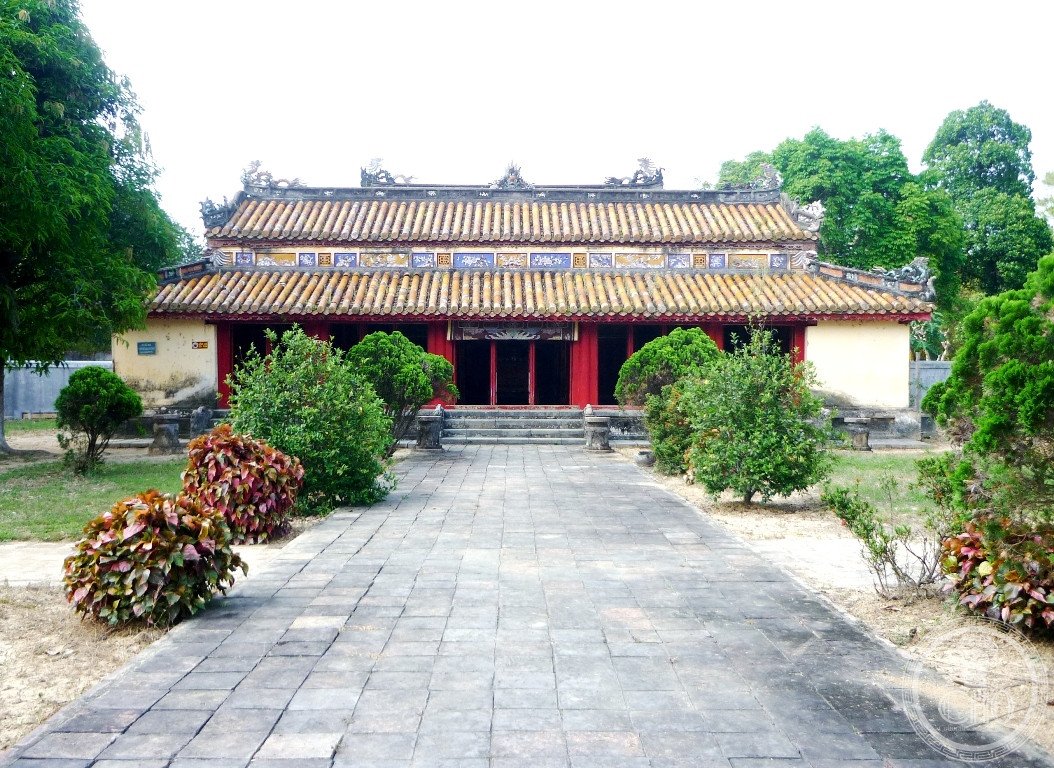
The royal mausoleum of Gia Long, founder of the Nguyễn dynasty, stands as a monumental testament to Vietnamese imperial power and architectural ambition in the early 19th century.
At a glance
Officially known as the Thiên Thọ Mausoleum, this royal tomb honors Gia Long, the first emperor of the Nguyễn dynasty. Located in the Hương Thọ commune of Hương Trà district, approximately 20 kilometres south of Huế, it remains one of Vietnam’s most significant imperial monuments.
History
Gia Long unified Vietnam and founded the Nguyễn dynasty in 1802, establishing Huế as the imperial capital. His mausoleum was constructed to honor his legacy and consolidate dynastic legitimacy. The tomb reflects the architectural traditions and spiritual beliefs of early 19th-century Vietnam.
What you see
The mausoleum showcases the monumental scale characteristic of Vietnamese imperial burials. Its design incorporates traditional geomantic principles and combines architectural elements reflecting both Vietnamese and broader East Asian imperial traditions.
Cultural significance
The tomb represents a pivotal moment in Vietnamese history—the consolidation of national unity under a single dynasty. As the burial place of a visionary emperor, it holds profound symbolic importance and remains central to understanding Vietnam’s imperial past and architectural heritage.
Key facts
- Country: Vietnam
- Location: Hương Thọ commune, Hương Trà district, Huế
- Distance from Huế: approximately 20 kilometres south
- Coordinates: 16.375°N, 107.596°E
- Official name: Thiên Thọ Mausoleum
Practical information & getting there
The tomb is accessible from Huế by road, situated south of the city in Hương Trà district. Visitors traveling to the region should arrange transport in advance, as it lies in a rural area away from the city center.
Sources & resources
Find it on the map
See this place and what’s around it →📷 Become a Cultural Heritage Online photographer
Share your photos of places: they stay published under your name as the author. The more they're seen, the more you get noticed — and soon a contest will reward the most appreciated photos.
Log in or sign up free to add a photo