
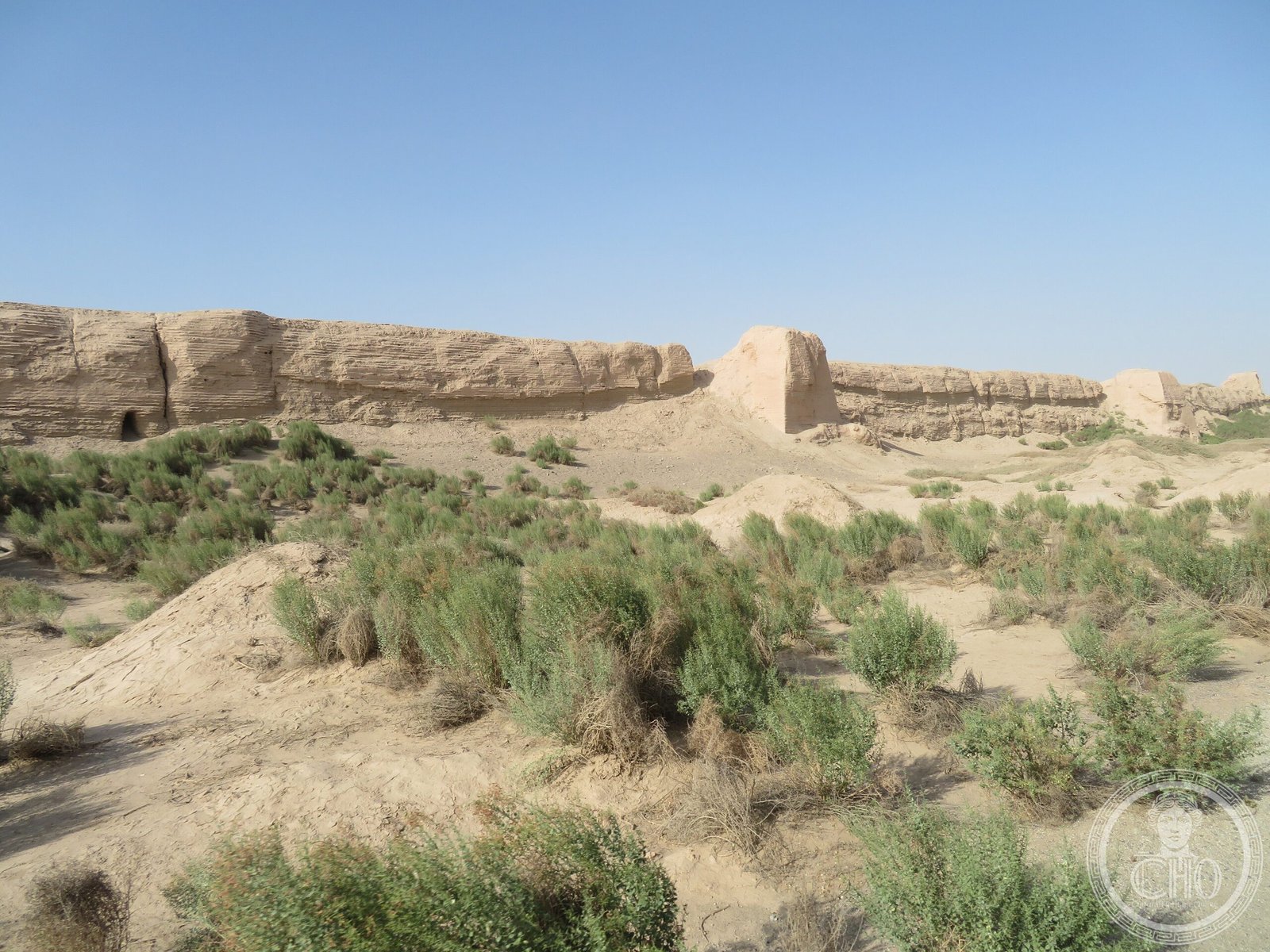
Suoyang City
A ruined Silk Road metropolis that served as the capital of Jinchang Commandery for over a millennium, Suoyang City grew from a Han dynasty outpost into a major administrative, economic, and cultural hub of the Hexi Corridor before its destruction in the 16th century.
At a glance
Suoyang City (also known as Kuyu) rose and fell as one of China’s most important trade centers. First established as Ming’an County in 111 BC under Emperor Wu of the Han dynasty, the city was relocated to its present location in 295 AD by Emperor Hui of the Western Jin. At its height during the Tang and Western Xia dynasties, it sheltered an estimated 50,000 residents and controlled vital routes connecting East and West.
History
Emperor Wu founded Ming’an County in 111 BC as part of Han expansion westward along the Silk Road. The settlement thrived as a garrison and trading post until 295 AD, when Emperor Hui relocated and rebuilt it at the current site to serve as capital of Jinchang Commandery. Under subsequent dynasties, particularly the Tang and Western Xia, Suoyang became a flourishing center of administration, commerce, and culture spanning more than 1,000 years of continuous occupation. The city’s prosperity ended abruptly in the 16th century following Mansur Khan’s attacks on Ming-controlled territories, leading to its final abandonment.
What you see
The ruins reveal an organized urban layout comprising an inner and outer city, with several yangmacheng—fortified animal enclosures that doubled as wartime strongholds. Beyond the city walls, the broader archaeological park encompasses the original Ming’an County site, more than 2,000 tombs, and the remains of an extensive irrigation network featuring over 90 kilometres of canals. Buddhist monuments dot the landscape, including Ta’er Temple, the Eastern Thousand Buddha Caves, Jianquanzi Caves, and Hanxia Caves, reflecting the city’s role as a spiritual crossroads.
Cultural significance
Suoyang City embodies the cosmopolitan character of Silk Road civilization. Its longevity as a major administrative center and its Buddhist heritage document centuries of exchange between Chinese, Central Asian, and Indian cultures. The irrigation infrastructure reveals sophisticated water management in an arid region. UNESCO recognized these values in 2014 by including the site as part of the Silk Roads World Heritage designation, acknowledging its role in one of history’s most transformative trade networks.
Key facts
- Location: Guazhou County, Gansu Province, northwestern China
- Coordinates: 40.24628° N, 96.20514° E
- Founded: 111 BC (as Ming’an County); relocated 295 AD
- Peak population: estimated 50,000
- Designation: Major National Historical and Cultural Site of China (No. 4-50)
- UNESCO World Heritage: 2014, Silk Roads: the Routes Network of Chang’an-Tianshan Corridor
Practical information & getting there
You can visit the archaeological park surrounding the ruins. The site’s remote location in the Hexi Corridor of northwestern China requires careful planning; access is via Guazhou County. Consult local tourism authorities for current visiting arrangements, as remote Silk Road sites sometimes have limited infrastructure or seasonal access restrictions.
Sources & resources
Find it on the map
See this place and what’s around it →📷 Diventa un fotografo di Cultural Heritage Online
Condividi le tue foto dei luoghi: restano pubblicate con la tua firma come autore. Più vengono viste, più ti fai conoscere — e presto un concorso premierà le foto più apprezzate.
Accedi o registrati gratis per aggiungere una fotoDo you manage this place?
This page is read by travellers and heritage enthusiasts who find it on Google. Keep it accurate — and make it work for you. Free for non-profit heritage institutions.