
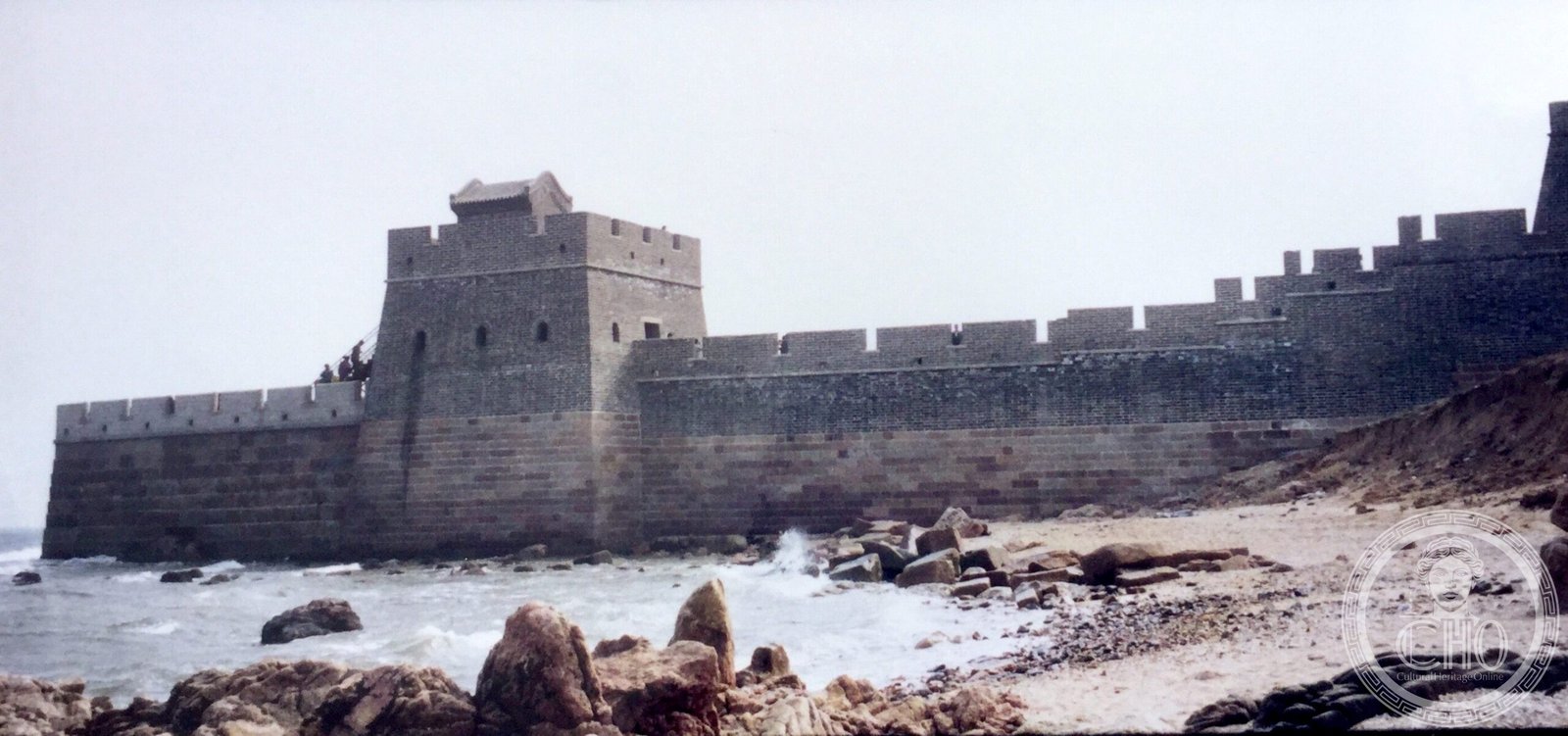
The easternmost fortress of China’s Great Wall, guarding the only accessible landway between North and Northeast China through a strategic coastal corridor.
At a glance
Shanhai Pass commands the narrowest point of the Liaoxi Corridor, an elongated plain squeezed between the Yan Mountains and the Bohai Sea. Its gatehouse stands on the east bank of the Shi River, with defensive walls extending from mountain foothills to the sea. The pass earned the epithet “Greatest Pass Under Heaven” for its role as China’s primary bulwark against invasion from the northeast.
History
Built during the early Ming dynasty as the Great Wall’s eastern terminus, Shanhai Pass was substantially reinforced after the Yongle Emperor relocated the imperial capital from Nanjing to Beijing in the early 15th century. This strategic shift transformed the pass into the most critical defensive barrier in the empire, shielding the heartland around the capital. Throughout Chinese history, garrisons at this site repelled incursions from northeast Asian peoples including the Dongyi, Donghu, Khitan, and Jurchen (Manchus).
The pass’s geography forced invaders into an impossible choice: mount a costly direct assault, or attempt to circumvent it through narrow, treacherous mountain passages where supply lines would collapse. In 1961, the State Council designated it a Major Historical and Cultural Site Protected at the National Level.
What you see
The fortification comprises a gatehouse with defensive walls that integrate seamlessly into the topography, stretching from the Yan Mountains to Liaodong Bay. The famous “Old Dragon’s Head” marks the dramatic point where the Great Wall’s eastern end meets the sea—a tourist landmark that powerfully visualizes the wall’s scale and ambition.
Cultural significance
Shanhai Pass embodies the Ming dynasty’s engineering prowess and strategic vision. Its design demonstrates sophisticated military thinking: an impregnable gate defending the capital while forcing adversaries into logistically untenable positions. UNESCO recognized this significance in 1987, including the pass within the Great Wall World Heritage designation.
Key facts
- Country: China
- Location: Shanhaiguan District, Qinhuangdao, Hebei Province
- Coordinates: 40.00944444°N, 119.75416667°E
- UNESCO World Heritage Site: 1987 (as part of the Great Wall of China)
- National Protected Status: 1961
- Distance from Beijing: approximately 300 kilometres (190 miles)
Practical information & getting there
The pass is accessible via the Jingshen Expressway, which runs northeast from Beijing toward Shenyang. Shanhaiguan railway station, a major stop on the Beijing–Harbin railway line, sits directly south of the old barbican wall at the main gate, making the site convenient to reach by rail or car.
Sources & resources
Find it on the map
See this place and what’s around it →📷 Become a Cultural Heritage Online photographer
Share your photos of places: they stay published under your name as the author. The more they're seen, the more you get noticed — and soon a contest will reward the most appreciated photos.
Log in or sign up free to add a photoIs this page about you?
This page is read by travellers and heritage enthusiasts who find it on Google. Tell us how you are connected to this place and we will take it from there.