
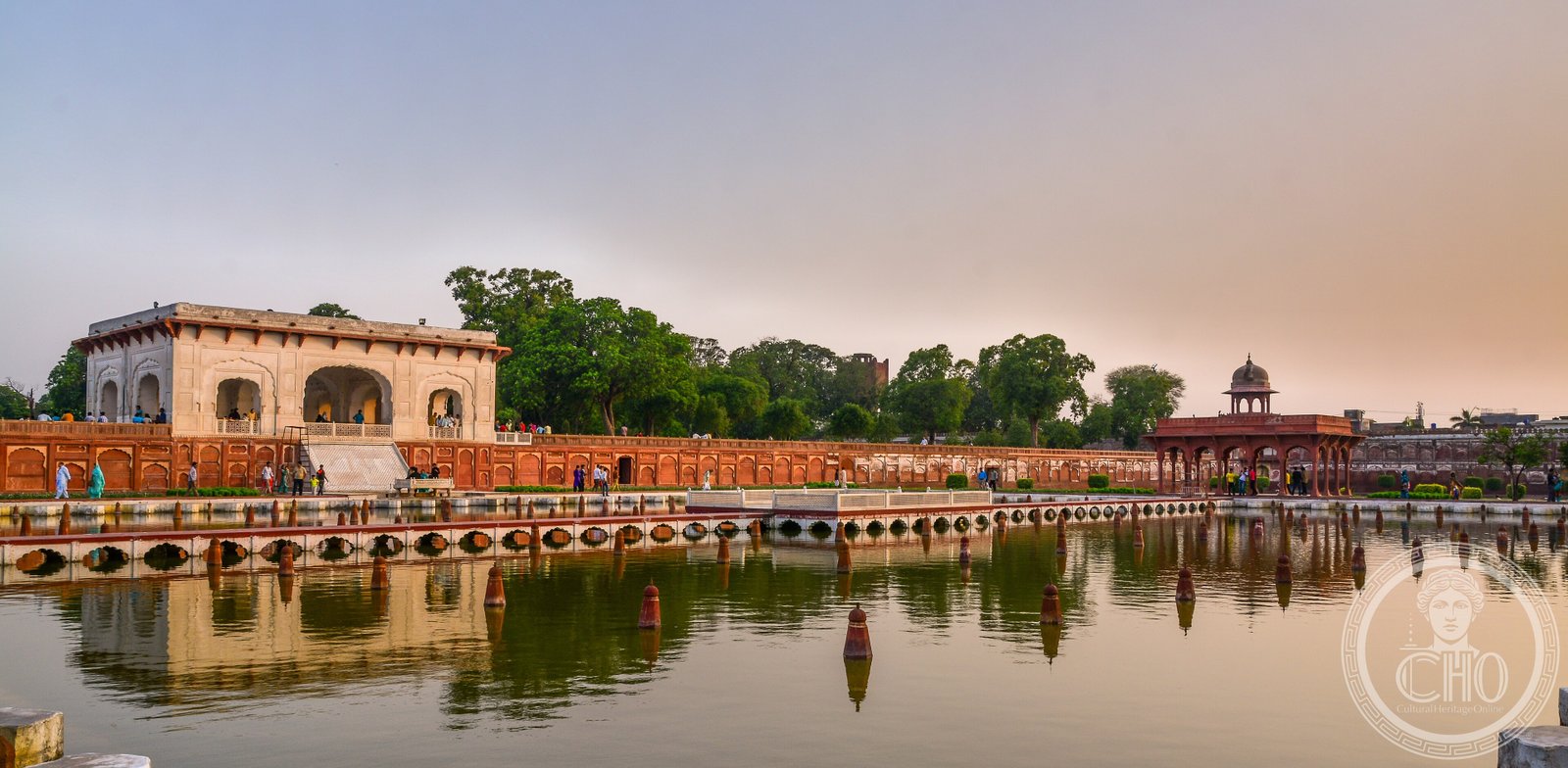
A masterwork of Mughal garden design, built by Emperor Shah Jahan as an earthly paradise where nature and human habitation achieve perfect harmony.
At a glance
The Shalamar Gardens represent the Mughal Empire at its artistic peak. Conceived as a Persian paradise garden, this sprawling complex near Baghbanpura embodies centuries of Islamic garden philosophy translated into stone, water, and verdant space. Today it ranks among Pakistan’s premier tourist destinations.
History
Emperor Shah Jahan commissioned the gardens during the height of Mughal power. Construction began in 1641 and was completed the following year—a testament to the resources and skill the empire commanded. In 1981, UNESCO recognized the gardens as a World Heritage Site, affirming their status as a supreme achievement of Mughal design.
What you see
The gardens were designed as a living representation of Islamic paradise, where water features, plantings, and architecture work together to create spaces of contemplation and beauty. The layout reflects the Persian garden tradition adapted to the Lahore landscape, integrating symmetry, flowing water, and tiered terraces that guide the visitor through carefully composed vistas.
Cultural significance
The Shalamar Gardens mark the apogee of Mughal garden development. They exemplify the empire’s synthesis of Persian, Central Asian, and Indian traditions into a uniquely Mughal aesthetic. As an enduring symbol of artistic achievement under Shah Jahan—himself the patron of the Taj Mahal—the gardens remain essential to understanding Islamic garden culture and the artistic legacy of South Asia.
Key facts
- Country: Pakistan
- City: Lahore
- Coordinates: 31.586°N, 74.382°E
- UNESCO World Heritage Site: 1981
- Construction: 1641–1642
- Patron: Emperor Shah Jahan
Practical information & getting there
The gardens are located near Baghbanpura in Lahore and are open to the public year-round. As one of Pakistan’s most visited heritage sites, they are easily accessible by road from central Lahore. Consult official sources for current hours and entry details.
Sources & resources
Find it on the map
See this place and what’s around it →📷 Become a Cultural Heritage Online photographer
Share your photos of places: they stay published under your name as the author. The more they're seen, the more you get noticed — and soon a contest will reward the most appreciated photos.
Log in or sign up free to add a photo