
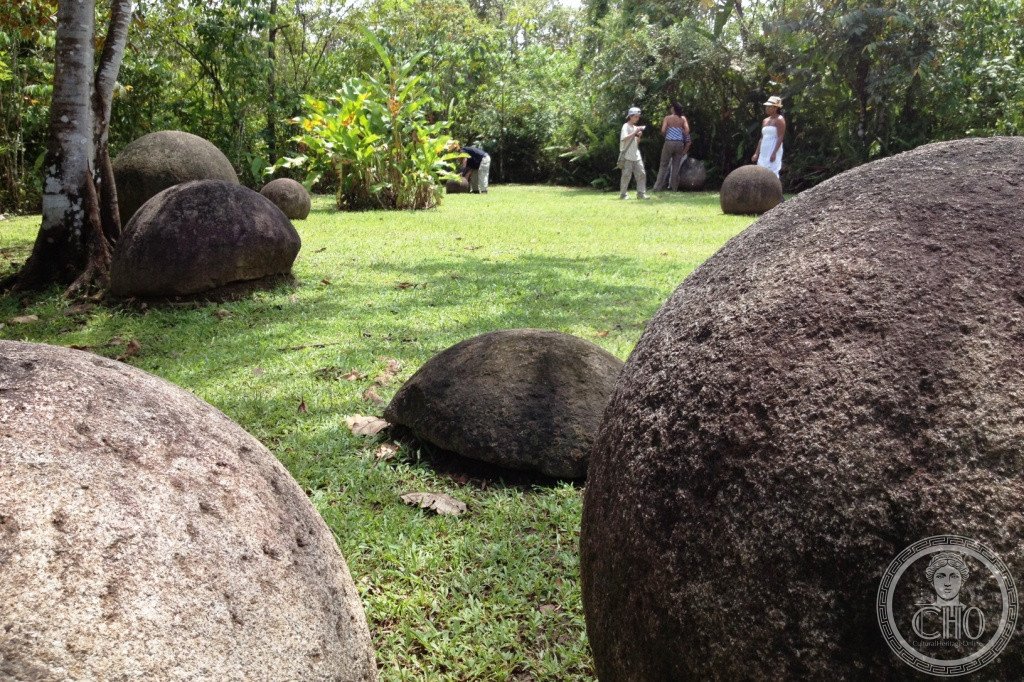
Over 300 precisely crafted stone spheres scattered across the Diquís Delta and Isla del Caño stand as enigmatic monuments to a vanished civilization. Their purpose remains one of archaeology’s enduring mysteries.
At a glance
The stone spheres—locally called bolas de piedra—represent the most recognizable sculptures of the Isthmo-Colombian region. More than 300 examples survive, attributed to the extinct Diquís culture. In 2014, these precolumbian chiefdom settlements were inscribed as a UNESCO World Heritage Site.
History
Archaeological excavations at Finca 6 in the Diquís Delta have revealed that the spheres date to two periods: the Aguas Buenas Period (300–800 CE) and the Chiriquí Period (800–1550 CE). The Palmar Sur Archaeological Excavations form the primary body of research on these sites. In July 2014, Costa Rica approved a national project to designate the spheres as an official symbol of the country.
What you see
The spheres range in size and are distinguished by their geometric precision—a remarkable achievement without modern tools. Archaeologists theorize they were positioned in lines leading to the residences of chiefs, though definitive evidence of their original arrangement remains scarce. The stones themselves show careful shaping and finishing.
Cultural significance
The exact meaning of the spheres continues to elude conclusive interpretation. One archaeological hypothesis suggests they represent solar systems or celestial phenomena—interpretations of the sun and moon as visible to the naked eye, including rising and setting suns, and lunar phases. Their true symbolic or functional purpose remains uncertain, adding to their mystique.
Key facts
- Country: Costa Rica
- Location: Diquís Delta and Isla del Caño
- Number of spheres: over 300
- Dating: 300–1550 CE
- UNESCO World Heritage Site: yes (inscribed June 2014)
- Coordinates: 8.91°N, 83.48°W
Practical information & getting there
The spheres are dispersed across sites in southern Costa Rica’s Diquís Delta region. Access varies by location; some are housed in local museums, while others remain at archaeological sites. Plan ahead to determine which spheres are most accessible during your visit.
Sources & resources
Find it on the map
See this place and what’s around it →📷 Become a Cultural Heritage Online photographer
Share your photos of places: they stay published under your name as the author. The more they're seen, the more you get noticed — and soon a contest will reward the most appreciated photos.
Log in or sign up free to add a photoIs this page about you?
This page is read by travellers and heritage enthusiasts who find it on Google. Tell us how you are connected to this place and we will take it from there.