

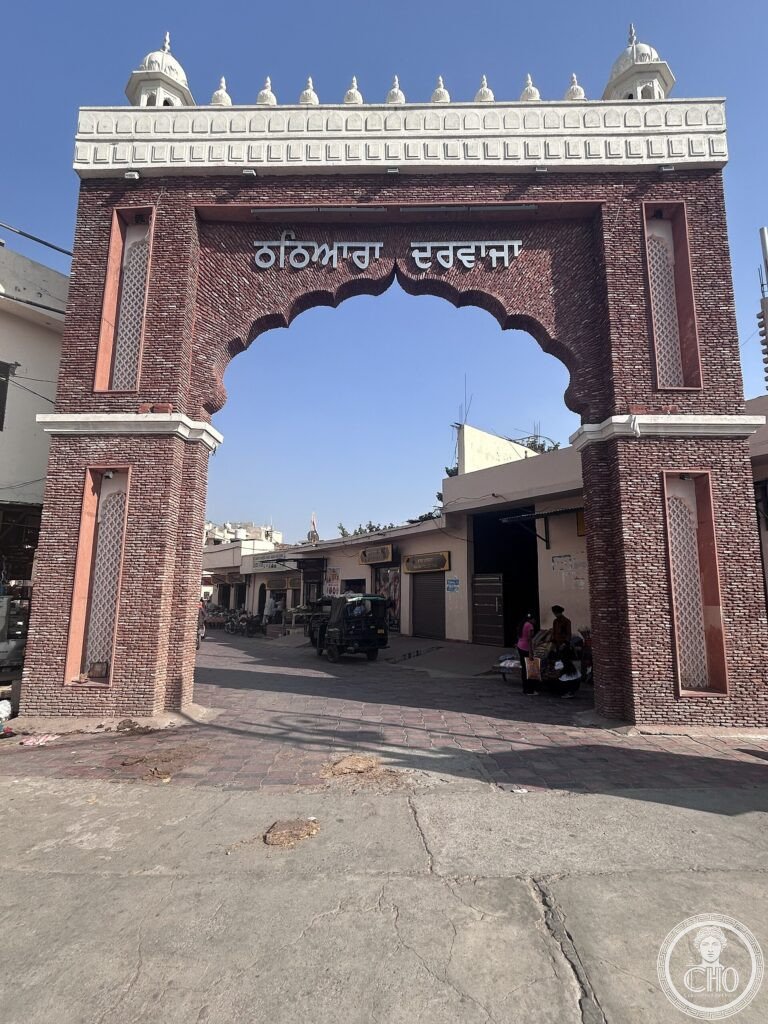
The Thathera community of Jandiala Guru practices an ancient tradition of hand-beaten brass and copper utensil-making, a craft passed through generations of Hindu and Sikh artisans whose skill transforms sheet metal into functional and ceremonial vessels.
In UNESCO’s words
The craft of the Thatheras of Jandiala Guru constitutes the traditional technique of manufacturing brass and copper utensils in Punjab. The metals used – copper, brass and certain alloys – are believed to be beneficial for health. The process begins with procuring cooled cakes of metal that are flattened into thin plates and then hammered into curved shapes, creating the required small bowls, rimmed plates, to larger pots for water and milk, huge cooking vessels and other artefacts. Heating the plates while hammering and curving them into different shapes requires careful temperature control, which is achieved by using tiny wood-fired stoves (aided by hand-held bellows) buried in the earth. Utensils are manually finished by polishing with traditional materials such as sand and tamarind juice. Designs are made by skilfully hammering a series of tiny dents into the heated metal. Utensils may be manufactured for ritual or utilitarian purposes, both for individual and community use on special occasions such as weddings or at temples. The process of manufacturing is transmitted orally from father to son. Metalwork is not simply a form of livelihood for Thatheras, but it defines their family and kinship structure, work ethic and status within the social hierarchy of the town.
Official description, UNESCO Intangible Cultural Heritage List — Traditional brass and copper craft of utensil making among the Thatheras of Jandiala Guru, Punjab, India
At a glance
The Thatheras of Jandiala Guru are traditional metalworkers who craft brass and copper utensils using hand-hammering techniques passed down through generations. Working with copper, brass, and certain alloys believed to benefit health, they create everything from small bowls to large cooking vessels and water pots for both everyday use and ritual purposes.
Origins & history
The craft has been transmitted orally from father to son within Thathera families, forming the foundation of their kinship structure and social identity. Metalworking defines not only their livelihood but their status and role within the community's social hierarchy.
The practice
Craftspeople begin with cooled metal cakes, flattening them into plates before hammering them into curved shapes. Heat is carefully controlled using wood-fired stoves buried in the earth and hand-held bellows. Designs are created by skilfully hammering tiny dents into the heated metal. Finishing involves manual polishing with traditional materials such as sand and tamarind juice, producing utensils for individual, community, and ritual occasions including weddings and temples.
Cultural significance
For the Thathera community, metalwork embodies far more than economic activity—it defines family structure, work ethic, and social standing within the town. The utensils serve both utilitarian and ritual functions, connecting households and communities through objects integral to daily life and special occasions.
Key facts
- Country: India
- Inscribed: 2014
- UNESCO list: Representative List of the Intangible Cultural Heritage of Humanity
- UNESCO reference: 00845
- UNESCO vocabulary: Metalworking; Technical skills
- Map: Jandiala Guru — the locality named in UNESCO’s official description of this element
Where to experience it
Jandiala Guru, in Punjab, remains the centre of the Thathera tradition. Visitors can observe artisans at work in their workshops, where the distinctive sound of hammering metal echoes through the community. The craft continues to define family structures and social life, with knowledge passed down from father to son across generations. Demonstrations and the sight of wood-fired stoves and hand-held bellows offer direct insight into how cooled metal is transformed into brass and copper utensils for both everyday use and ceremonial occasions.
Sources & resources
- UNESCO — official element page: Traditional brass and copper craft of utensil making among the Thatheras of Jandiala Guru, Punjab, India
- UNESCO — open data record: Intangible Heritage List, reference 00845
- UNESCO — official photograph: The processing of raw material – the plate of metal scrap — Sangeet Natak Akademi 2014
- Reference — Wikipedia (secondary): Thathera — consulted as a secondary reference, not as confirmation
- Cultural Heritage Online: Our archive and city guides

Find it on the map
See this place and what’s around it →📷 Become a Cultural Heritage Online photographer
Share your photos of places: they stay published under your name as the author. The more they're seen, the more you get noticed — and soon a contest will reward the most appreciated photos.
Log in or sign up free to add a photo