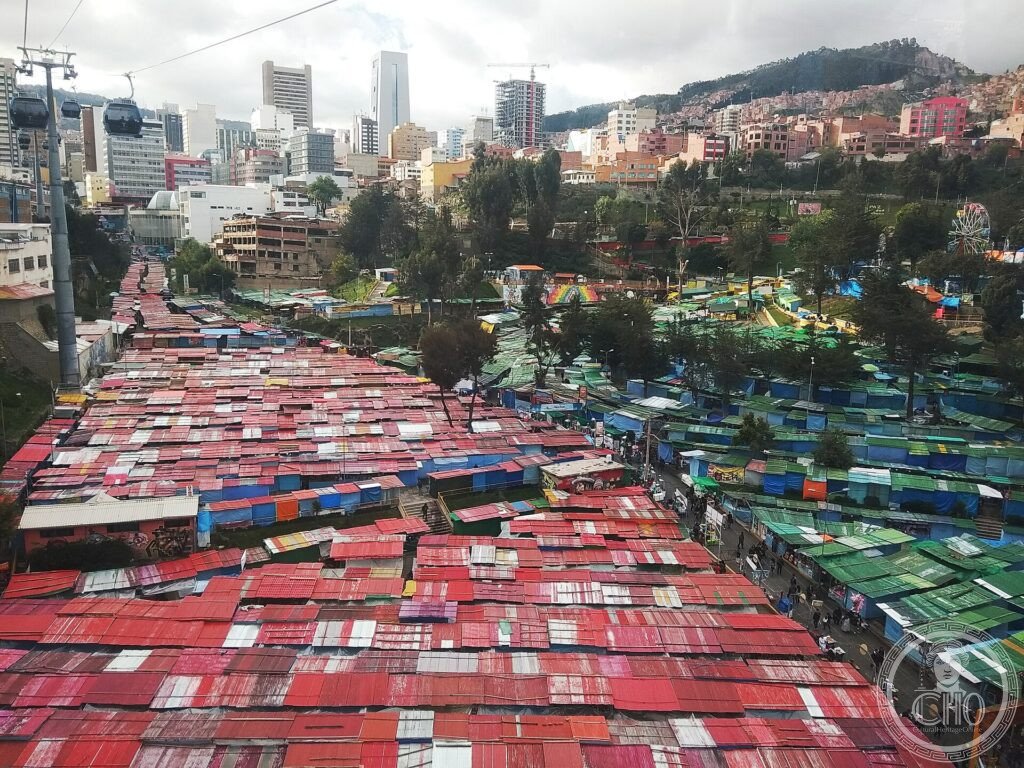
Each January, La Paz transforms into a month-long fair honouring Ekeko, the Aymara god of abundance, through the ceremonial exchange of miniature treasures.
In UNESCO’s words
During the ritual journeys in La Paz during Alasita, which begin on 24 January and last two or three weeks, participants procure ‘good luck’ miniatures associated with Ekeko, the city’s beneficent god of fertility. The activities begin with the search for and acquisition of the miniatures, followed by their consecration with the different Andean ritualists or their blessing by the Catholic Church. The miniatures acquire a new meaning since the individuals have vested them with faith, allowing their wishes to come true. People also exchange the miniatures to symbolically pay debts. The bearers and practitioners include a broad community of stakeholders, and inhabitants of the city participate irrespective of their social status. The practice promotes social cohesion and intergenerational transmission and improves intra-family relationships. The importance granted to donations and the payment of debts, even if symbolic, also lowers tensions between individuals and even social classes. Alasita rituals are primarily transmitted naturally within families, with children accompanying their parents during the journey. Efforts to safeguard Alasita have been continuous and depend mainly on civil society. Conservatories and museum exhibitions have raised awareness about certain Alasita themes, and municipal contests are organized to encourage the craft production of the miniatures and develop creativity, enjoying an ever-increasing number of participants.
Official description, UNESCO Intangible Cultural Heritage List — Ritual journeys in La Paz during Alasita
At a glance
Alasita is an annual ritual in La Paz beginning on 24 January that lasts two or three weeks. During this time, participants search for and acquire miniature objects associated with Ekeko, the city's beneficent god of fertility. After purchase, the miniatures are consecrated by Andean ritualists or blessed by the Catholic Church. Through this act of faith, people believe the miniatures help their wishes come true. Inhabitants of all social backgrounds participate in these ritual journeys together.
Origins & history
Alasita centres on Ekeko, a deity connected to fertility and prosperity. The practice draws on Andean tradition and Catholic blessing, combining these spiritual frameworks. Safeguarding Alasita has been an ongoing effort led mainly by civil society, with conservatories and museum exhibitions raising awareness of different Alasita themes.
The practice
Participants journey through the city searching for miniatures, which they then have consecrated or blessed. People exchange miniatures to symbolically pay debts and honour their wishes. A broad community of stakeholders takes part, including families with children who accompany parents during the journey. The practice is transmitted naturally within families across generations.
Cultural significance
Alasita strengthens social cohesion across all social classes and improves relationships within families and between individuals. The emphasis on symbolic debt payment and gift-giving reduces tensions in the community. Municipal contests encourage the craft production of miniatures and foster creativity, drawing an ever-increasing number of participants to the tradition.
Key facts
- Country: Bolivia (Plurinational State of)
- Inscribed: 2017
- UNESCO list: Representative List of the Intangible Cultural Heritage of Humanity
- UNESCO reference: 01182
- UNESCO vocabulary: Festivals; Prosperity ritual; Religious practice
- Map: La Paz — the locality named in UNESCO’s official description of this element
Where to experience it
Alasita unfolds in La Paz each January, beginning on the 24th and continuing for two or three weeks. During this period, participants undertake ritual journeys through the city to acquire miniatures dedicated to Ekeko, the beneficent god of fertility. Visitors encounter consecration ceremonies led by Andean ritualists and Catholic blessings, watch symbolic exchanges of miniatures, and observe how communities across all social classes gather to perform this practice. Museums and conservatories showcase Alasita traditions, while municipal contests celebrate the craft production of miniatures, drawing increasing numbers of participants and visitors to witness this celebration of shared belief and social cohesion.
Sources & resources
- UNESCO — official element page: Ritual journeys in La Paz during Alasita
- UNESCO — open data record: Intangible Heritage List, reference 01182
- UNESCO — official video: UNESCO film on this element — embedded on this page
- UNESCO — official photograph: Photograph of this element — Xavier Loza — Loza 2015
- Reference — Wikipedia (secondary): Alasitas — consulted as a secondary reference, not as confirmation
- Cultural Heritage Online: Our archive and city guides

Find it on the map
See this place and what’s around it →📷 Become a Cultural Heritage Online photographer
Share your photos of places: they stay published under your name as the author. The more they're seen, the more you get noticed — and soon a contest will reward the most appreciated photos.
Log in or sign up free to add a photo