
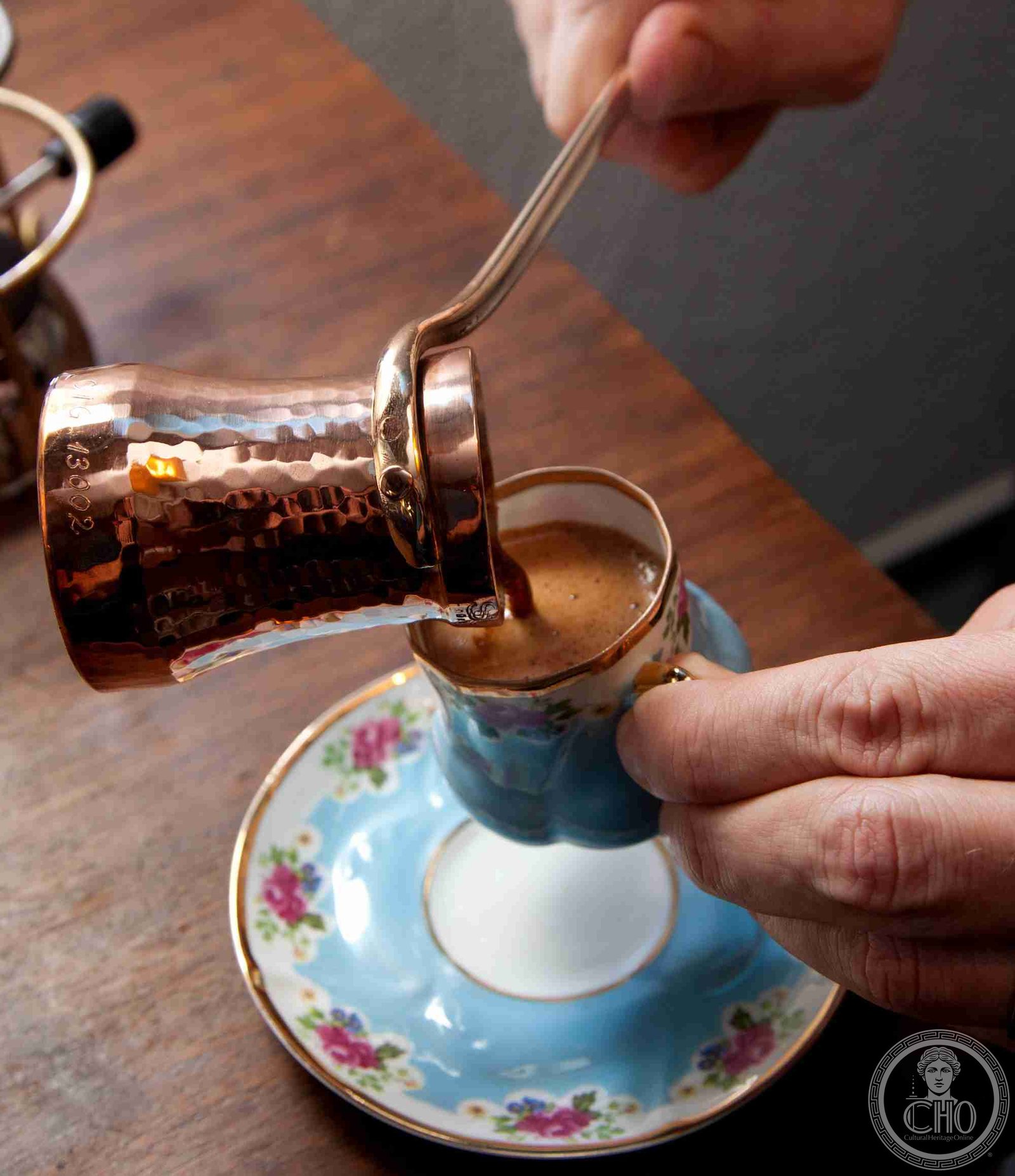
In Istanbul’s coffeehouses and home kitchens, Turkish coffee persists as a ritual of hospitality, conversation, and contemplation. Prepared in a small copper cezve and served unfiltered in delicate cups, this centuries-old tradition binds together the social and spiritual life of Turkish communities.
At a glance
Turkish coffee is prepared using very finely ground coffee beans and a traditional copper vessel called a cezve, without filtering. The result is a thick, aromatic brew served in small cups, often accompanied by conversation, hospitality rituals, and the tradition of coffee fortune-telling from the settled grounds.
Origins and history
Coffee arrived in Istanbul during the Ottoman period and quickly became woven into daily life. The preparation method and the social customs surrounding it evolved into a distinctive Turkish tradition, spreading across the Balkans, the Middle East, North Africa, and the Caucasus, where similar drinks emerged under different regional names.
The tradition today
Turkish coffee remains central to Istanbul’s social fabric. Coffeehouses serve as gathering places where people meet to drink coffee, converse, and participate in games or discussion. Families continue to prepare coffee at home following inherited methods, and the ritual of grinding beans fresh, heating them in the cezve, and serving them with intention endures as an everyday practice.
Cultural significance
Coffee culture in Turkey embodies values of hospitality, patience, and community. The act of preparing and sharing coffee is an expression of respect and welcome. Fortune-telling through the patterns left in the cup—tasseography—adds a spiritual dimension to the practice, linking the mundane and the mystical in Turkish life.
Key facts
- Country: Turkey
- Anchor community: Istanbul
- UNESCO Intangible Cultural Heritage: Representative List
- Method: Prepared in a cezve using very finely ground, unfiltered coffee beans
- Regional reach: Similar traditions exist across the Balkans, Middle East, North Africa, and Caucasus
Where to experience it
You can experience Turkish coffee culture in Istanbul’s traditional coffeehouses, where locals gather daily. Many families also welcome visitors to share coffee in home settings, where the ritual is often more intimate and personal.
Sources & resources
Find it on the map
See this place and what’s around it →📷 Become a Cultural Heritage Online photographer
Share your photos of places: they stay published under your name as the author. The more they're seen, the more you get noticed — and soon a contest will reward the most appreciated photos.
Log in or sign up free to add a photo