
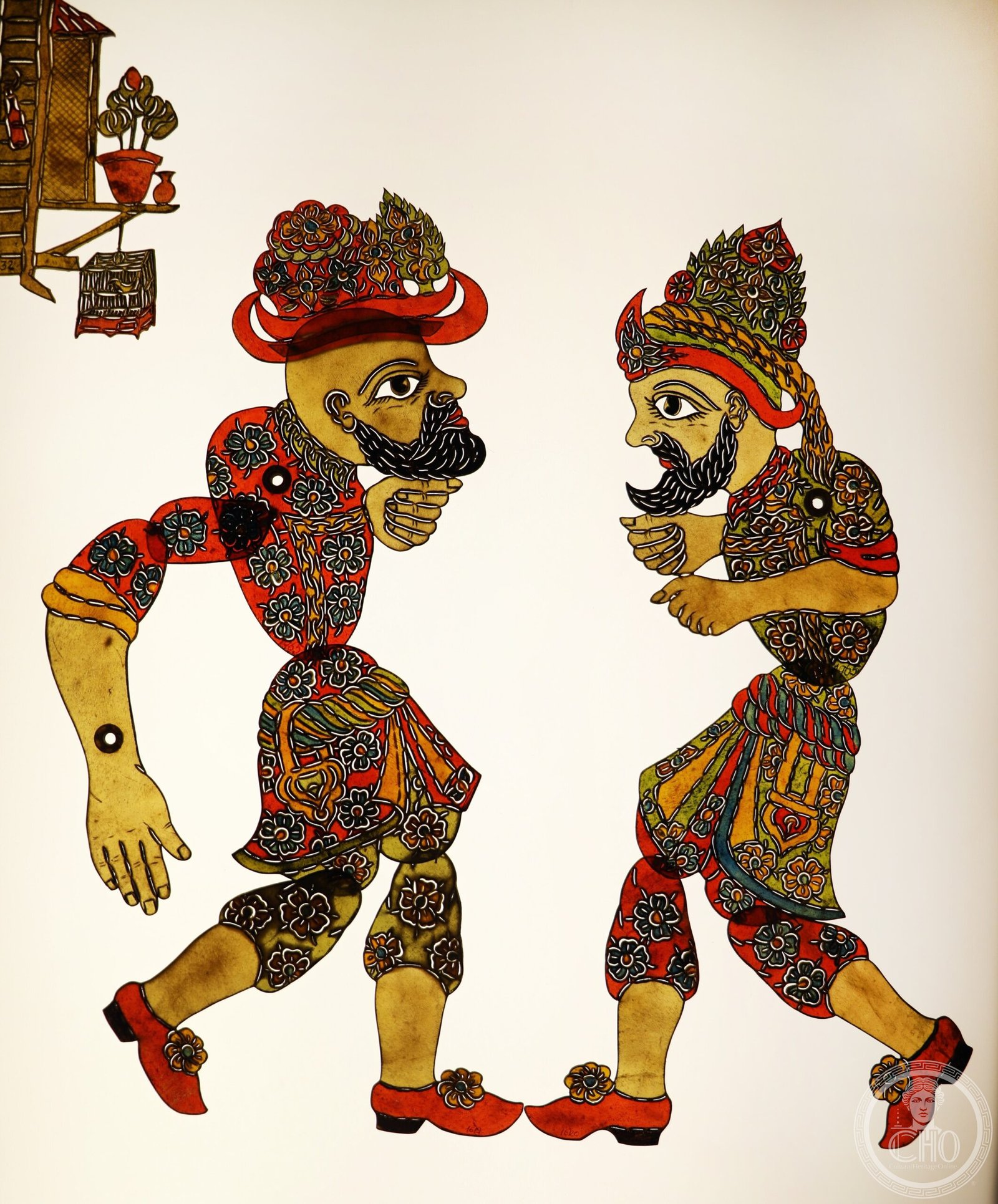
Two irreverent characters—the witty Karagöz (“Black Eye”) and the pompous Hacivat—have entertained audiences across the Ottoman world for centuries through shadow play, a vibrant theatrical tradition that combines comedy, social satire, and the craft of silhouette puppetry.
At a glance
Karagöz and Hacivat are the legendary protagonists of Turkish shadow theatre, a performance art that flourished during the Ottoman period and spread throughout the empire’s territories. The dynamic between the two characters—Karagöz’s irreverent cunning pitched against Hacivat’s pretentiousness—drives narratives that comment on daily life, politics, and social hierarchies. Performed behind an illuminated screen using flat leather puppets, the tradition remains a vital expression of Turkish popular culture and humour.
Origins and history
Shadow theatre emerged as a major Ottoman entertainment form, with Karagöz and Hacivat at its heart. The characters’ names carry historical weight: Karagöz translates literally as “Black Eye,” while Hacivat derives from “Hacı İvaz,” meaning “İvaz the Pilgrim.” The tradition grew most prominent in Turkey, Syria, Egypt, Greece, Bosnia and Herzegovina, and Adjara. Each region developed local variations—in Greece, Karagöz became known as Karagiozis; in Bosnia and Herzegovina, as Karađoz—yet the essential partnership between wit and folly remained constant.
The tradition today
Contemporary performances continue the craft of leather-puppet carving and manipulation, with puppeteers working behind an illuminated translucent screen. Dialogue remains largely improvisational, allowing performers to adapt stories to current events and audiences. The plays retain their satirical edge, critiquing authority and social convention through ribald humour and visual gag.
Cultural significance
Karagöz theatre represents a rare theatrical form that blends high artifice—intricate puppet carving and silhouette composition—with folk irreverence. The tradition has preserved Ottoman-era vernacular language, costume practices, and social commentary across generations. As a cross-cultural phenomenon spanning the former Ottoman territories, it remains a bridge between diverse Mediterranean and Balkan communities.
Key facts
- Country: Turkey
- Anchor community: Bursa
- UNESCO Intangible Cultural Heritage: Karagöz, inscribed on the Representative List
- Geographic reach: Primarily Turkey, Syria, Egypt, Greece, Bosnia and Herzegovina, and Adjara (Georgia)
- Performance medium: Shadow theatre using carved leather puppets and an illuminated screen
Where to experience it
Bursa, Turkey’s cultural heartland, remains the primary centre for Karagöz performance and scholarship. You can encounter performances at venues dedicated to traditional theatre and during cultural festivals throughout the year. The tradition is also practised in Istanbul and other major Turkish cities, as well as in communities across the former Ottoman territories where it continues to adapt and flourish.
Sources & resources
Find it on the map
See this place and what’s around it →📷 Become a Cultural Heritage Online photographer
Share your photos of places: they stay published under your name as the author. The more they're seen, the more you get noticed — and soon a contest will reward the most appreciated photos.
Log in or sign up free to add a photo