
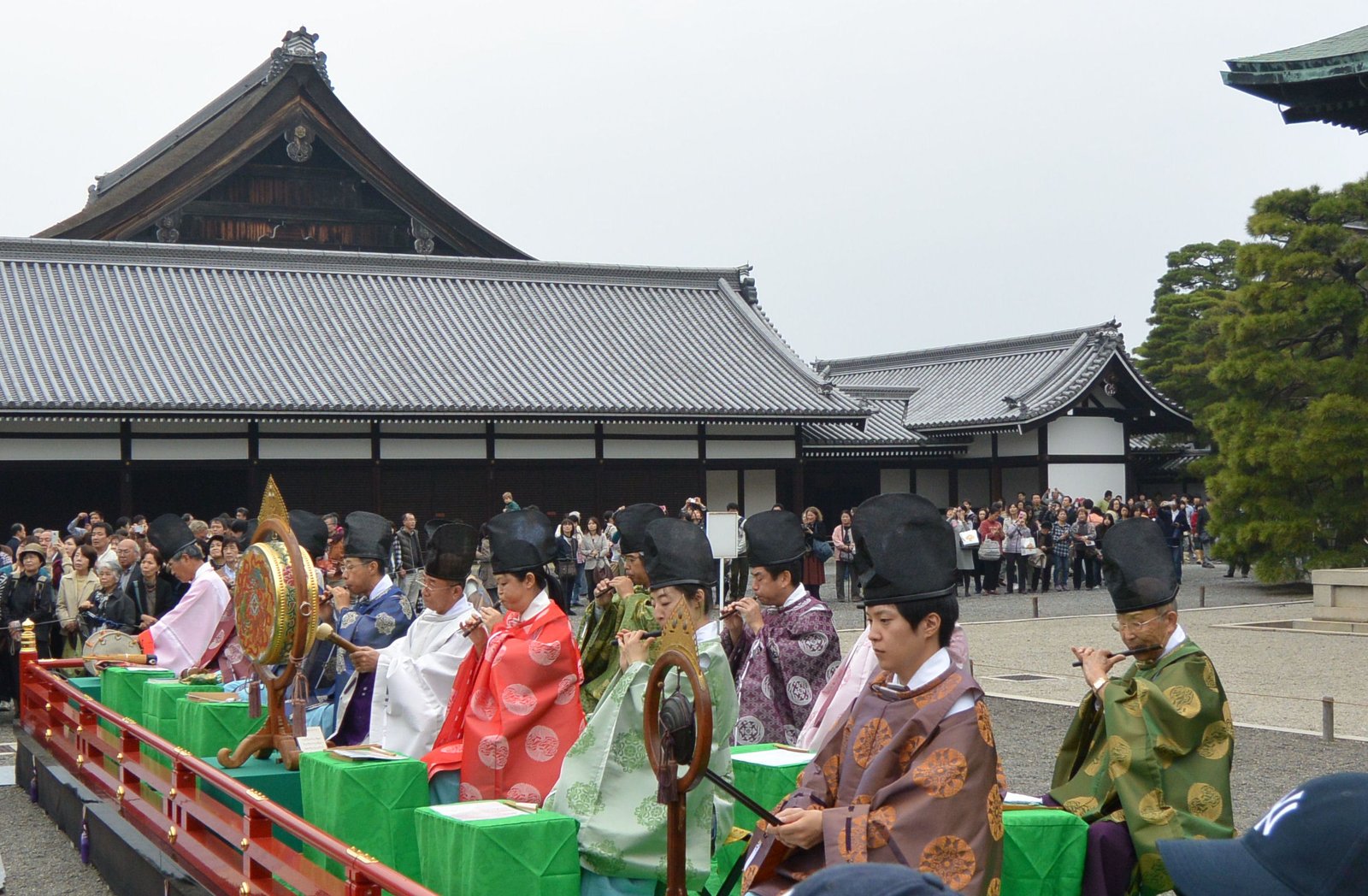
Gagaku—literally “elegant music”—is Japan’s oldest surviving classical music tradition. For over a thousand years, this refined court repertoire has accompanied imperial ceremonies, diplomatic events, and sacred rituals at the heart of Japanese power.
At a glance
Gagaku is a sophisticated ensemble tradition performed with wind, percussion, and string instruments. Each piece unfolds around a main melody that each instrumentalist elaborates with artistic discretion. The music employs the yo scale, a pentatonic system that gives gagaku its distinctive tonal character, quite separate from the ceremonial music traditions of China and Korea despite historical influences.
Origins and history
Gagaku developed as the music of the Kyoto Imperial Palace and took its near-current form during the Heian period (794–1185), around the 10th century. The tradition absorbed influences from Tang dynasty China, Vietnam, India, Korea, and Manchuria—creating a hybrid court repertoire that reflects Japan’s historical cultural exchanges across East and Southeast Asia.
The tradition today
Today, gagaku is performed by the Board of Ceremonies at the Tokyo Imperial Palace. The repertoire comprises three primary branches: Kuniburi no utamai (native Shinto religious music and imperial songs and dances); Utaimono (vocal music based on native folk poetry); and foreign-style forms including Tōgaku (Chinese, Vietnamese, and Indian influences) and komagaku (Korean and Manchurian traditions). The ensemble remains active in state ceremonies and official diplomatic functions.
Cultural significance
Gagaku embodies centuries of Japanese court life and cosmopolitan artistic vision. Its survival represents an unbroken chain linking modern Tokyo to the imperial courts of medieval Kyoto. The tradition demonstrates how Japan synthesized foreign musical influences while maintaining a distinctly Japanese aesthetic and philosophical approach to sound.
Key facts
- Country: Japan
- Primary location: Tokyo Imperial Palace
- UNESCO Intangible Cultural Heritage: Representative List
- Establishment period: Near-current form established around the 10th century during the Heian period
- Instruments: Wind, percussion, and string instruments
- Musical scale: Pentatonic yo scale with intervals of 2–3–2–2–3 semitones
- Repertoire branches: Three primary divisions encompassing native, vocal, and foreign-influenced traditions
Where to experience it
You can encounter gagaku at official state ceremonies and diplomatic events held at the Tokyo Imperial Palace. The Board of Ceremonies maintains the tradition as a living practice integral to imperial protocol. Specific performance dates and access arrangements are managed by palace authorities.
Sources & resources
- Gagaku – Wikipedia
- Cultural Heritage Online
Find it on the map
See this place and what’s around it →📷 Become a Cultural Heritage Online photographer
Share your photos of places: they stay published under your name as the author. The more they're seen, the more you get noticed — and soon a contest will reward the most appreciated photos.
Log in or sign up free to add a photo