
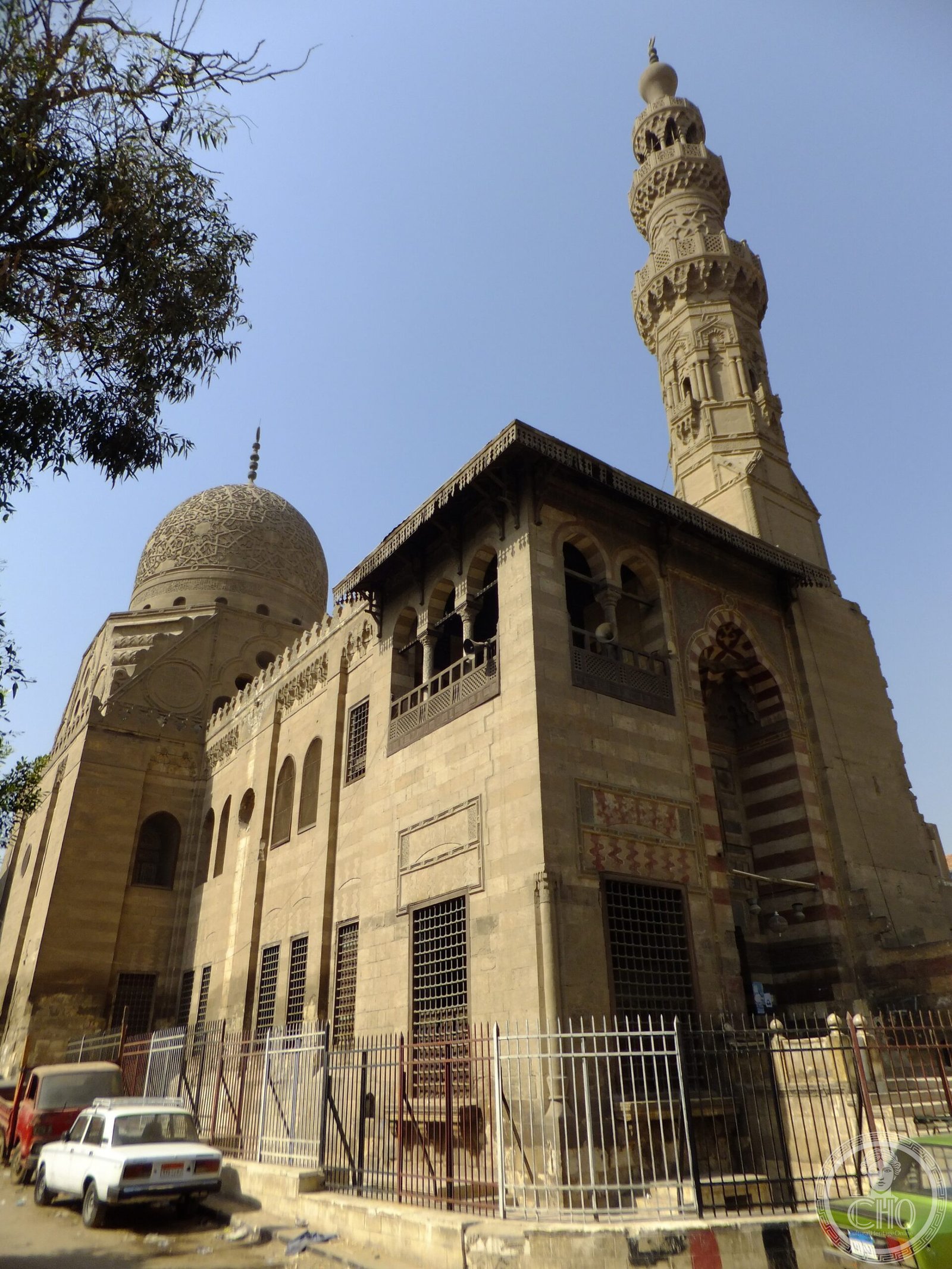
A masterwork of late Mamluk architecture, this funerary complex built for Sultan al-Ashraf Qaytbay combines a mosque, mausoleum, and residential structures in Cairo’s Northern Cemetery.
At a glance
Constructed between 1470 and 1474, the complex represents the pinnacle of Mamluk architectural achievement. Its importance extends beyond the scholarly realm—the ensemble is so prized that it appears on Egypt’s one-pound banknote.
History
Sultan al-Ashraf Qaytbay commissioned this funerary complex during the final flourishing of Mamluk rule in Egypt. Built over four years, it served both as his tomb and as a functioning religious and social center within Cairo’s Northern Cemetery, a vast necropolis that developed over centuries.
What you see
The complex comprises several structures arranged around courtyards. A mosque—originally built as a madrasa (school)—stands attached to Qaytbay’s own mausoleum. Residential quarters, a smaller secondary tomb, and a drinking trough for animals complete the ensemble. Each element reflects the refined geometric proportions and decorative sophistication characteristic of late Mamluk design.
Cultural significance
This complex ranks among the most accomplished Islamic monuments of its era. Its enduring cultural status—recognized through its placement on Egyptian currency—reflects both its architectural excellence and its symbolic importance to Egyptian heritage. The site exemplifies how Mamluk patrons integrated religious devotion, civic provision, and aesthetic ambition into a single, unified composition.
Key facts
- Location: Northern Cemetery, Cairo, Egypt
- Coordinates: 30.0439°N, 31.2749°E
- Built: 1470–1474
- Patron: Sultan al-Ashraf Qaytbay
- Style: Late Mamluk architecture
Practical information & getting there
The complex is located within Cairo’s Northern Cemetery, one of the city’s oldest burial grounds. Visiting hours and accessibility information are best confirmed locally, as cemetery sites may have restricted access or specific visiting protocols. The site remains active as a religious space.
Sources & resources
Find it on the map
See this place and what’s around it →📷 Become a Cultural Heritage Online photographer
Share your photos of places: they stay published under your name as the author. The more they're seen, the more you get noticed — and soon a contest will reward the most appreciated photos.
Log in or sign up free to add a photoIs this page about you?
This page is read by travellers and heritage enthusiasts who find it on Google. Tell us how you are connected to this place and we will take it from there.