
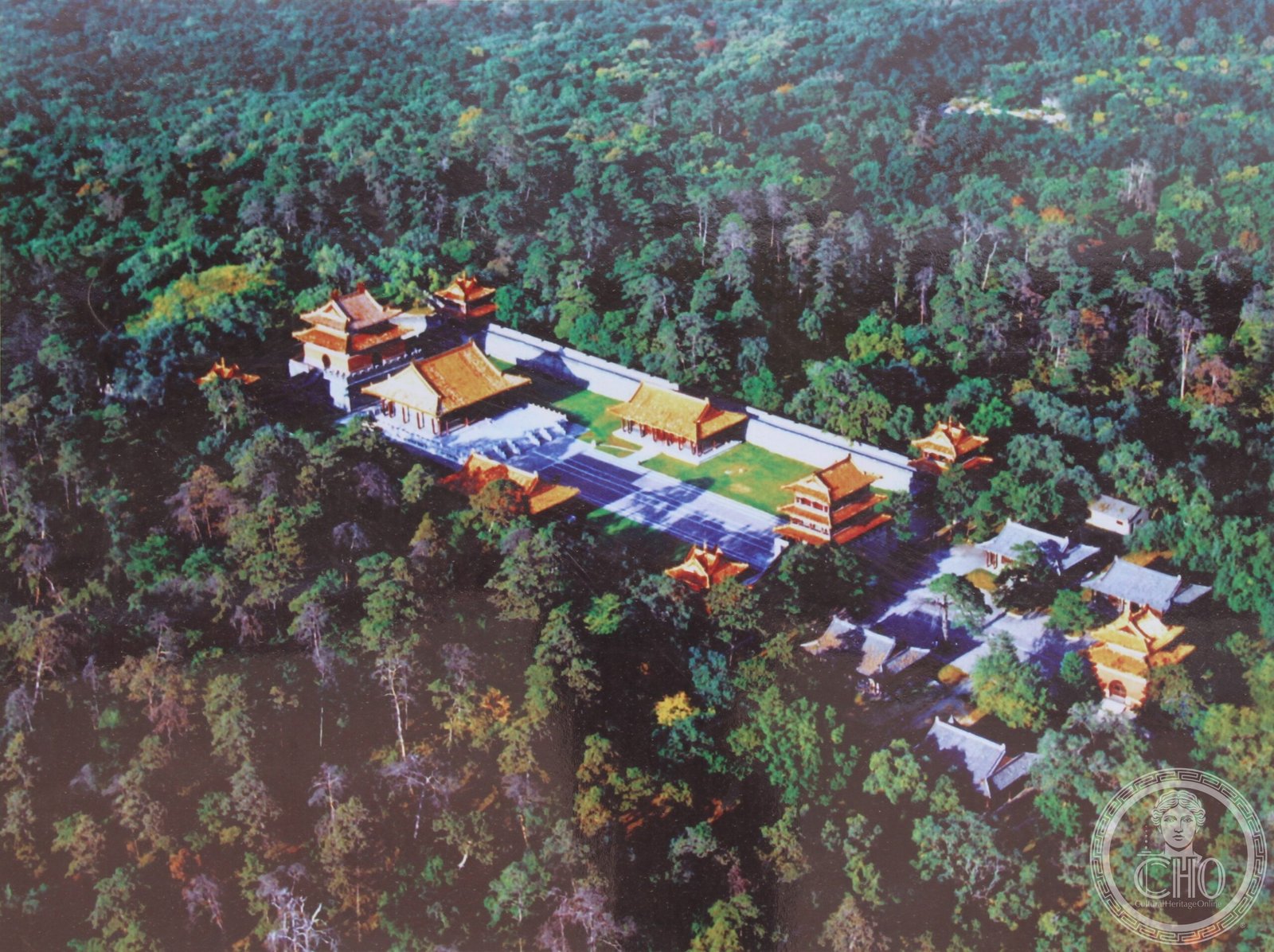
The royal tomb of Nurhaci, founder of the Later Jin dynasty and posthumous emperor of the Qing, Fuling served as the ritual center for the imperial family throughout the Qing era and remains a supreme testament to early Manchu power and piety.
At a glance
Fuling, also called the East Mausoleum, honors Nurhaci and his wife Empress Xiaocigao in Shenyang’s eastern quarter. The site functioned as the principal venue for imperial ceremonies across the entire Qing dynasty. Its designation as a UNESCO World Heritage Site in 2004 recognized its architectural and historical significance.
History
Nurhaci (1559–1626) unified the Jurchen tribes and established the Later Jin dynasty, laying the foundation for Qing rule. Though he died before the Qing conquest of Ming China, he was later honored as an imperial ancestor. Empress Xiaocigao, his consort, rests beside him at Fuling. The mausoleum became the focal point for imperial worship and remembrance throughout the Qing period, cementing Nurhaci’s role in the dynasty’s mythology and legitimacy.
What you see
The mausoleum complex reflects Manchu imperial funerary architecture. Detailed descriptions of its structures and sculptural program are not fully documented in available sources.
Cultural significance
Fuling embodies the spiritual and political authority of the Qing dynasty. As the burial place of its founding figure, the mausoleum anchored imperial ritual life and symbolized the continuity of Manchu rule over China. Its role as a ceremonial center distinguished it from other imperial tombs and made it a living monument to dynastic identity.
Key facts
- Location: Shenyang, Liaoning Province, northeastern China
- Coordinates: 41.83°N, 123.58°E
- Occupants: Nurhaci (founder of Later Jin; posthumous Qing emperor) and Empress Xiaocigao
- UNESCO World Heritage Site: Inscribed 2004
Practical information & getting there
Fuling is situated in the eastern part of Shenyang city. For current visiting hours, admission fees, and guided-tour availability, consult local tourism resources or the site directly before planning your visit.
Sources & resources
Find it on the map
See this place and what’s around it →📷 Become a Cultural Heritage Online photographer
Share your photos of places: they stay published under your name as the author. The more they're seen, the more you get noticed — and soon a contest will reward the most appreciated photos.
Log in or sign up free to add a photoIs this page about you?
This page is read by travellers and heritage enthusiasts who find it on Google. Tell us how you are connected to this place and we will take it from there.