
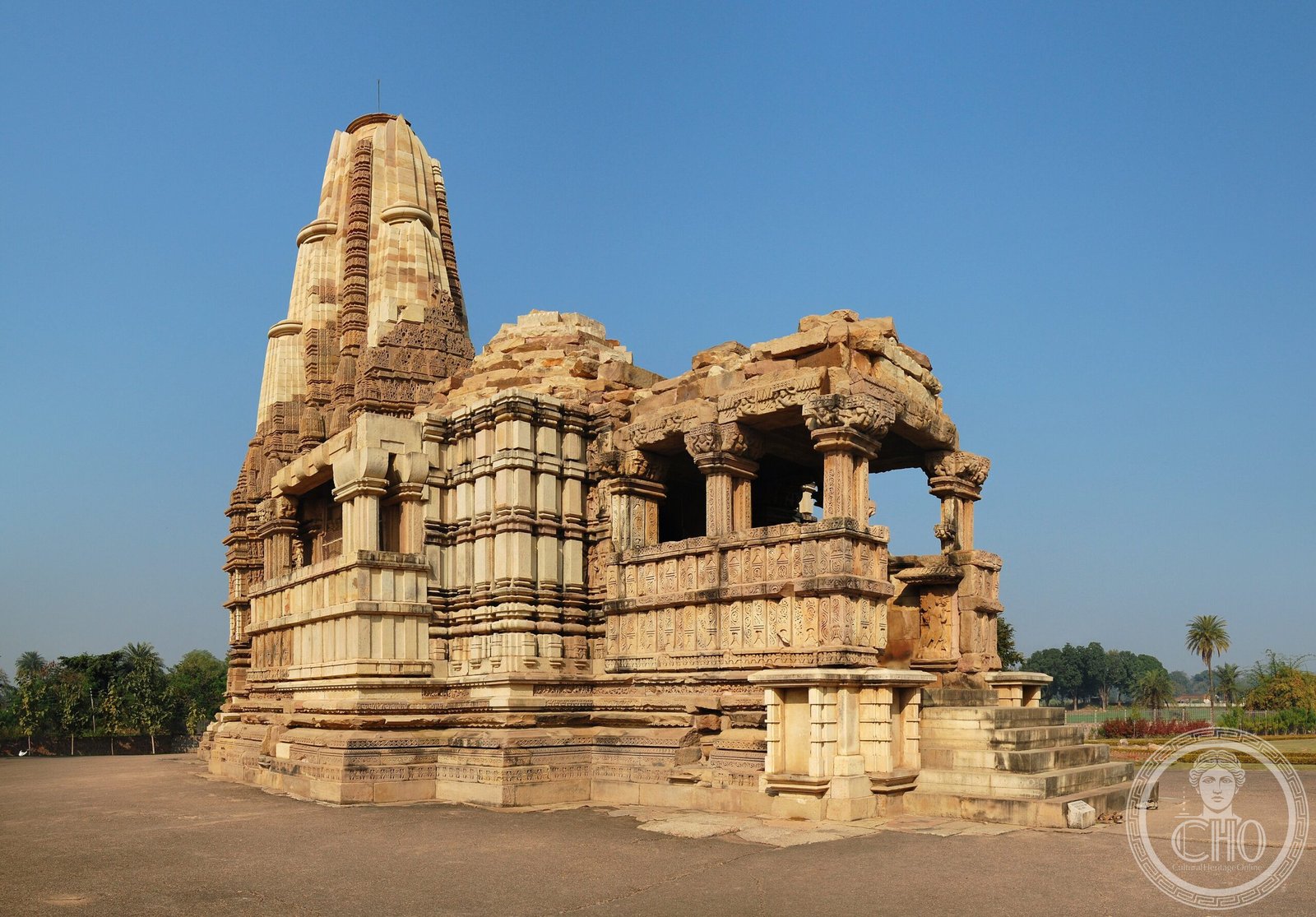
A Hindu sanctuary devoted to Shiva, this 11th-century temple closes the architectural sequence of the Chandela dynasty with ornate stone carving and celestial figures in dynamic poses.
At a glance
Duladeo Temple stands as the final temple erected during Khajuraho’s great building period. Dedicated to Shiva in the form of a linga, it takes its name from the Sanskrit term “Dulodeo,” meaning “Holy Bridegroom.” The structure exemplifies the saptarata or seven-chariot architectural plan characteristic of the region’s finest Hindu temples.
History
Constructed between 1000 and 1150 AD, the temple represents the culmination of Chandela patronage in Khajuraho. It concludes a dynasty’s extraordinary architectural legacy. Also known as “Kunwar Math,” the temple has endured as a testament to medieval Hindu devotional practice and regional dynastic ambition.
What you see
The temple faces east and follows the saptarata floor plan, a sophisticated design reflecting Hindu cosmological principles. Its sculptural program distinguishes itself through softer, more expressive carving than contemporary temples. Walls display intricate stone carvings of celestial dancers—apsaras—rendered in sensual, dynamic postures, alongside representations of other divine and secular figures. The sanctum houses a linga, the aniconic form through which Shiva receives worship.
Cultural significance
Duladeo exemplifies the sophisticated stone-carving traditions of medieval India. The temple’s artistic refinement—particularly in the modelling of carved figures—marks an evolution in regional sculptural practice. As part of the Khajuraho Group of Monuments, it contributes to one of South Asia’s most celebrated architectural ensembles, recognized internationally for its blend of spiritual purpose and aesthetic ambition.
Key facts
- Country: India
- City: Khajuraho, Madhya Pradesh
- Coordinates: 24.85305556, 79.91944444
- Period: 1000–1150 AD (Chandela dynasty)
- UNESCO World Heritage: Inscribed 1986 as part of Khajuraho Group of Monuments
Practical information & getting there
The temple is accessible as part of the Khajuraho Group of Monuments complex in central India. For travel logistics, opening hours, and entry fees, consult local tourism resources or the Khajuraho monument authority.
Sources & resources
Find it on the map
See this place and what’s around it →📷 Become a Cultural Heritage Online photographer
Share your photos of places: they stay published under your name as the author. The more they're seen, the more you get noticed — and soon a contest will reward the most appreciated photos.
Log in or sign up free to add a photoIs this page about you?
This page is read by travellers and heritage enthusiasts who find it on Google. Tell us how you are connected to this place and we will take it from there.