
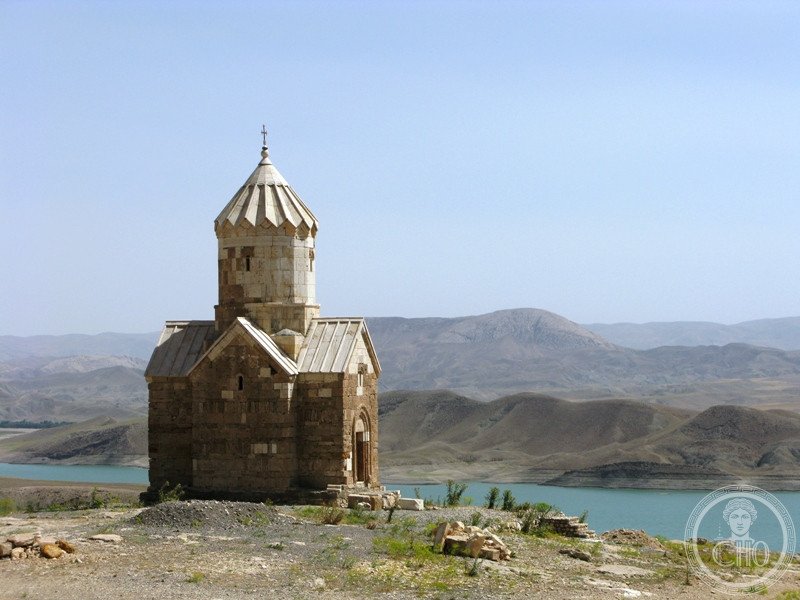
The sole survivor of a medieval Armenian monastery, this modest stone chapel endured abandonment, destruction, and relocation to preserve one of Iran’s most significant Christian monuments.
At a glance
The Chapel of Dzordzor stands near Barun village in West Azerbaijan, Iran, a solitary remnant of a once-thriving fourteenth-century monastery. Relocated 600 meters in 1987–1988 to escape submersion beneath a dam reservoir, it remains a testament to Armenian Christian heritage in the region.
History
The monastery flourished during the fourteenth century as a center of Armenian Apostolic faith. In the early seventeenth century, Shah Abbas I’s decision to displace the local Armenian population led to the monastery’s abandonment and destruction. The chapel itself was spared, though isolated and vulnerable for centuries.
When Iran’s authorities prepared to dam the Zangmar River in the 1980s, the chapel faced inundation. In a remarkable act of preservation, Iranian authorities relocated the entire structure 600 meters to higher ground between 1987 and 1988, allowing it to survive.
What you see
The chapel exemplifies Armenian cross-in-square design, with a cross surmounted by a drum dome at its center. Some sources attribute the structure to the ninth or tenth centuries, though the fourteenth-century dating is more widely accepted. The stonework displays the refined masonry techniques characteristic of medieval Armenian architecture.
Cultural significance
The Chapel of Dzordzor represents the deep roots of Armenian Christianity in western Asia and the region’s complex history of religious and political upheaval. As one of few surviving structures from its era, it documents Armenian architectural traditions and the community’s resilience across centuries.
Key facts
- Country: Iran
- Region: Maku County, West Azerbaijan province
- Coordinates: 39.19°N, 44.48°E
- UNESCO World Heritage Status: Inscribed July 6, 2008, as part of Armenian Monastic Ensembles of Iran
- Relocated: 600 meters in 1987–1988 due to dam construction
Practical information & getting there
The chapel is accessible from Maku County in West Azerbaijan. Contact local tourism authorities for current access conditions and visiting hours. The site requires respect for its sacred status within the Armenian Apostolic tradition.
Sources & resources
Find it on the map
See this place and what’s around it →📷 Become a Cultural Heritage Online photographer
Share your photos of places: they stay published under your name as the author. The more they're seen, the more you get noticed — and soon a contest will reward the most appreciated photos.
Log in or sign up free to add a photoIs this page about you?
This page is read by travellers and heritage enthusiasts who find it on Google. Tell us how you are connected to this place and we will take it from there.