
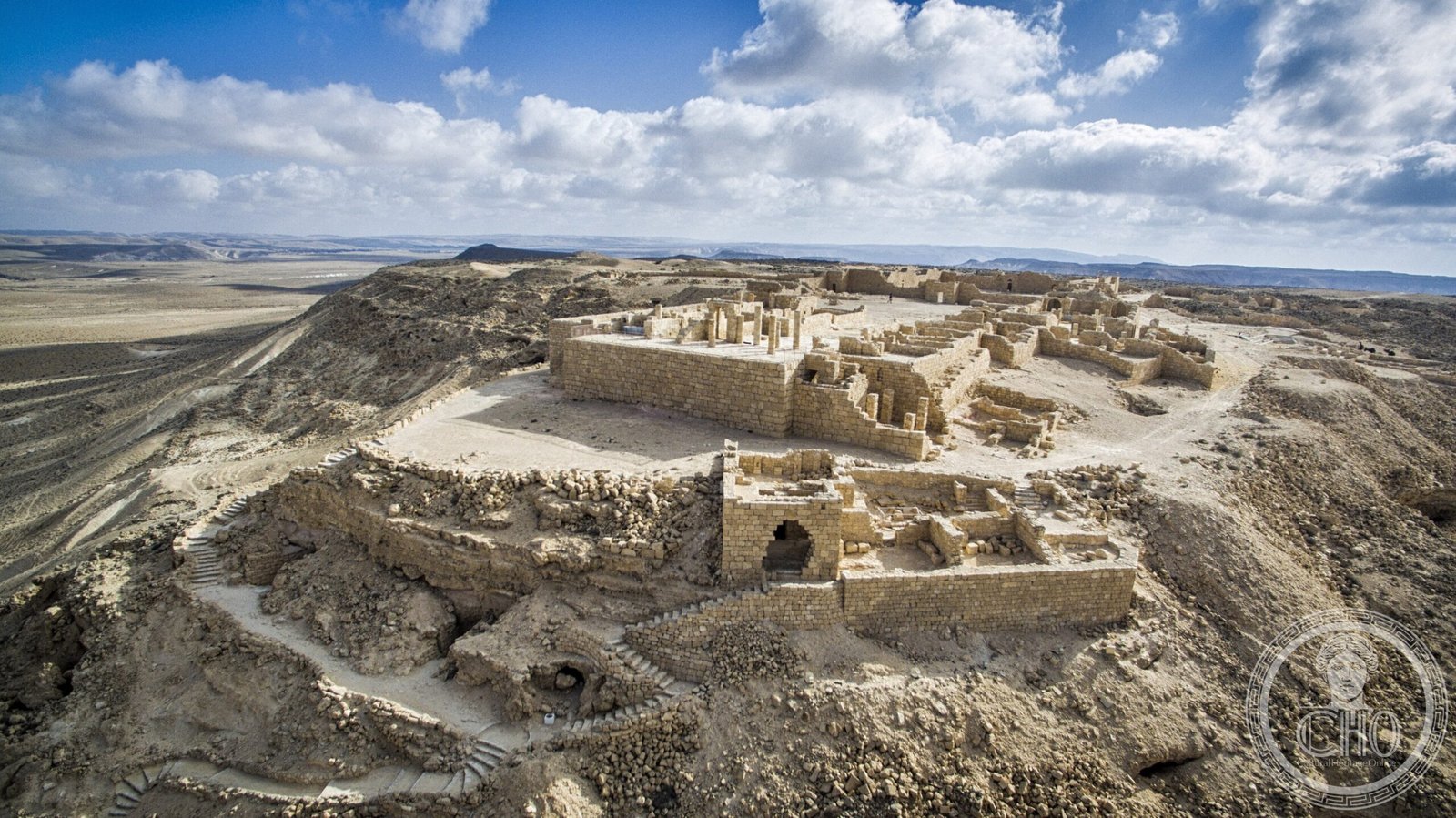
A Nabataean caravan city transformed into a Roman and Byzantine stronghold, Avdat was the second-most important settlement on the ancient Incense Route after Petra, controlling trade between Arabia and the Mediterranean for nearly a thousand years.
At a glance
Avdat stands as a multi-layered desert settlement spanning three major civilizations. The site reveals how a seasonal Nabataean waystation evolved into a permanent city, then adapted under Roman military administration and Byzantine religious authority. Its strategic location on the Petra–Gaza trade corridor made it vital to regional commerce and power.
History
Settlement at Avdat began around the 3rd century BCE as a seasonal camping ground for Nabataean caravans traveling the early Petra–Gaza road (Darb es-Sultan). The city’s name derives from Nabataean King Obodas I, whom tradition held to be revered as a deity and buried at the site. Under Nabataean rule, Avdat became the second-most important city on the Incense Route after Petra itself—a position reflecting its crucial role in moving frankincense, myrrh, and spices northward to Mediterranean markets.
Roman conquest brought military settlement and reorganization. Veterans of the Roman army established a garrison, strengthening the city’s defensive structures. Byzantine period brought Christian religious authority and new construction, while habitation continued into the Early Muslim era. The site was intermittently occupied throughout, revealing how successive powers recognized its enduring strategic value.
What you see
The archaeological remains reveal the physical imprint of each civilization that occupied the site. Nabataean, Roman, and Byzantine building traditions are visible in stone structures adapted to harsh desert conditions. The layers of occupation tell the story of continuous adaptation to new political and economic circumstances across centuries.
Cultural significance
Avdat exemplifies how trade networks shaped settlement patterns and cultural exchange in the ancient Near East. Its prominence on the Incense Route connected Arabian producers with Mediterranean consumers, facilitating not only commerce but also religious, artistic, and technological exchange. The site demonstrates how a strategic location enabled a small desert settlement to influence broader regional history.
Key facts
- Location: Negev Desert, southern Israel
- Coordinates: 30.794°N, 34.773°E
- Primary periods: Nabataean (3rd century BCE–1st century CE), Roman (1st–4th century CE), Byzantine (4th–7th century CE)
- Named after: Nabataean King Obodas I
- Historical significance: Second-most important city on the Incense Route after Petra
Practical information & getting there
Avdat is located in the Negev Desert in southern Israel. For current opening hours, admission fees, and access information, consult local Israeli tourism resources or the site management authority.
Sources & resources
Find it on the map
See this place and what’s around it →📷 Become a Cultural Heritage Online photographer
Share your photos of places: they stay published under your name as the author. The more they're seen, the more you get noticed — and soon a contest will reward the most appreciated photos.
Log in or sign up free to add a photoIs this page about you?
This page is read by travellers and heritage enthusiasts who find it on Google. Tell us how you are connected to this place and we will take it from there.