
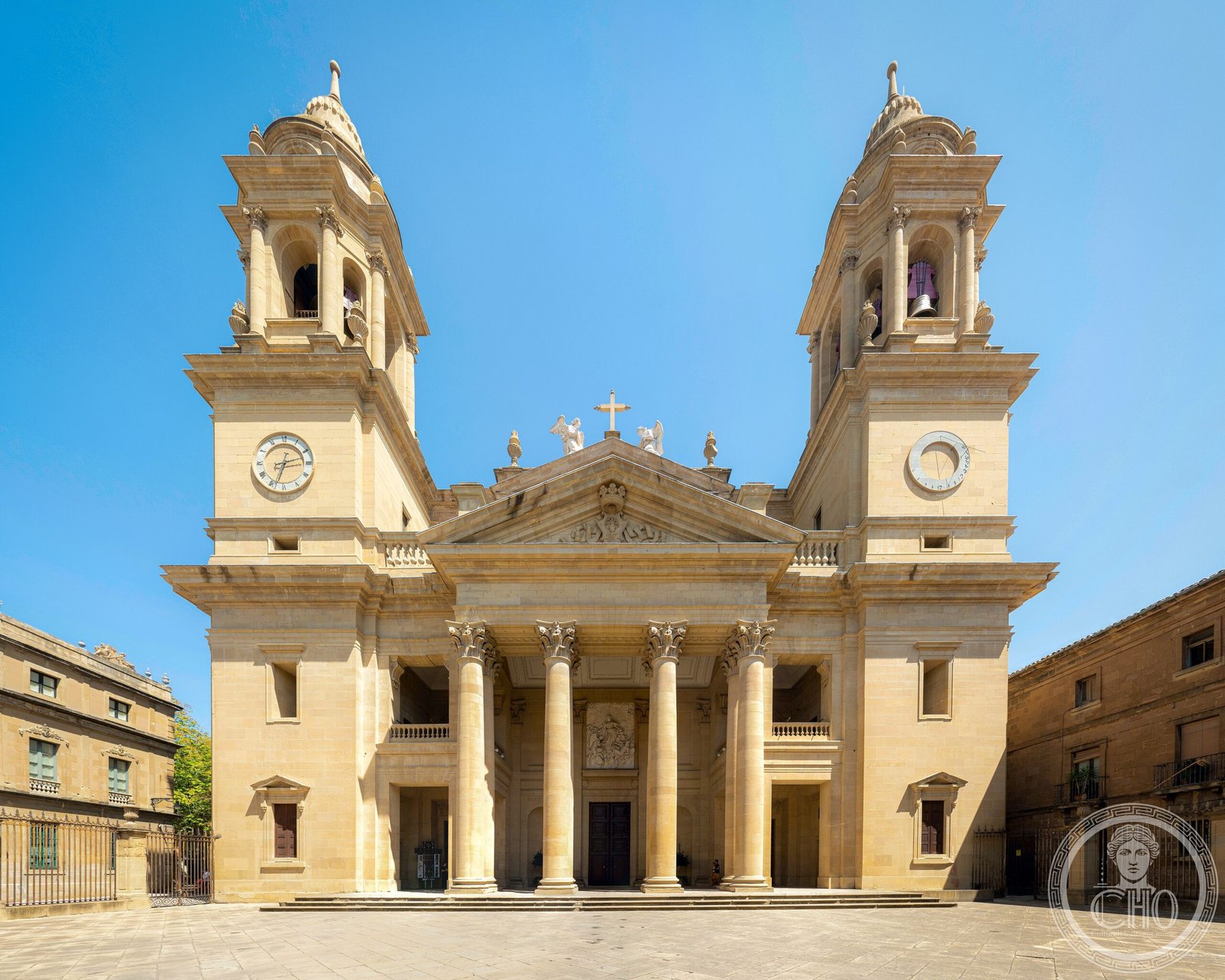
A Gothic cathedral dedicated to Saint Mary of the Assumption, crowned by a Neoclassical façade designed in 1783. For centuries the sacred setting for Navarrese coronations and parliamentary gatherings.
At a glance
Pamplona Cathedral stands as the principal church of the archdiocese of Pamplona. The present Gothic structure replaced an earlier Romanesque building, itself built upon the remains of two still-older churches—evidence of continuous sacred occupation at this site. The cathedral’s most visible feature is its austere Neoclassical façade, designed by architect Ventura Rodríguez and completed in 1783.
History
The cathedral’s dedication to Santa María de la Asunción (Saint Mary of the Assumption) dates to its foundation. Medieval and early modern Navarre centered important rituals here: kings of Navarre were crowned within these walls, and some were buried in its precincts. The Navarrese Cortes (Parliament) convened at the cathedral during the early modern period, conferring political weight upon the sacred space.
In 1946, a Canonical Coronation of Santa María de Pamplona formalized popular veneration, though historical records confirm the original titular dedication remained simply Santa María de Pamplona.
What you see
The Gothic church itself dates to the 15th century, representing a substantial rebuild from the earlier Romanesque structure. The cathedral preserves a remarkable 13th–14th-century Gothic cloister, a sheltered processional space that opens onto two additional Gothic rooms of note: the Barbazan chapel and the refectory. Ventura Rodríguez’s Neoclassical façade creates a striking contrast with the medieval core, its restrained geometry framing the entrance.
Cultural significance
Pamplona Cathedral embodies the political and spiritual authority of the Kingdom of Navarre. Its role as a coronation church and seat of Parliament elevated it beyond a place of worship into a repository of dynastic legitimacy and governance. The layered archaeology of its site—multiple churches superseding one another—speaks to the enduring sacred geography of Pamplona itself.
Key facts
- Country: Spain
- City: Pamplona
- Coordinates: 42.8197°N, 1.6411°W
- Current structure: 15th-century Gothic
- Façade: Neoclassical, designed by Ventura Rodríguez, 1783
- Cloister: 13th–14th century Gothic
- Feast day of titular saint: August 15
Practical information & getting there
Pamplona Cathedral is located in central Pamplona, in the Basque Country of northern Spain. As an active cathedral, visiting hours and admission policies may vary. We recommend checking ahead or contacting the archdiocese for current opening times and any liturgical observances that may affect access.
Sources & resources
Find it on the map
See this place and what’s around it →📷 Become a Cultural Heritage Online photographer
Share your photos of places: they stay published under your name as the author. The more they're seen, the more you get noticed — and soon a contest will reward the most appreciated photos.
Log in or sign up free to add a photoIs this page about you?
This page is read by travellers and heritage enthusiasts who find it on Google. Tell us how you are connected to this place and we will take it from there.