
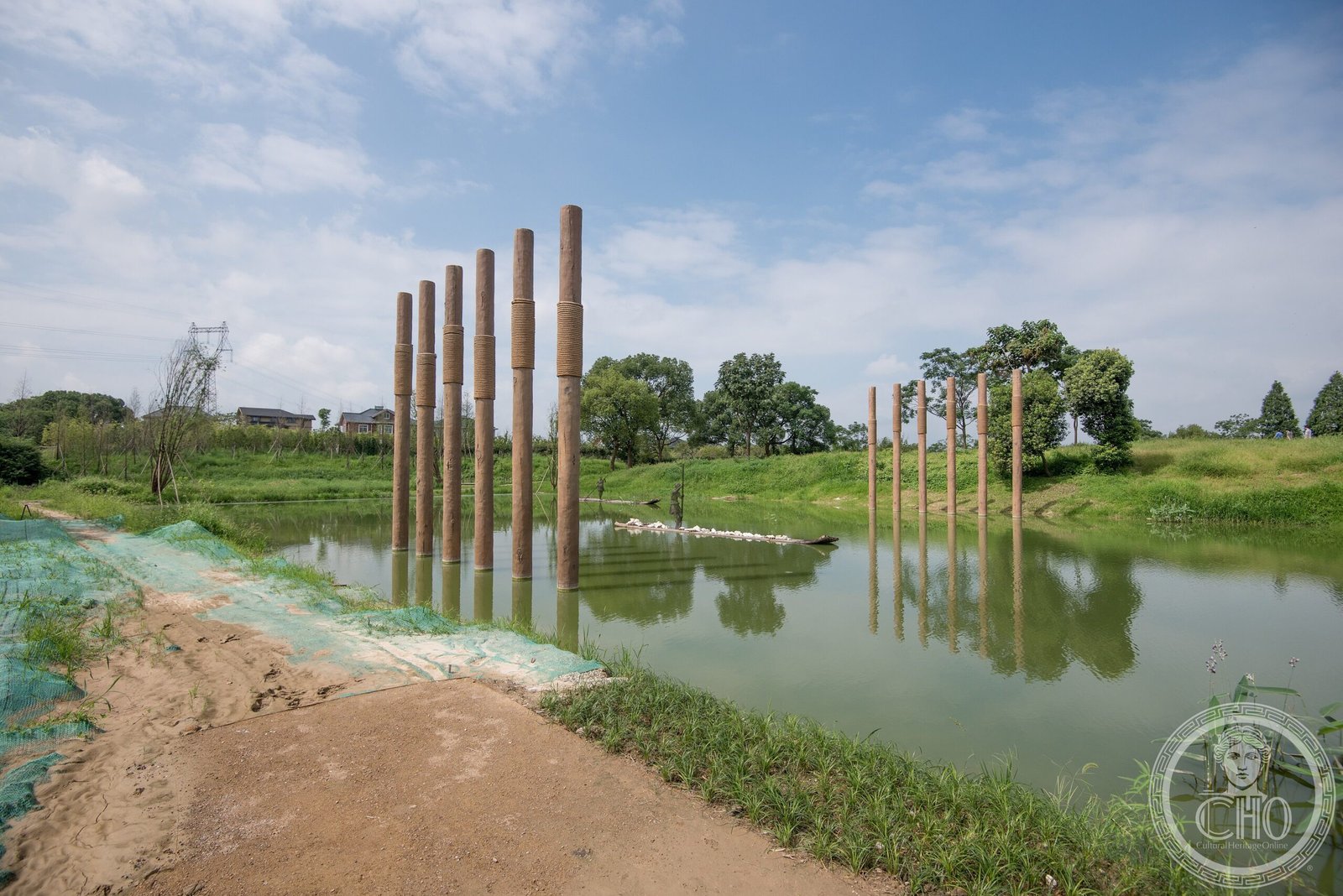
A cluster of Neolithic ruins revealing one of China’s earliest urban civilisations, with the world’s oldest known hydraulic engineering system.
At a glance
Liangzhu City stands as a remarkable testimony to prehistoric sophistication in the Yangtze River basin. The site reveals a rice-cultivating urban society with evidence of centralised governance, palatial architecture, and ceremonial spaces—all flourishing nearly 5,000 years ago. The walled city’s intricate water-management system remains unparalleled in antiquity.
History
Shi Xingeng first excavated the site in 1936, though its true significance went unrecognised for decades. By 1959, archaeologists identified it as the centre of a previously unknown civilisation, naming it the Liangzhu culture. The discovery of city walls in 2006 transformed understanding of the site, confirming it as an ancient urban settlement rather than a scattered ceremonial complex.
The city flourished for approximately one thousand years before circa 2300 BCE, when catastrophic flooding linked to climate change forced its abandonment and triggered the civilisation’s collapse.
What you see
The ruins encompass a walled city with clearly defined palatial complexes and ceremonial areas. Most striking is the hydraulic system—the earliest known in the world. Comprising dams, reservoirs, and channels, it demonstrates advanced engineering capability and water-management knowledge that would not emerge elsewhere for millennia.
Cultural significance
Liangzhu City ranks among the earliest examples of Chinese civilisation, embodying the complex political and spiritual organisation of a prehistoric state. Its technology, urban planning, and agricultural base fundamentally reshape understanding of Neolithic Asia. The site provides rare archaeological evidence of how early societies adapted to environmental pressures through engineering innovation.
Key facts
- Country: China
- Location: Yuhang, Hangzhou (Zhejiang Province)
- Coordinates: 30.39555556°N, 119.99083333°E
- Period: c. 3300–2300 BCE
- Designated major cultural heritage site (national protection): 1996
- UNESCO World Heritage Site: 2019
- Managed by: Liangzhu Site District Management Committee
Practical information & getting there
The site is open to visitors through the Liangzhu National Archaeological Site Park. Located in the Liangzhu Subdistrict and Pingyao Town of Yuhang district, it is accessible from central Hangzhou. For current opening hours, admission fees, and guided-tour availability, consult the management committee’s official information.
Sources & resources
Find it on the map
See this place and what’s around it →📷 Become a Cultural Heritage Online photographer
Share your photos of places: they stay published under your name as the author. The more they're seen, the more you get noticed — and soon a contest will reward the most appreciated photos.
Log in or sign up free to add a photo