
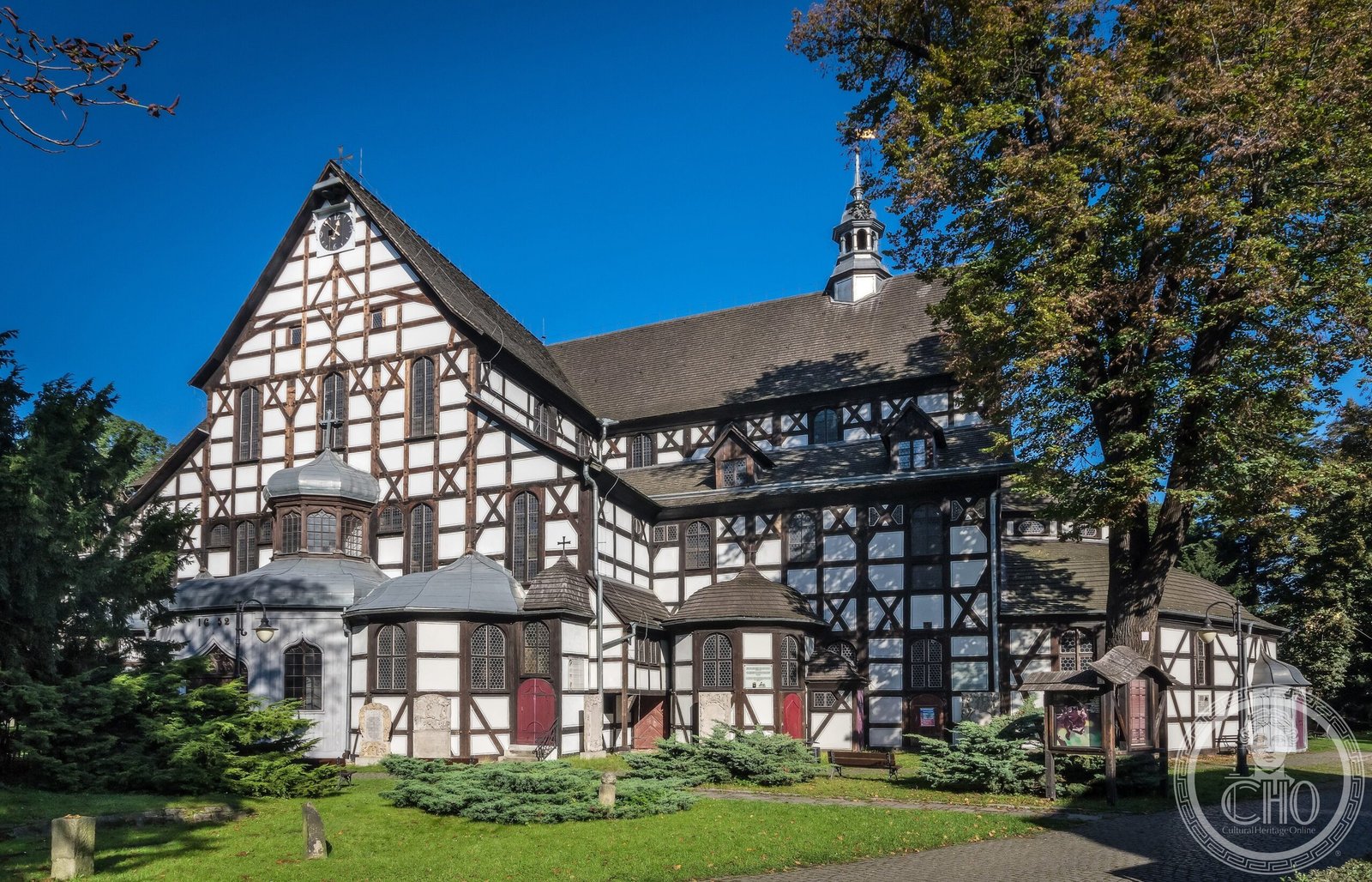
Churches of Peace
Two extraordinary wooden churches in Lower Silesia, built under the strict terms of the 1648 Peace of Westphalia, stand as monuments to religious tolerance and Baroque artistry.
At a glance
The Churches of Peace in Jawor and Świdnica are remarkable survivors of 17th-century religious compromise. Built from wood, loam, and straw, these austere exteriors conceal ornately decorated interiors—a physical expression of the constraints and creativity of their era.
History
The Peace of Westphalia in 1648 granted Silesian Lutherans a singular privilege: permission to construct three churches outside city walls. Strict conditions applied. The buildings could use only wood, loam, and straw. No steeples or church bells were permitted. Construction had to be completed within one year.
Two churches survive. The Church of Peace in Jawor and the Holy Trinity Church of Peace in Świdnica both stand intact. A third, erected in Głogów, burned down in 1758.
What you see
The exteriors present a deliberate plainness—a direct consequence of the restrictions imposed by the Peace treaty. Inside, the contrast is startling. The Jawor church contains 180 paintings illustrating Biblical narratives from both Old and New Testaments. The Świdnica interior features apocalyptic visions alongside panoramic depictions of the surrounding landscape, all rendered in exuberant Baroque style.
Cultural significance
These churches represent a unique moment in European religious history. They embody both constraint and freedom—constrained by the treaty’s strict material and architectural requirements, yet liberated to express faith through extraordinary interior decoration. They testify to the possibility of coexistence and compromise during an era of religious division.
Key facts
- Country: Poland
- Locations: Jawor and Świdnica, Lower Silesia
- Date: 1648–1656
- Material: Wood, loam, straw
- UNESCO World Heritage Site: Yes (since 2001)
- Coordinates: 51.053914, 16.189041
Practical information & getting there
Both churches remain active places of worship and are open to visitors. Jawor and Świdnica lie in Lower Silesia, accessible by rail and road from major Polish cities. Contact local tourism offices for visiting hours and current information.
Sources & resources
Find it on the map
See this place and what’s around it →📷 Diventa un fotografo di Cultural Heritage Online
Condividi le tue foto dei luoghi: restano pubblicate con la tua firma come autore. Più vengono viste, più ti fai conoscere — e presto un concorso premierà le foto più apprezzate.
Accedi o registrati gratis per aggiungere una fotoDo you manage this place?
This page is read by travellers and heritage enthusiasts who find it on Google. Keep it accurate — and make it work for you. Free for non-profit heritage institutions.