
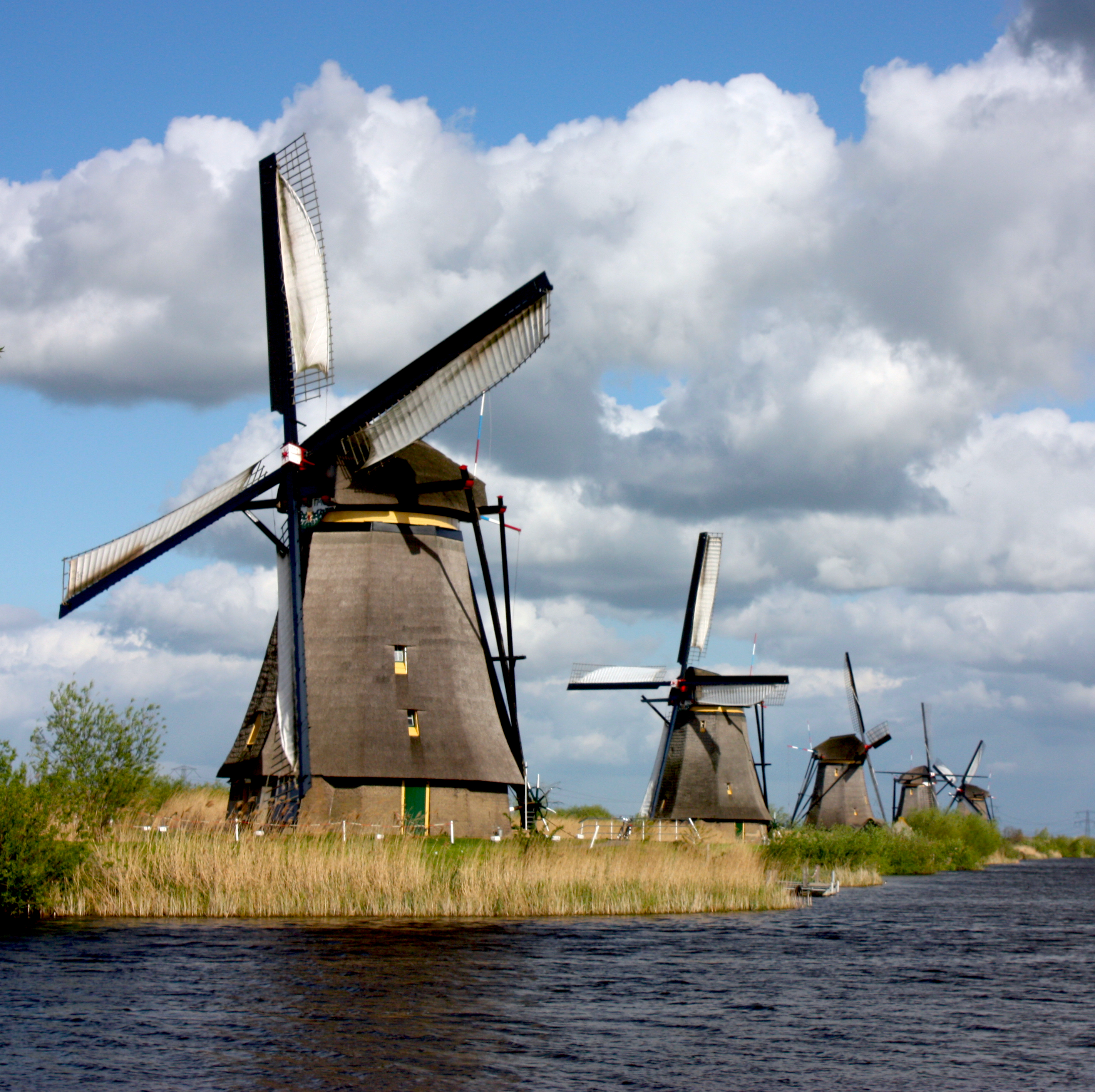
A monumental ensemble of 19 windmills built to manage water in the Alblasserwaard polder, representing the largest concentration of historic mills in the Netherlands and a UNESCO World Heritage Site since 1997.
At a glance
Nineteen windmills stand in and around the village of Kinderdijk in the municipality of Molenlanden, with one mill, De Blokker, located in Alblasserdam. Built over two years in the late 1730s, they form a working water-management system unique in scale and preservation. The entire area has been protected as a village view since 1993.
History
The mills were constructed between 1738 and 1740 to pump water out of the Alblasserwaard polder and protect the low-lying land from flooding. Their construction responded to the chronic water management challenges facing the Netherlands’ vulnerable polders. Today they stand as monuments to Dutch hydraulic engineering and persistence against the sea.
What you see
The 19 mills represent a remarkable array of historic windmill design. Each structure reflects the engineering principles and aesthetic conventions of 18th-century Dutch mill-building. The mills are arranged across the polder landscape, many aligned along waterways where they once functioned as an integrated pumping network. All are designated national monuments.
Cultural significance
Kinderdijk is among the Netherlands’ most recognizable cultural sites, celebrated as a symbol of Dutch ingenuity in water management and perseverance in inhabiting challenging terrain. The mills represent a technological and social achievement: the organized collective effort required to maintain habitable land below sea level. UNESCO recognition reflects their universal value as an outstanding example of hydraulic engineering heritage.
Key facts
- Location: Alblasserwaard polder, South Holland, Netherlands
- Municipalities: Molenlanden (majority) and Alblasserdam (De Blokker mill)
- Number of mills: 19
- Built: 1738–1740
- Coordinates: 51.8825°N, 4.6494°E
- UNESCO World Heritage Site: yes (since 1997)
- Official UNESCO designation: Mill Network at Kinderdijk-Elshout
- Protected status: National monuments; protected village view (since 1993)
Practical information & getting there
Kinderdijk is accessible from Rotterdam by car, bicycle, or public transport; it lies approximately 15 kilometers southeast of Rotterdam city centre. The site is open to visitors year-round. Several mills are accessible to the public, and the area offers walking and cycling routes. For current visiting hours and admission fees, consult local tourism information.
Sources & resources
Find it on the map
See this place and what’s around it →📷 Become a Cultural Heritage Online photographer
Share your photos of places: they stay published under your name as the author. The more they're seen, the more you get noticed — and soon a contest will reward the most appreciated photos.
Log in or sign up free to add a photo