
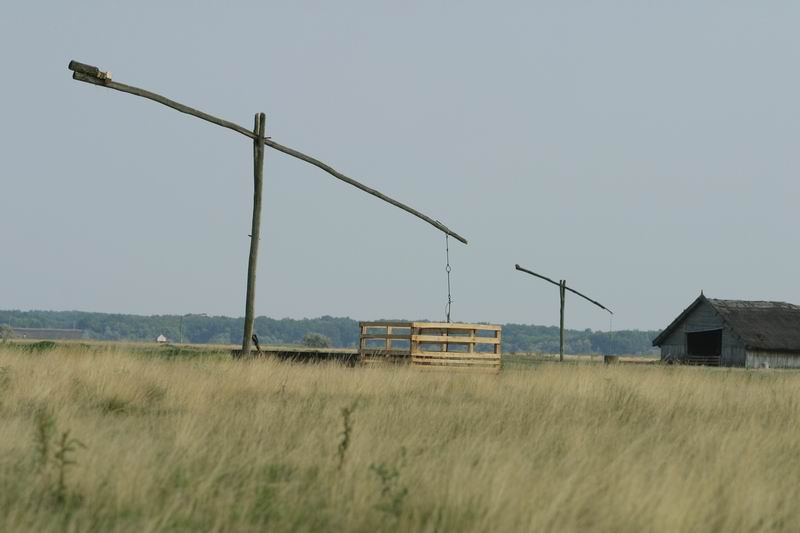
Europe’s largest semi-natural grassland, this vast alkaline steppe in Hungary’s Great Plain preserves four millennia of pastoral culture and the continent’s most extensive protected grassland ecosystem.
At a glance
Hortobágy spans 800 square kilometers of open puszta (steppe), where traditional pastoral methods and distinctive architectural features—including the iconic Nine-holed Bridge and T-shaped sweep wells—define the landscape. The park’s ecology and cultural heritage reflect an unbroken continuum of human land use stretching back over four thousand years.
History
Long believed to have formed from medieval deforestation and Tisza River management, Hortobágy’s true origins reach back ten thousand years, when the Tisza cut through the Great Hungarian Plain and alkalinization began. Wild horses and grazing animals shaped the steppe during the Ice Age; domesticated herds continued the process through millennia of settlement and traditional pastoralism.
The site was designated Hungary’s first national park in 1973, recognizing its ecological and cultural significance. UNESCO inscribed it in 1999 as testimony to this long history and its distinctive cultural landscape. The park’s past also encompasses darker chapters, including its use as a site of forced labor during the communist era.
What you see
The Nine-holed Bridge stands among Hortobágy’s most recognizable structures. Traditional T-shaped sweep wells—csárdák—scattered across the grassland testify to centuries of pastoral adaptation. Heat mirages shimmer across the flat expanse, creating optical illusions of trees where none exist. Part of the park is designated a dark sky preserve, protecting the steppe’s nocturnal character.
Cultural significance
Hortobágy embodies Europe’s oldest surviving pastoral landscape and represents millennia of traditional grazing practices and land management. The steppe’s ecological stability and cultural continuity provide insight into human adaptation to semi-arid environments and the relationship between domesticated animals and grassland formation. Its designation as both a national park and World Heritage Site underscores its importance to European natural and cultural heritage.
Key facts
- Location: Eastern Hungary, Great Plain (Alföld)
- Area: 800 km²
- Coordinates: 47.6°N, 21.1°E
- Designated national park: 1973 (Hungary’s first)
- UNESCO World Heritage Site: 1999
- Largest semi-natural grassland in Europe
- Hungary’s largest protected area
Practical information & getting there
Hortobágy lies in eastern Hungary near the towns of Debrecen and Tiszafüred. The park welcomes visitors year-round to experience its open grasslands, wildlife, and cultural landmarks. For current visiting hours, facilities, and access points, consult the park’s official website or Hungarian national parks authority.
Sources & resources
Find it on the map
See this place and what’s around it →
📷 Become a Cultural Heritage Online photographer
Share your photos of places: they stay published under your name as the author. The more they're seen, the more you get noticed — and soon a contest will reward the most appreciated photos.
Log in or sign up free to add a photo