
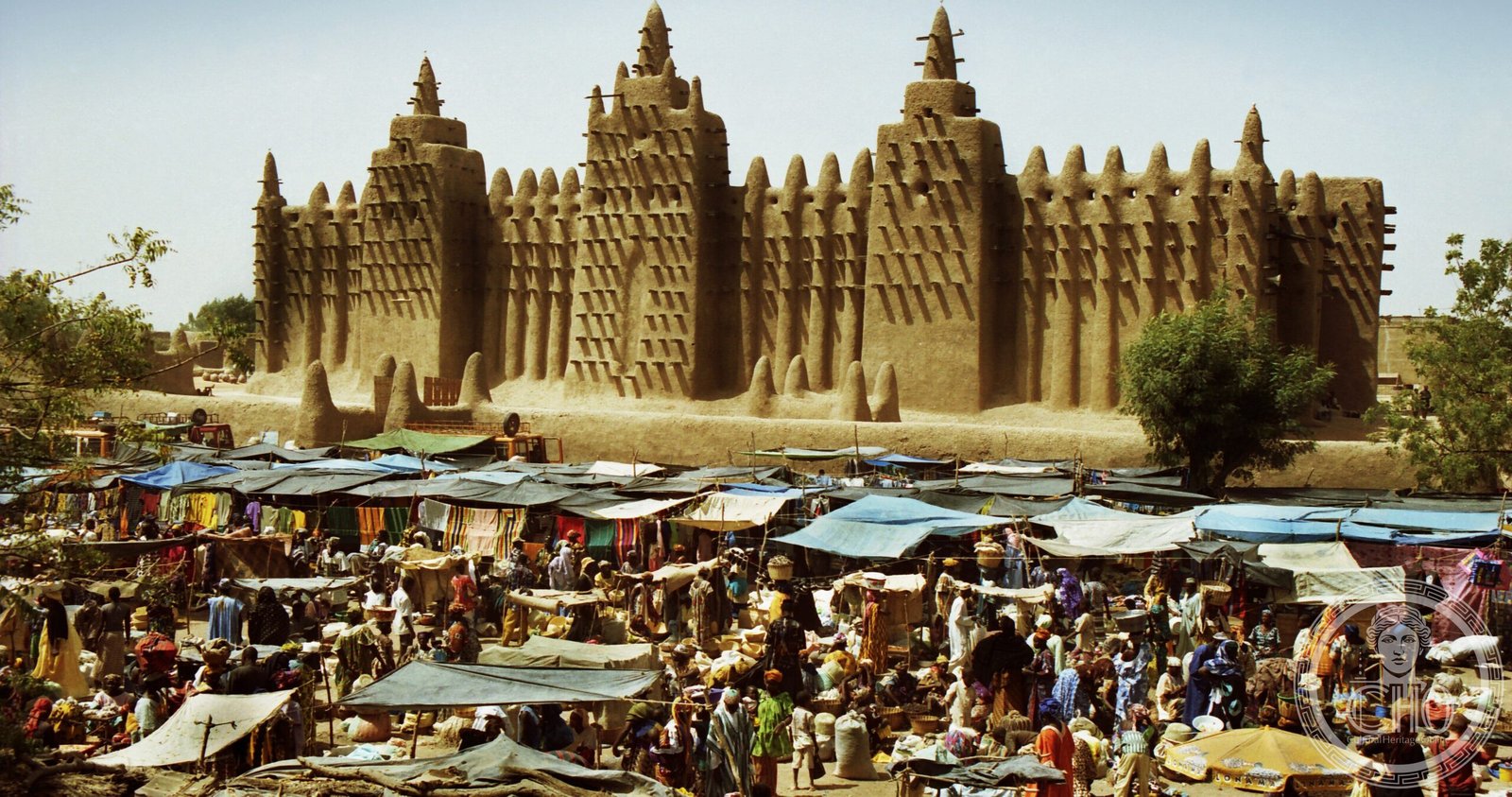
An archaeological ensemble spanning four sites that documents millennia of settlement and urban development in the Niger River delta region.
At a glance
The Old Towns of Djenné comprise four distinct archaeological sites—Djenné-Djeno, Hambarkétolo, Kaniana, and Tonomba—clustered within and around the modern city of Djenné in Mali. Together they form a palimpsest of human habitation and cultural transformation across centuries.
History
These sites document continuous settlement patterns in the region. Djenné-Djeno and its companions reveal the development of urban centers along the Niger River, tracing occupation and economic networks across multiple periods. The ensemble illustrates how settlement shifted and adapted over time.
What you see
Visitors encounter the physical remains of four archaeological sites distributed across the landscape. The ensemble preserves evidence of domestic structures, settlement organization, and material culture spanning different eras of occupation.
Cultural significance
The Old Towns of Djenné represent critical testimony to West African urban development and the historical importance of Djenné as a trading center. The archaeological record reveals patterns of habitation, cultural exchange, and adaptation within the Sahel region. Recognition as a UNESCO World Heritage site underscores the ensemble’s global importance for understanding African history.
Key facts
- Country: Mali
- City: Djenné
- Coordinates: 13.90639°N, 4.555°W
- UNESCO World Heritage site (inscribed 1988)
- Comprises four archaeological sites: Djenné-Djeno, Hambarkétolo, Kaniana, and Tonomba
Practical information & getting there
The sites are located in Djenné, accessible from Mali’s major cities by road. Visitors should consult local guides and UNESCO information for current access conditions and preservation protocols.
Sources & resources
Find it on the map
See this place and what’s around it →📷 Become a Cultural Heritage Online photographer
Share your photos of places: they stay published under your name as the author. The more they're seen, the more you get noticed — and soon a contest will reward the most appreciated photos.
Log in or sign up free to add a photo