
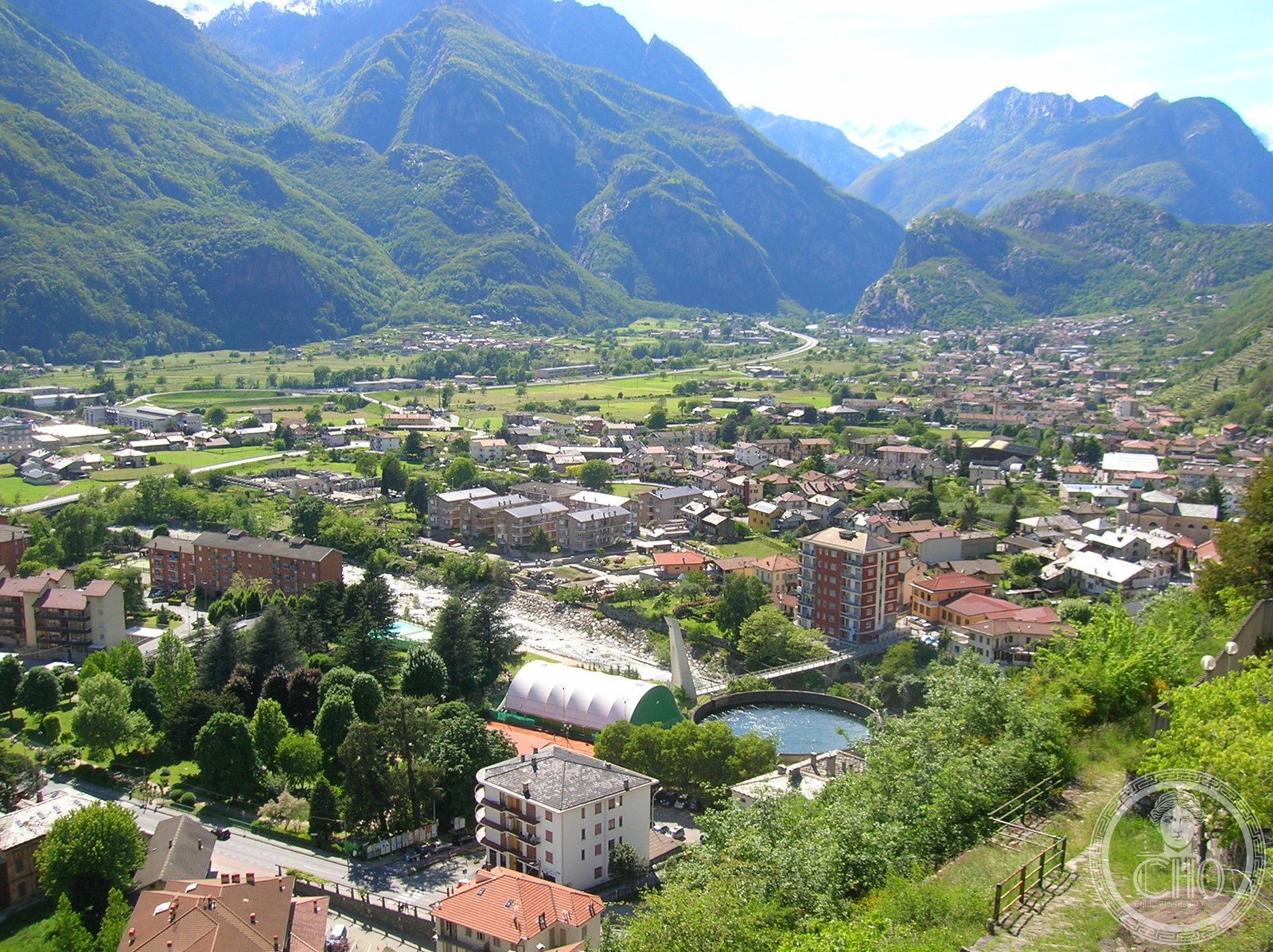
Pont-Saint-Martin is a town and comune in the Aosta Valley region of northwestern Italy. It stands at the southern entrance to the valley, where the Lys stream meets the Dora Baltea, and takes its name from an ancient stone bridge that has long been one of the area’s defining landmarks. The town sits at a historic gateway between the Po plain and the western Alps.
At a glance
- Type
- Comune (municipality)
- Period
- Settlement linked to its ancient bridge
- Style
- Alpine valley town
- Location
- Aosta Valley, northwestern Italy
Overview
Pont-Saint-Martin lies at the lower, southern end of the Aosta Valley, the bilingual autonomous region of northwest Italy. Its name, meaning “Saint Martin’s Bridge”, refers to the masonry bridge that spans the Lys stream. The town serves as one of the principal gateways into the valley from the neighbouring Piedmont region.
History
The site has long commanded an important route through the western Alps connecting the Po plain with the high valley. Its celebrated stone bridge, of ancient origin, gave the settlement both its name and its strategic role as a crossing point. Over the centuries the town grew around this passage as a hub for trade and travel into and out of the valley.
What you see
The town’s most recognisable feature is its single-arch stone bridge over the Lys stream, which has come to symbolise the municipality. The surrounding settlement spreads across the valley floor and lower slopes, framed by the steep mountains that rise on either side toward the upper Aosta Valley.
Cultural significance
Pont-Saint-Martin is closely identified with its historic bridge, a landmark celebrated in local tradition and festivities. As the southern threshold of the bilingual Aosta Valley, the town reflects the meeting of Alpine and lowland cultures along one of the region’s oldest routes.
Practical information
Pont-Saint-Martin is a public municipality open to visitors. For local services, events and opening times, check the official municipal website and the regional tourism portal of the Aosta Valley.
Getting there
The town is one of the first reached when entering the Aosta Valley from the south. It is served by the A5 motorway and the valley’s main road and rail line linking it with Piedmont and, further up the valley, with the regional capital of Aosta.
Sources & resources
See the place
Find it on the map
See this place and what’s around it →📷 Become a Cultural Heritage Online photographer
Share your photos of places: they stay published under your name as the author. The more they're seen, the more you get noticed — and soon a contest will reward the most appreciated photos.
Log in or sign up free to add a photo