
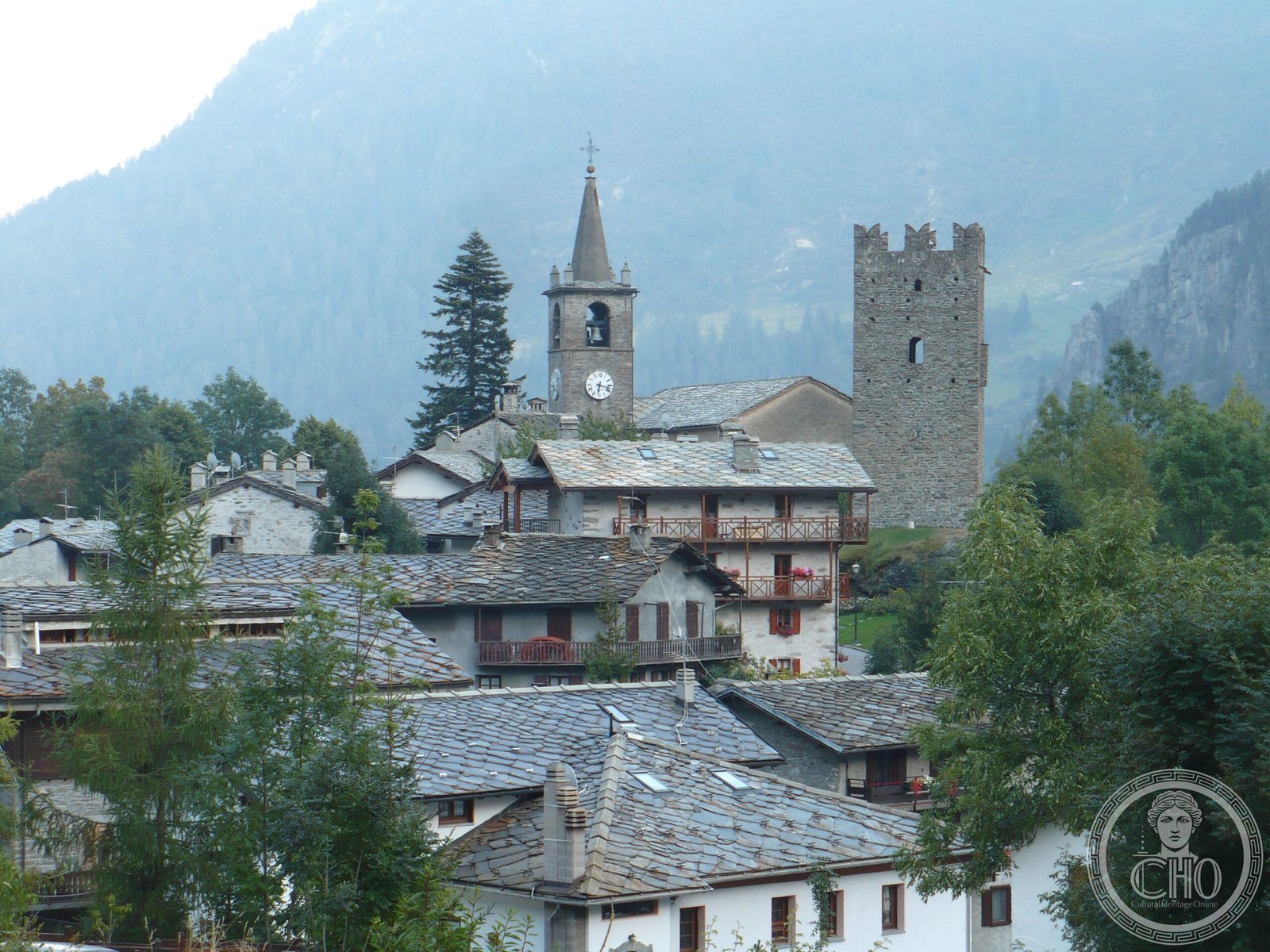
Champorcher is a comune in the Aosta Valley region of northwestern Italy and the main town of the Champorcher Valley. Tucked into a lateral valley of the Alpine region, it serves as the principal settlement for the surrounding mountain communities. Its setting among high peaks gives it a strongly Alpine character.
At a glance
- Type
- Comune (municipality)
- Period
- Historic Alpine settlement
- Style
- Alpine mountain community
- Location
- Champorcher Valley, Aosta Valley, Italy
Overview
Champorcher is the main town of the Champorcher Valley, a side valley of the Aosta Valley in northwestern Italy. It lies within the smallest and least populous Italian region, a bilingual Alpine territory where French and Italian are official. The municipality acts as the hub for the smaller hamlets of its valley.
History
The Champorcher Valley has long been settled by mountain communities living from farming, pasture and the resources of the high Alps. As the chief town of its valley, Champorcher developed as the local centre for trade, worship and administration. The wider Aosta Valley gained its modern autonomous status after the Second World War.
What you see
The comune presents a classic Alpine scene of mountain slopes, scattered hamlets and a settled core within the Champorcher Valley. The surrounding terrain rises toward high peaks and alpine pastures, with the valley offering access to walking and mountain landscapes.
Cultural significance
As the principal town of its valley, Champorcher anchors a traditional Alpine community within the bilingual Aosta Valley. The region is known for its mountain heritage, traditional architecture and protected natural environment.
Practical information
Champorcher is a public municipality open to visitors year-round. For services, opening times and seasonal activities, check the official municipal website and the regional tourism portal of the Aosta Valley.
Getting there
The town is reached by the road that climbs into the Champorcher Valley from the main Aosta Valley floor. The valley connects to the A5 motorway and the regional rail line, with the capital Aosta lying to the northwest.
Sources & resources
See the place
Find it on the map
See this place and what’s around it →📷 Become a Cultural Heritage Online photographer
Share your photos of places: they stay published under your name as the author. The more they're seen, the more you get noticed — and soon a contest will reward the most appreciated photos.
Log in or sign up free to add a photo