
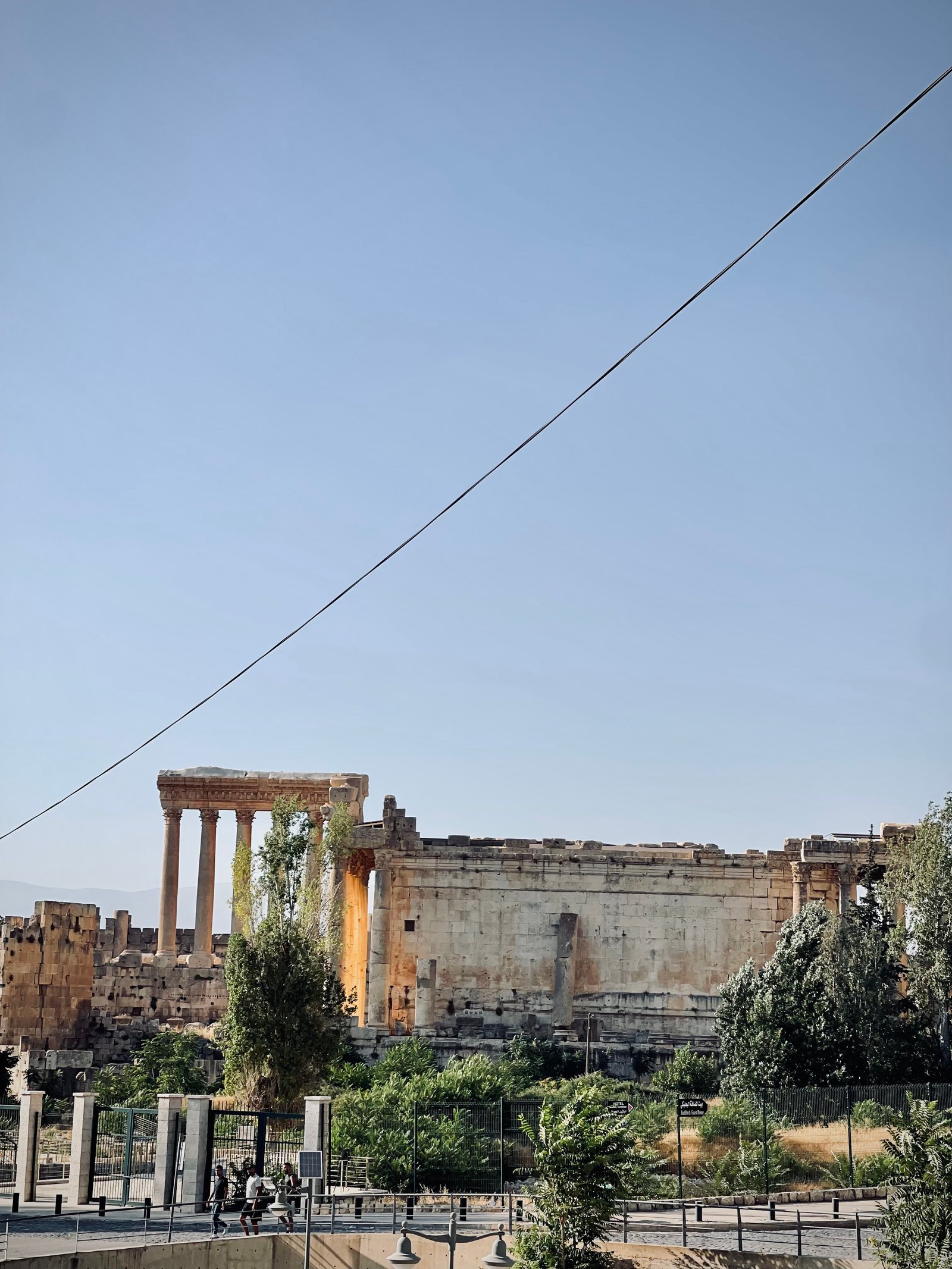
Within two hours of central Beirut stand four UNESCO World Heritage Sites that span 7,000 years of human settlement: a Phoenician harbour city that gave the world its alphabet, a Roman temple complex of staggering scale, a Roman-era port ringed by mosaics, and the only Umayyad inland city ever built outside Arabia. From Cultural Heritage Online.
Byblos 37 km north · 45 min by service taxi
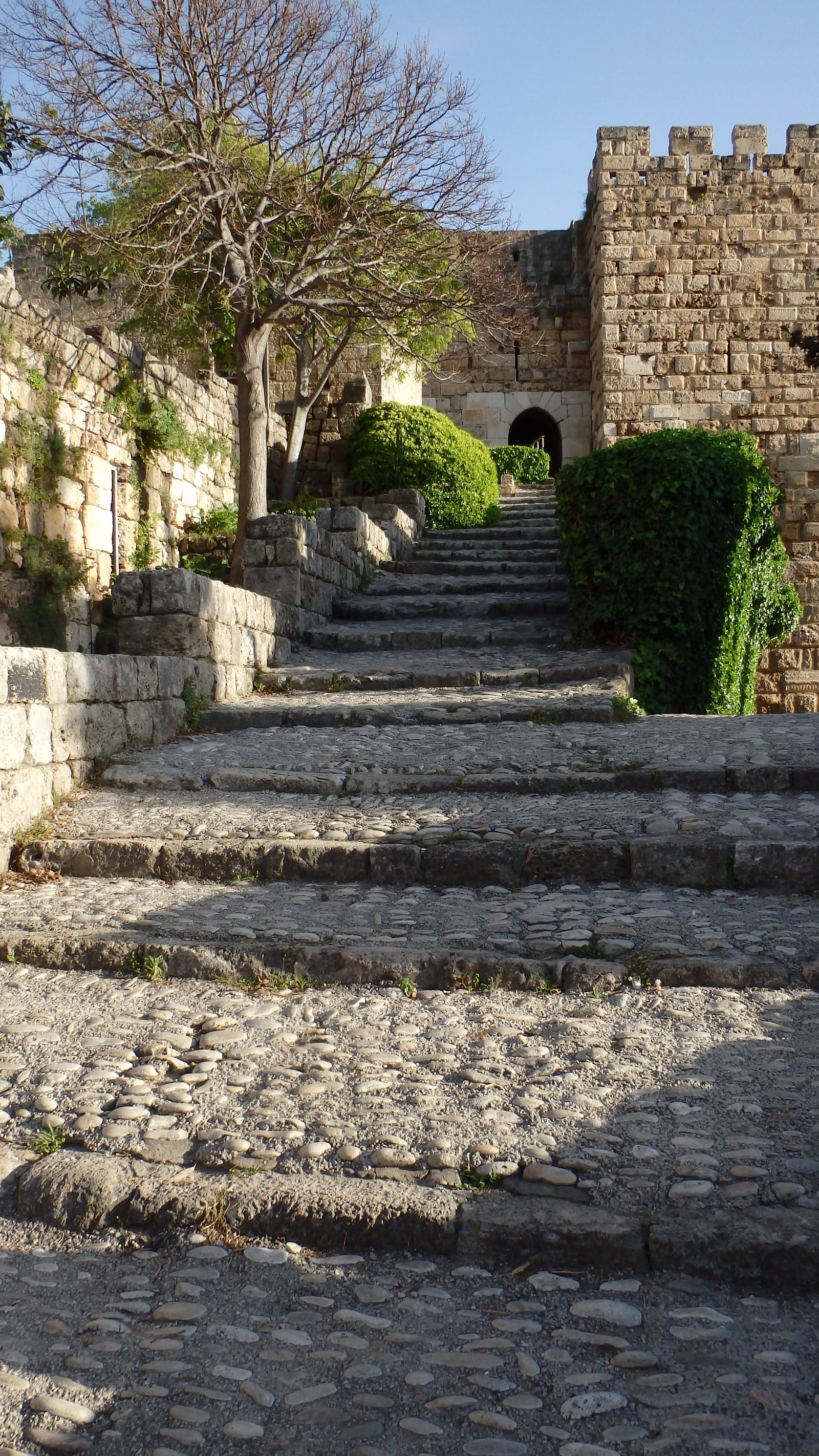
Byblos — known today as Jbeil — has been continuously inhabited since roughly 5000 BCE, making it one of the oldest living cities on earth. The Phoenicians settled here in earnest around 3000 BCE, trading cedar wood with Egypt and, in doing so, developing the consonantal alphabet that Greek scribes later adapted and that all Western writing systems ultimately descend from. UNESCO inscribed the site in 1984.
Walking through Byblos is a lesson in compressed time. The Crusader castle, built in the 12th century from reused Roman blocks, sits a few hundred metres from a Roman amphitheatre whose semicircular seats once faced the sea. Descend further and the Phoenician royal tombs open below ground level — shaft-cut into limestone, their walls still carrying the faint chill of deep stone even on a warm afternoon. The harbour, framed by low medieval walls, still receives fishing boats.
Outside the archaeological zone, the old souk sells Phoenician-replica jewellery and Lebanese ceramics under stone vaults. The scale is intimate, nothing like the monumental sites further inland, which makes Byblos a good opening day rather than a destination reserved for specialists.
Getting there: Service taxis and minibuses from Dora terminal in Beirut, 45 minutes. Allow: Half day (3–4 hours). Best for: First-time visitors to Lebanon, travellers interested in the history of writing and Phoenician civilisation.
Anjar 56 km east · 1 hr by car
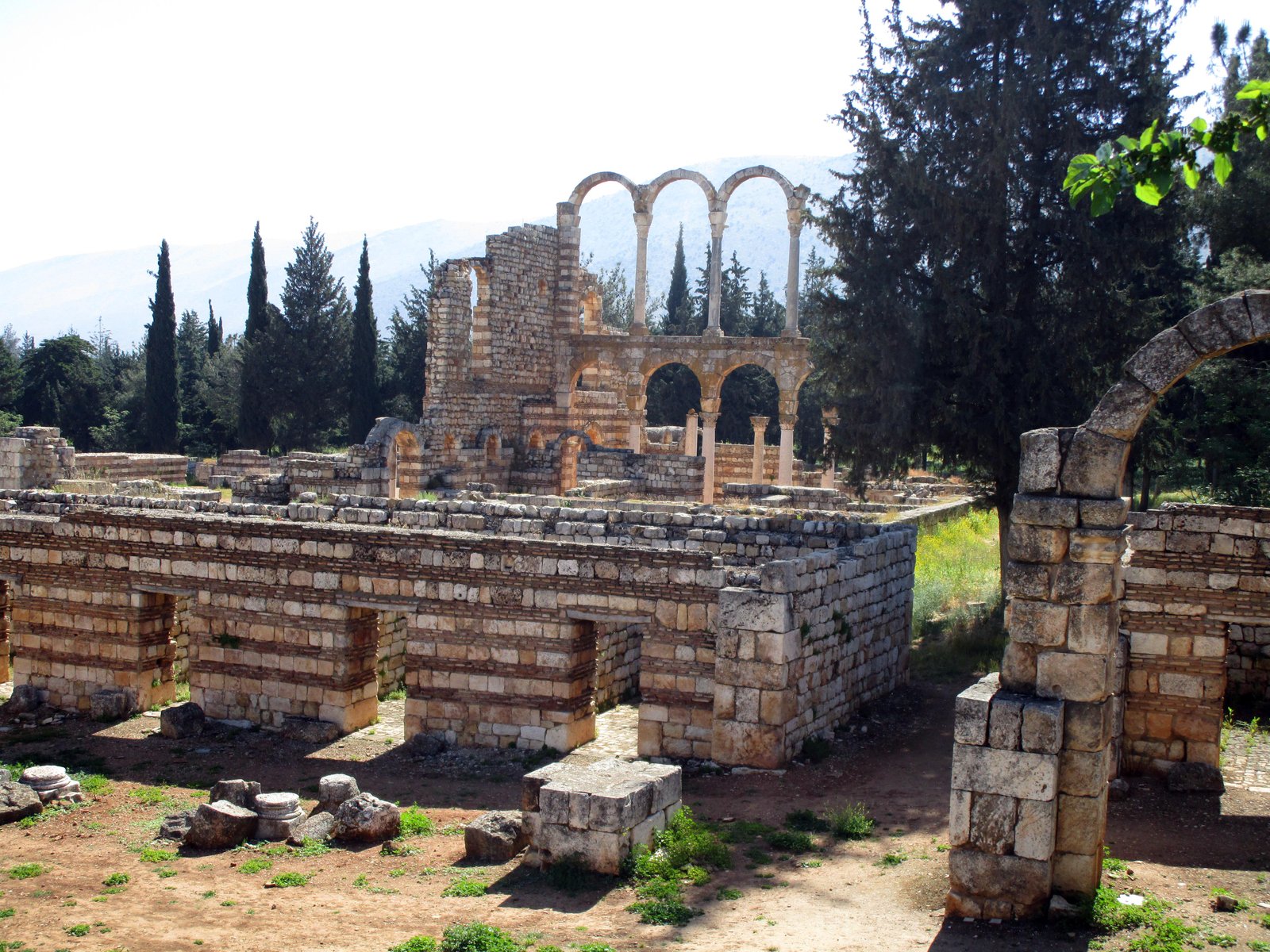
Anjar is an anomaly. Built by the Umayyad caliph Walid I in the early 8th century CE, it is the only known Umayyad inland city outside the Arabian peninsula — a planned urban grid laid out in less than a generation and abandoned almost as quickly. UNESCO inscribed it in 1984. The site sits in the flat northern Bekaa Valley, the Anti-Lebanon mountains visible beyond the ruins on clear days.
The plan follows Roman principles the Umayyads absorbed and reinterpreted: a cardo and a decumanus — two main colonnaded avenues — divide the city into four quarters. Walk along the cardo and you pass the stumps of columns, reconstructed arches, and the outlines of more than 600 individual shops, their stone thresholds still readable underfoot. The great palace occupies one quarter; a smaller palace anchors another. The baths retain their floor plan. The whole city covers roughly 114,000 square metres.
What makes Anjar unusual among Lebanese UNESCO sites is its completeness as an urban plan. You are not looking at temple fragments or harbour walls but at the ghost of a functioning commercial city — a market economy drawn in stone, interrupted mid-sentence.
Getting there: Private car or organised tour from Beirut, approximately 1 hour east via the Beirut–Damascus highway. Public transport possible via Chtaura junction, then local taxi. Allow: 2–3 hours. Best for: Visitors interested in Islamic history and urban archaeology; combines well with a Bekaa Valley wine-country afternoon.
Baalbek 86 km northeast · 1.5 hr by bus or service taxi
The Temple of Jupiter at Baalbek was once the largest religious building in the Roman Empire. Six of its original 54 Corinthian columns still stand, each 22 metres tall and each drum weighing around 60 tonnes. Standing beneath them, what registers first is not the height but the sound — or rather the absence of it, the silence that falls inside the shadow of the stones. The complex was built over several centuries starting in the 1st century BCE and dedicated to the Roman triad of Jupiter, Venus, and Bacchus. UNESCO inscribed it in 1984.
Adjacent to Jupiter, the Temple of Bacchus is the best-preserved Roman temple in the world. Its interior walls reach 27 metres and the carved ceiling coffers — each one a different mythological scene — remain sharp enough to read despite 2,000 years of Bekaa winters. The entry portal, with its eagle carved into the keystone above the doorway, has been photographed from every angle but still stops people mid-step. The Temple of Venus, smaller and more delicate, curves at its ends in an unusual concave facade.
Baalbek has been through Phoenician, Macedonian, Roman, Byzantine, Arab, Crusader, and Ottoman hands; the site layers their physical traces. The massive platform stones in the lower courses — including three limestone blocks each weighing over 800 tonnes, among the largest ever quarried — predate the Roman construction and remain unexplained in their exact purpose.
Getting there: Buses from Cola intersection in Beirut, approximately 1.5 hours; service taxis also available. Allow: Half day (4–5 hours including transit from Anjar if combining). Best for: All visitors; the scale and state of preservation make Baalbek one of the most significant Roman sites anywhere in the Mediterranean.
Tyre 83 km south · 1 hr 15 min by minibus
Tyre — Sour in Arabic — was one of the great Phoenician cities of antiquity, a maritime power whose purple dye, extracted from murex sea snails, became the colour of empire. Alexander the Great besieged it for seven months in 332 BCE, connecting the island city to the mainland by a causeway whose accumulated sediment still shapes the coastline. UNESCO inscribed the site in 1984.
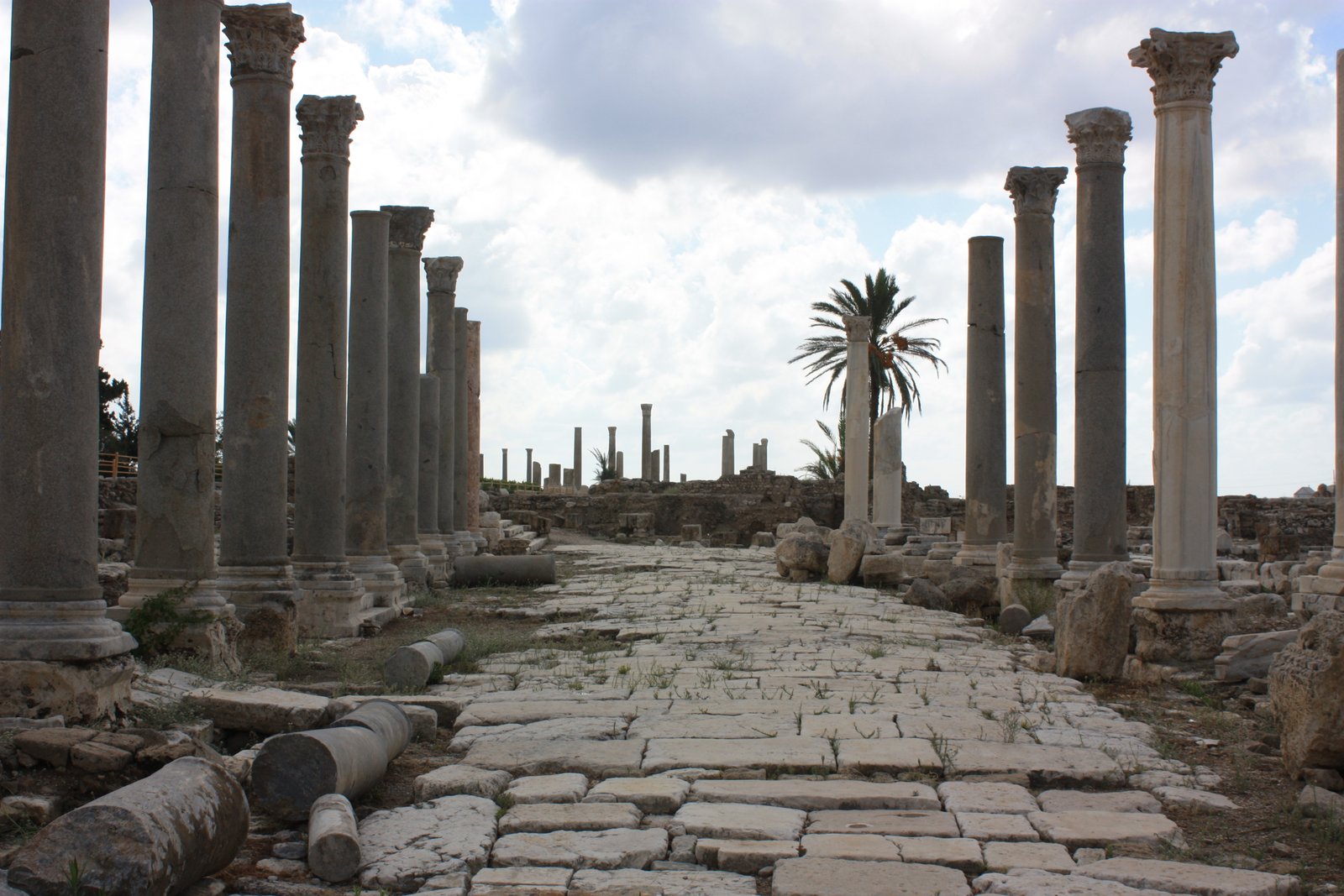
The Roman city built over Phoenician Tyre left two remarkable zones. The al-Bass site, north of the modern city, contains the longest known Roman hippodrome — 480 metres end to end — its tiered stone seating banks still in place along both straights. A triumphal arch marks the entrance. The second zone, closer to the sea, preserves a colonnaded avenue whose pavement still carries mosaic geometric patterns, the tesserae worn smooth by foot traffic over centuries. Tombs line both sides of the avenue, sarcophagi resting in situ.
The site sits inside a working city, which gives it a different character from Baalbek or Anjar. Local fishermen work the harbour within sight of the archaeological zones. The Mediterranean light in the afternoon, flat and white off the water, lands differently on Roman stone here than anywhere further inland.
Getting there: Minibuses from Cola intersection in Beirut, approximately 1 hour 15 minutes. Allow: 3–4 hours for both archaeological zones. Best for: Visitors interested in Phoenician history, Roman urban archaeology, and combining heritage with the Lebanese coast.
Frequently Asked Questions
How many UNESCO World Heritage Sites are near Beirut?
Four UNESCO World Heritage Sites lie within two hours of central Beirut: Byblos (inscribed 1984), Anjar (1984), Baalbek (1984), and Tyre (1984). Lebanon has six World Heritage Sites in total; the other two — Qadisha Valley with the Forest of the Cedars of God (1998) and the Rachid Karami International Fair in Tripoli (2023) — are further north and require more than two hours from Beirut.
How do you get from Beirut to Baalbek?
Buses and service taxis for Baalbek depart from the Cola intersection in Beirut, roughly 1.5 hours northeast in the Bekaa Valley. The journey costs a few dollars by shared service taxi. Most visitors allow a half-day for the site itself; combining with Anjar on the same day is feasible — stop in Anjar on the way and continue east to Baalbek. A private car or organised day tour gives more flexibility for timing.
Can you visit Byblos and Baalbek on the same day?
Combining both in a single day is possible but leaves little time to absorb either site. Byblos is 45 minutes north of Beirut; Baalbek is 1.5 hours northeast. The routes diverge at Beirut, so the journey between the two sites takes roughly 2 hours. A more rewarding plan is to combine Byblos with a morning in Beirut, then spend a second day on Baalbek and Anjar, which share the Bekaa Valley corridor. Spring (April–May) and autumn (September–October) offer the best conditions: the Bekaa plateau is hot in July and August, and Baalbek’s open complex has almost no shade.
What is the significance of Byblos in the history of writing?
The Phoenicians who lived at Byblos around 1050 BCE used one of the earliest consonantal alphabets — a system of 22 letters representing consonant sounds only, with readers supplying vowels from context. This Phoenician script was adapted by Greek traders in the 9th to 8th centuries BCE, who added vowel signs to create the first true alphabet. All European writing systems, including Latin, Cyrillic, and Greek, trace back through this adaptation. The word “Bible” itself derives from Byblos, through the Greek word for papyrus scroll — Byblos was a major exporting port for Egyptian papyrus throughout antiquity.



.jpg)
.jpg)