
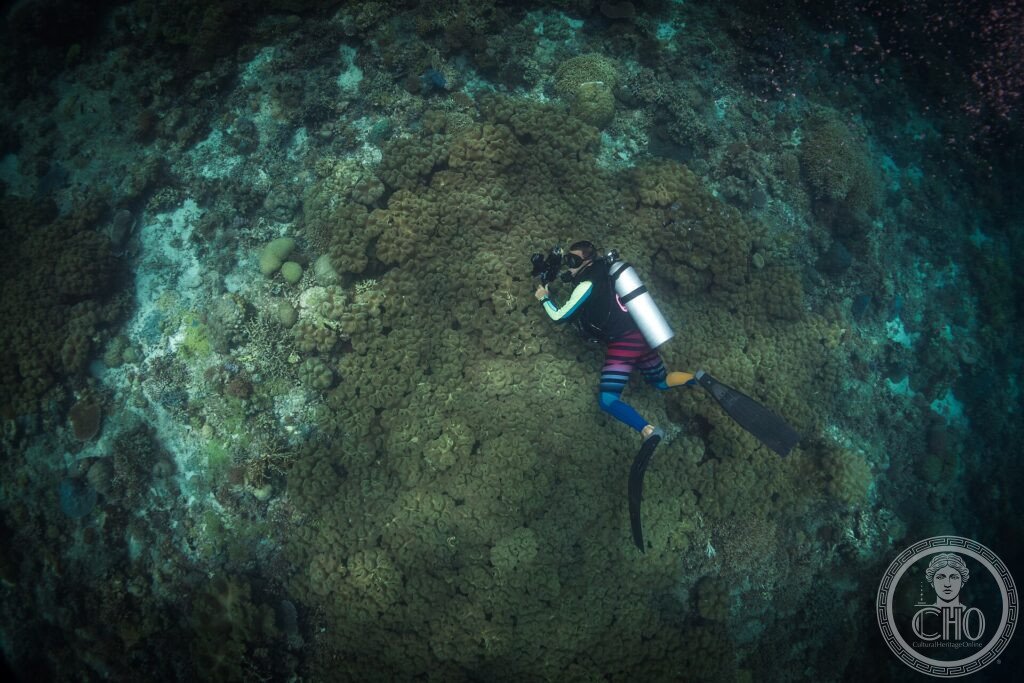
Far from any coast, in the middle of the Sulu Sea, two coral atolls rise out of the blue: Tubbataha. Almost uninhabited and protected, its reefs are among the most pristine and the richest in Asia, with walls that fall away into the deep, swarming with fish, sharks, turtles and manta rays. A rare marine sanctuary, almost untouched.
At a glance
Tubbataha Reefs Natural Park, in the middle of the Sulu Sea in the Philippines, far from any coast, protects two coral atolls and a third reef rising from the deep ocean. Almost uninhabited and strictly protected, its reefs are among the most pristine and biodiverse in Asia, with sheer coral walls plunging into the blue, vast numbers of fish, and abundant sharks, sea turtles, manta rays and seabirds. This near-untouched marine sanctuary was inscribed by UNESCO in 1993.
Key facts
- UNESCO: World Heritage since 1993 (Tubbataha Reefs Natural Park)
- Two atolls: coral atolls rising from the deep Sulu Sea
- Pristine reefs: among the most untouched in Asia
- Coral walls: sheer reef faces dropping into deep water
- Rich marine life: sharks, turtles, manta rays and seabirds
- Remote sanctuary: far from any coast, strictly protected
History
The reefs of Tubbataha grew on undersea ridges far out in the Sulu Sea, their isolation sparing them from the pressures that have damaged reefs nearer to land. Used only seasonally by fishers, the atolls and their birdlife and marine life remained extraordinarily rich.
Recognising their value, the Philippines made Tubbataha a national marine park and, with the support of local communities and rangers stationed on the reef, enforced strict protection against destructive fishing. Inscribed by UNESCO in 1993 and later enlarged, it is one of the best-protected and most pristine coral reef systems in the world, visited only on liveaboard dive trips in a short season.
What you see
Tubbataha is reached only by liveaboard dive boats during a short season: divers descend along sheer coral walls alive with fish, where sharks patrol, sea turtles glide and manta rays pass, amid some of the healthiest coral in the region. Small sand cays host nesting seabirds, and a ranger station guards the reef.
The abundance and health of life on the remote reef walls is the wonder of Tubbataha.
Practical information
- Park: reached only by liveaboard dive boats, in a short season
- Best time: the dive season is roughly mid-March to mid-June
- Time needed: a diving expedition of several days
- Note: a strictly protected marine park; access is regulated
Getting there
Tubbataha Reefs lie in the middle of the Sulu Sea, Philippines, about 150 km south-east of Puerto Princesa on Palawan, the usual departure port for dive boats. GPS: 8.85° N, 119.92° E.
Nearby
- Puerto Princesa — the Palawan city and departure port
- Palawan — the island province to the north-west
- The Sulu Sea — the deep sea around the reefs
Sources
- UNESCO World Heritage Centre — “Tubbataha Reefs Natural Park” (ref. 653)
- Tubbataha Management Office (Philippines) — official body
- Encyclopaedia Britannica — Sulu Sea
Find it on the map
See this place and what’s around it →📷 Become a Cultural Heritage Online photographer
Share your photos of places: they stay published under your name as the author. The more they're seen, the more you get noticed — and soon a contest will reward the most appreciated photos.
Log in or sign up free to add a photo