
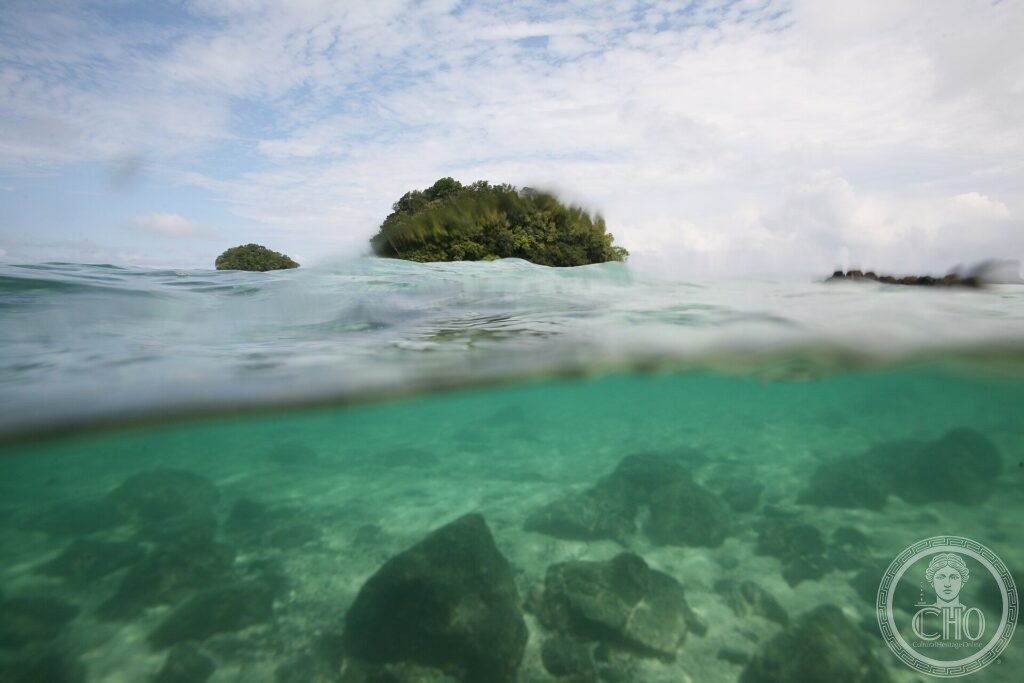
Parco Nazionale di Coiba (sito naturale): la foresta e i coralli salvati da una prigione
Per quasi un secolo, l’isola di Coiba fu una temuta colonia penale del Panama: e proprio per questo la sua foresta tropicale e le sue barriere coralline rimasero intatte, al riparo dallo sviluppo. Oggi è la più grande isola del Pacifico centroamericano e un raro santuario di natura marina e terrestre.
At a glance
Coiba National Park, off the Pacific coast of Panama, centres on Coiba, the largest island in Central American Pacific waters, and a scatter of smaller islands and rich seas around it. For most of the 20th century the island was a penal colony, which — by keeping people away — preserved its tropical forest and its coral reefs almost untouched. Now protected, it shelters endemic wildlife on land and one of the most important coral and marine ecosystems of the eastern Pacific. It was inscribed by UNESCO in 2005.
Key facts
- UNESCO: World Heritage since 2005 (Coiba National Park and its marine zone)
- Largest Pacific island: Coiba is the biggest island in Central America’s Pacific
- Former penal colony: isolation preserved the forest and reefs
- Coral reefs: among the richest in the eastern Pacific
- Endemic wildlife: unique birds and animals on the islands
- Marine life: sharks, whales, dolphins and turtles in its waters
History
Coiba was inhabited in pre-Columbian times, but from 1919 to 2004 it served as Panama’s penal colony, a feared prison island. The presence of the prison, and the fear it inspired, kept the rest of the island and its waters off-limits to logging, fishing and development, so that when the colony finally closed, Coiba’s rainforest and reefs remained in near-pristine condition — an accidental nature reserve.
Recognising this rare survival, Panama protected the islands and surrounding sea as a national park, and they were inscribed by UNESCO in 2005. The park is now a refuge for species lost elsewhere and a living laboratory for studying tropical Pacific nature.
What you see
The park is explored by boat and on dives and snorkels: clear waters over coral reefs alive with fish, sharks and rays, forested islands ringed by white beaches, and the chance to see whales, dolphins and turtles. On Coiba itself, trails lead through rainforest, and the ruins of the old penal colony can still be seen.
The contrast of a dark prison past with a brilliant living sea and forest gives Coiba its remarkable character.
Practical information
- Park: reached by boat; diving, snorkelling and forest walks
- Best time: the drier months (December–April)
- Time needed: a day trip or longer
- Note: access is regulated; go with authorised operators
Getting there
Coiba National Park is off the Pacific coast of the Veraguas province of Panama, reached by boat from Santa Catalina, about 4 hours west of Panama City by road and then by sea. GPS: 7.45° N, 81.75° W.
Nearby
- Santa Catalina — the mainland village and departure point
- Gulf of Chiriquí — the rich Pacific waters of western Panama
- Panama City — the capital, to the east
Sources
- UNESCO World Heritage Centre — “Coiba National Park and its Special Zone of Marine Protection” (ref. 1138)
- Ministerio de Ambiente (Panama) — official body
- Encyclopaedia Britannica — Panama
Find it on the map
See this place and what’s around it →📷 Diventa un fotografo di Cultural Heritage Online
Condividi le tue foto dei luoghi: restano pubblicate con la tua firma come autore. Più vengono viste, più ti fai conoscere — e presto un concorso premierà le foto più apprezzate.
Accedi o registrati gratis per aggiungere una foto