
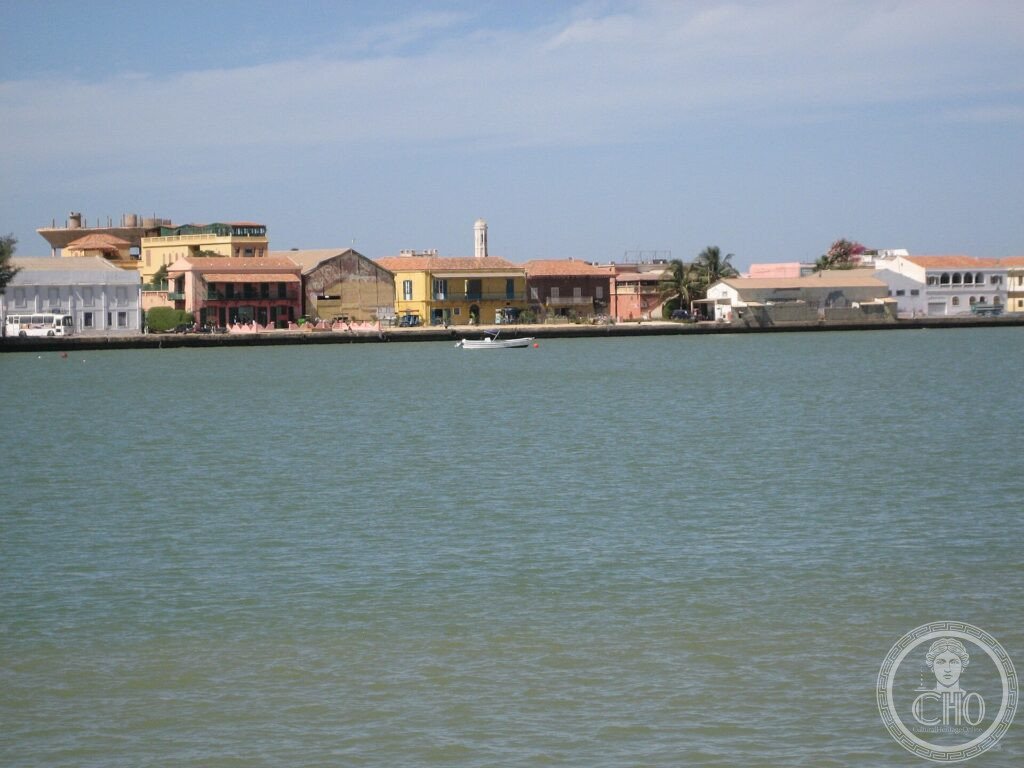
On a narrow island at the mouth of the Senegal River, the French founded their first West African settlement in the seventeenth century. Saint-Louis became a capital and a crossroads of trade and cultures, with its regular grid, low houses with iron balconies, and the two bridges linking it to the mainland and the ocean.
At a glance
Saint-Louis, on a narrow island at the mouth of the Senegal river, was founded by the French in the 17th century as their first settlement in West Africa, and became the capital of Senegal and of French West Africa. Laid out on a regular grid, the island town developed a distinctive colonial architecture of low houses with wooden and ironwork balconies, and a culture mixing European and African influences. Linked to the mainland and a sandspit by bridges, its historic island was inscribed by UNESCO in 2000.
Key facts
- UNESCO: World Heritage since 2000 (Island of Saint-Louis)
- Founded: 17th century, the first French settlement in West Africa
- Capital: long the capital of Senegal and French West Africa
- Grid town: a regular plan on the river island
- Colonial architecture: low houses with balconies of wood and iron
- Faidherbe Bridge: the metal bridge linking island and mainland
History
French traders established a post on the island in the 1650s, the beginning of a settlement that grew into the hub of French activity on the West African coast, trading in gum, gold and, in earlier centuries, enslaved people. Saint-Louis became the capital of the colony of Senegal and, for a time, of all French West Africa, with a mixed society of French, métis and African inhabitants and a lively cultural life.
The island filled with a regular grid of streets and houses in a colonial style adapted to the climate, with shaded balconies and inner courtyards. When the capital moved to Dakar in the 20th century the town declined but kept its historic fabric, a record of urban colonial Africa and of the meeting of cultures at the river mouth.
What you see
The island is a grid of streets lined with faded colonial houses, their wooden and wrought-iron balconies overhanging the pavements, churches, the governor’s palace and old trading houses. The long metal Faidherbe Bridge connects it to the mainland, while another bridge leads to the fishing quarter on the ocean sandspit.
Colour, river light and the bustle of the fishing harbour give the historic island its atmosphere.
Practical information
- Island: walkable; a horse-cart ride is a traditional way to tour
- Time needed: a day
- Note: a noted jazz festival is held here
- Setting: at the mouth of the Senegal river in northern Senegal
Getting there
Saint-Louis is in northern Senegal, about 260 km north of Dakar, near the border with Mauritania. It is reached by road from Dakar. GPS: 16.0264° N, 16.5042° W.
Nearby
- Djoudj — a great bird sanctuary in the river delta nearby
- Langue de Barbarie — the sandspit and its fishing village
- Dakar — the Senegalese capital, to the south
Sources
- UNESCO World Heritage Centre — “Island of Saint-Louis” (ref. 956)
- Senegalese Ministry of Culture — official body
- Encyclopaedia Britannica — Saint-Louis, Senegal
Find it on the map
See this place and what’s around it →📷 Become a Cultural Heritage Online photographer
Share your photos of places: they stay published under your name as the author. The more they're seen, the more you get noticed — and soon a contest will reward the most appreciated photos.
Log in or sign up free to add a photo