
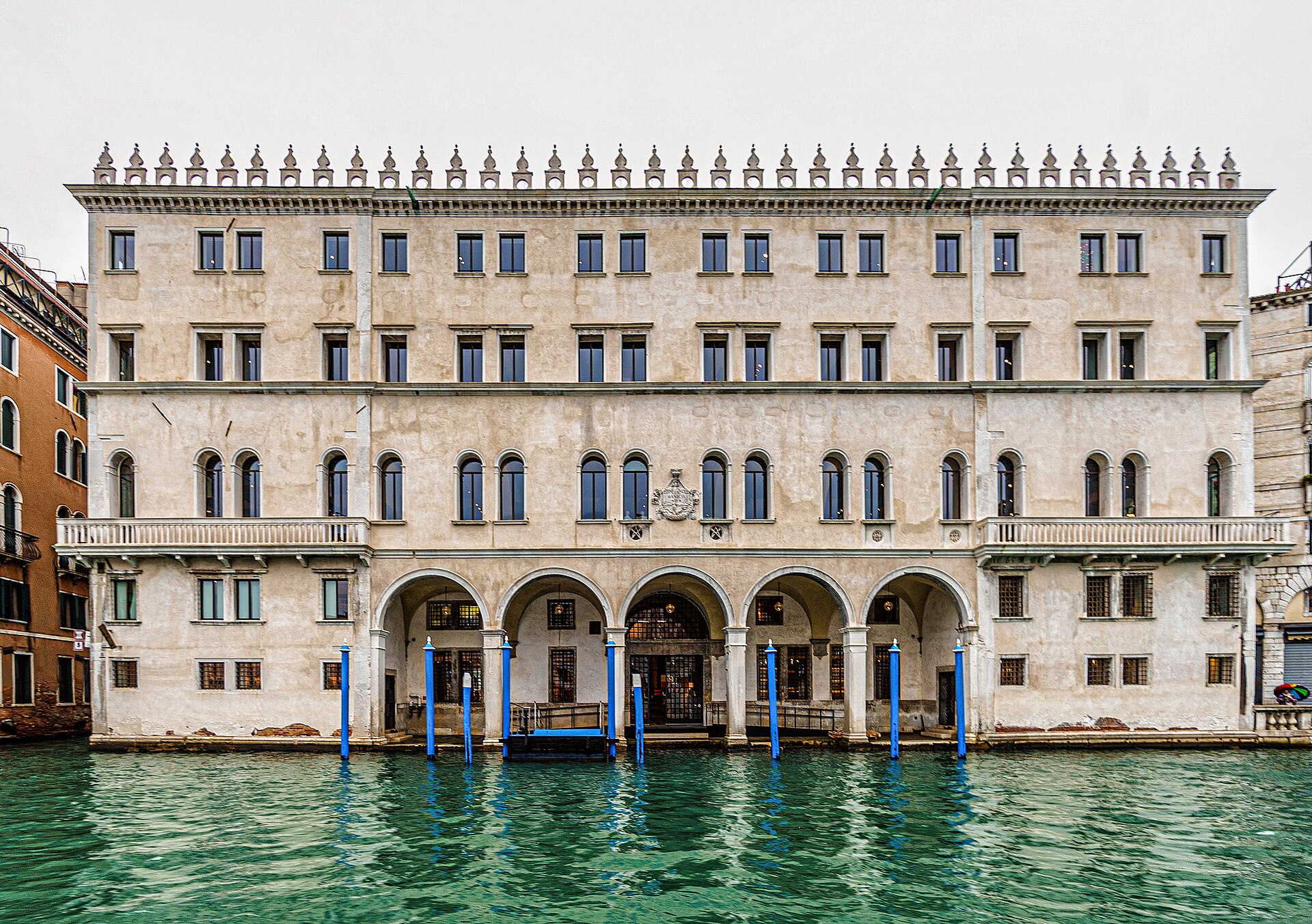
For eight centuries the building at the foot of the Rialto bridge has been a warehouse, a customs house, a post office and a department store. Since April 2025 it is none of them: the doors are shut and the roof terrace has not reopened.
At a glance
The Fondaco dei Tedeschi stands on the Grand Canal in the sestiere of San Marco, immediately beside the Rialto bridge. It was built in 1228 as the regulated warehouse and lodging house of the German merchants trading in Venice: a fondaco was both a store and a residence, and the Republic kept its foreign traders in one place where their goods could be counted and taxed. Burned down in 1505 and rebuilt within three years, it has been given a new use in almost every century since. The most recent one lasted seven years and ended on 30 April 2025.
Key facts
- Built: 1228, beside the Rialto bridge, as the warehouse and lodging of the German merchants
- Burned: in the night of 27–28 January 1505
- Rebuilt: 1505–1508, to a design by Girolamo Tedesco, larger than before
- Frescoed: around 1508 by Giorgione and his young pupil Titian — only fragments survive
- Then: customs house under Napoleon from 1806; headquarters of the Italian post office for about seventy years in the twentieth century
- Sold: in 2008 to Edizione Property, of the Benetton family, for a reported fifty-three to fifty-five million euros
- Converted: 2014–2016 by OMA, under Rem Koolhaas; opened 1 October 2016 as a luxury department store
- Closed: to the public on 30 April 2025, at six in the evening
History
A fondaco — from the Arabic funduq, the word used for the lodgings given to European merchants in eastern ports — was a building where foreign traders lived, stored and sold under supervision. The Venetian Republic built one for the Germans in 1228 and put it where the money was, at the foot of the Rialto. Merchants from Nuremberg, Judenburg and Augsburg unloaded and warehoused here; so did the German-speaking communities bound to the Serenissima by treaty, among them the men of the Sette Comuni plateau. By the end of the fourteenth century the Fugger, the great merchant bankers of Augsburg, kept their Venetian office in the building. The first Fondaco can still be seen, in the background of Carpaccio’s Miracle of the Relic of the Cross at the Rialto Bridge.
On the night of 27–28 January 1505 it burned down. In less than five months the Senate had resolved to rebuild it, to a design by Girolamo Tedesco, and the new building — larger than the one it replaced — went up between 1505 and 1508. The decision taken about its appearance was unusual and deliberate: no marble facing, no carved tracery, none of the ornament the other palaces on the canal were competing with. The flat fields of wall between the windows were to be painted instead, and for that the Republic called Giorgione, who brought with him his young pupil Titian.
What followed is one of the best-known stories in Venetian painting. Writing in 1557, Ludovico Dolce reported that Titian’s Justice, painted on the side facing the calle, was so fine that people took it for the work of the master — which set the two men against each other. A solemn mass marked the end of the works in 1508, and a dispute over the payment due to Giorgione suggests the outside was finished by then too.
After the fall of the Republic the building went on working. Napoleon’s administration turned it into a customs house in 1806. In the twentieth century it became the headquarters of the Italian post office and stayed so for some seventy years, long enough that generations of Venetians knew it simply as the post office and not by its medieval name. The post office left in 2011.
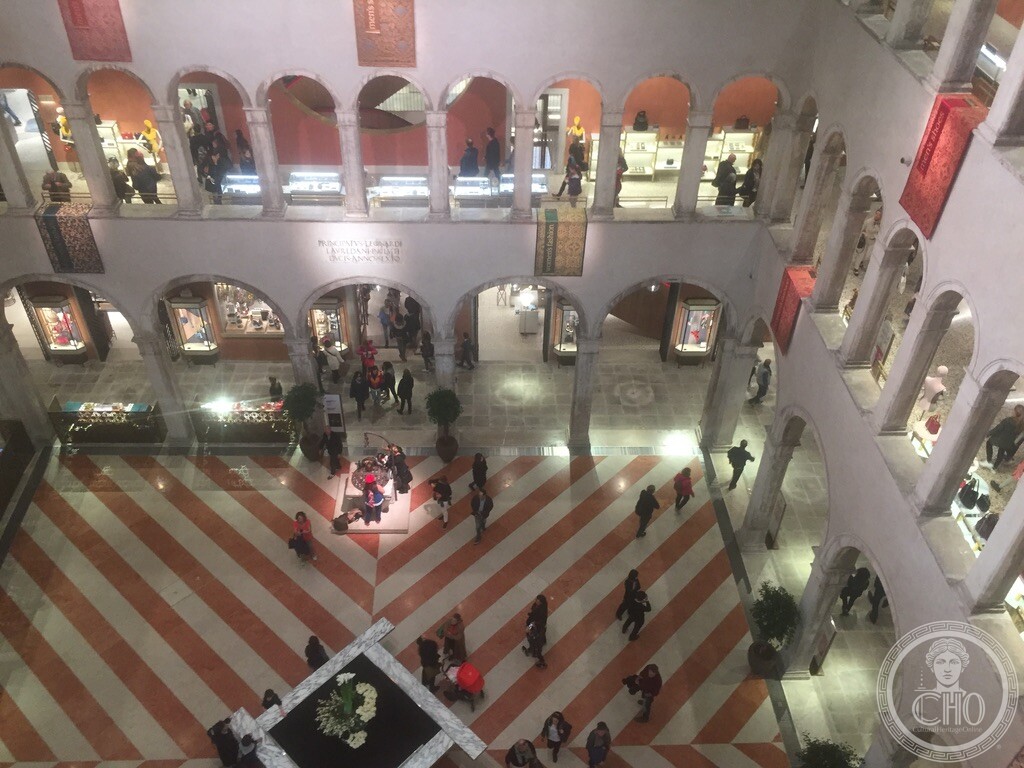
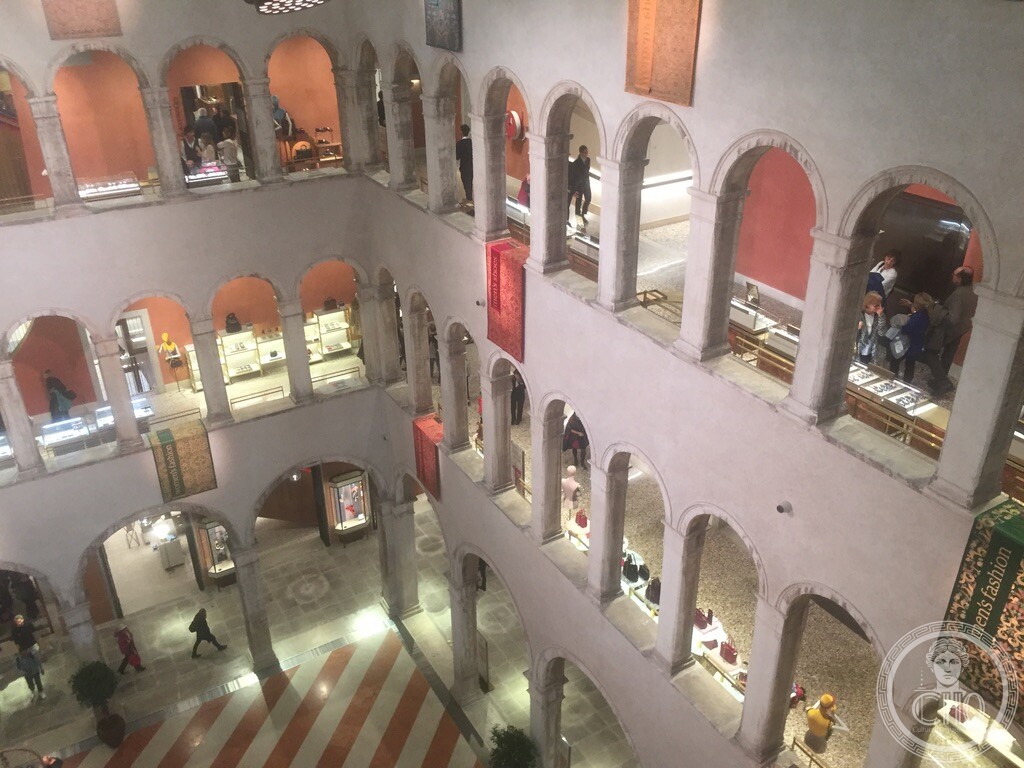
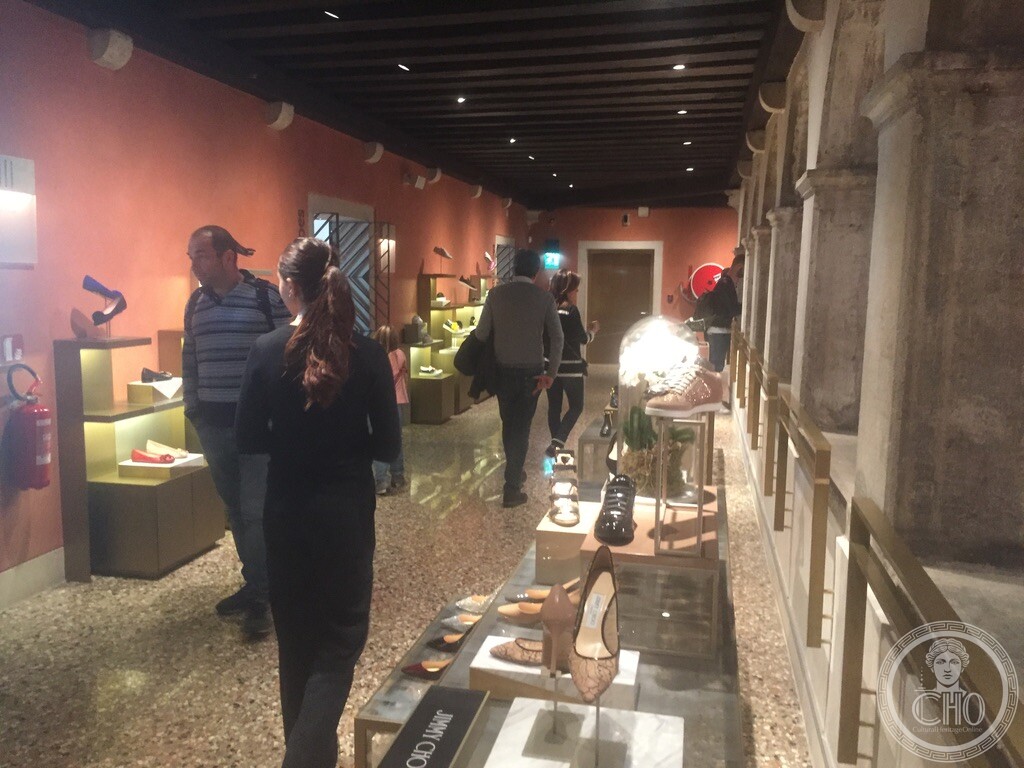
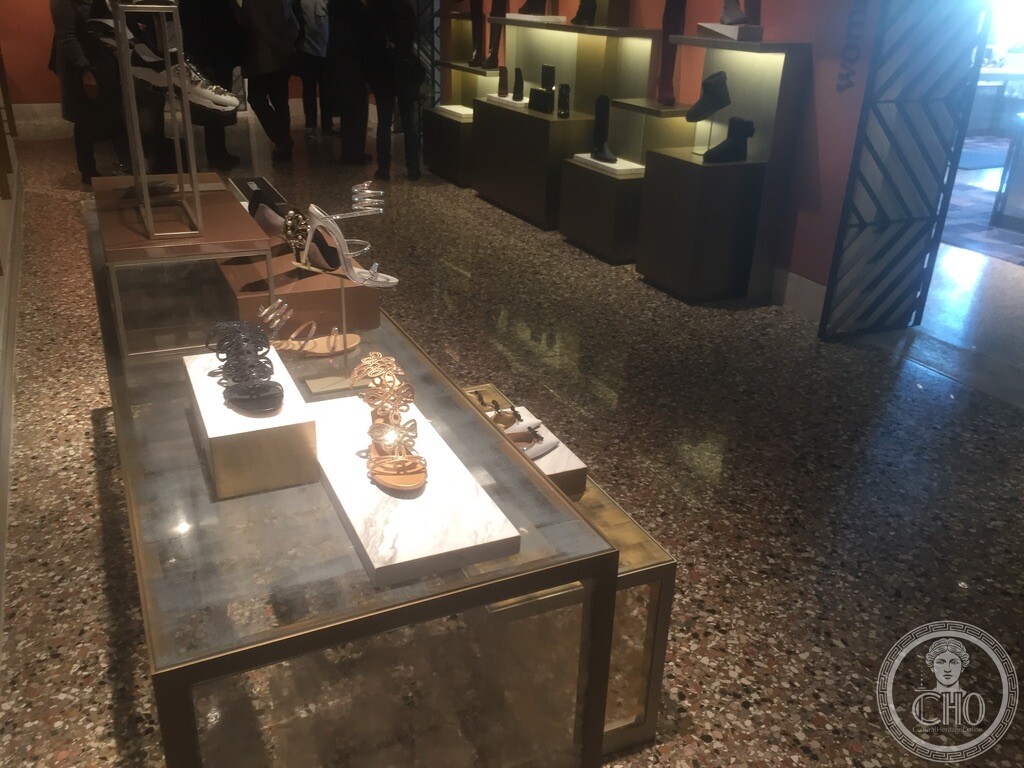
In 2008 the Fondaco was sold to Edizione Property, the property company of the Benetton family, for a figure reported at between fifty-three and fifty-five million euros. The plan to convert it into a shopping centre was contested in the city — public meetings, petitions, articles, and the opposition of the Venetian chapter of Italia Nostra. The conversion went ahead between 2014 and 2016 under the Dutch practice OMA, directed by Rem Koolhaas, and on 1 October 2016 the building opened as T Fondaco dei Tedeschi, a luxury department store run by the DFS group of LVMH, with a cultural space and a roof terrace over the Grand Canal.
Closed, and what closed it
In November 2024 DFS announced that it would not renew the lease, which ran to September 2025, and sent out 226 letters of dismissal; counting indirect employment, the figure reported locally was around five hundred people. The company gave as its reason the state of the travel-retail business and the losses of the Venice store, attributed to the fall in visitors from Asia.
The shop closed to the public at six in the evening on 30 April 2025, after seven years. From 1 May the whole building was closed off, and dismantling began. The roof terrace — which had been authorised by way of derogation precisely on condition that public access to it stayed free — has not reopened.
At the time of writing the building is shut and its next use has not been announced. It is worth saying plainly, because it is the point of this page: a building that has been a warehouse, a customs house and a post office is not in difficulty because a shop left it. It is between uses, as it has been four times before. What is new is that this is the first time in eight hundred years that nobody has said what the next use will be.
What you see
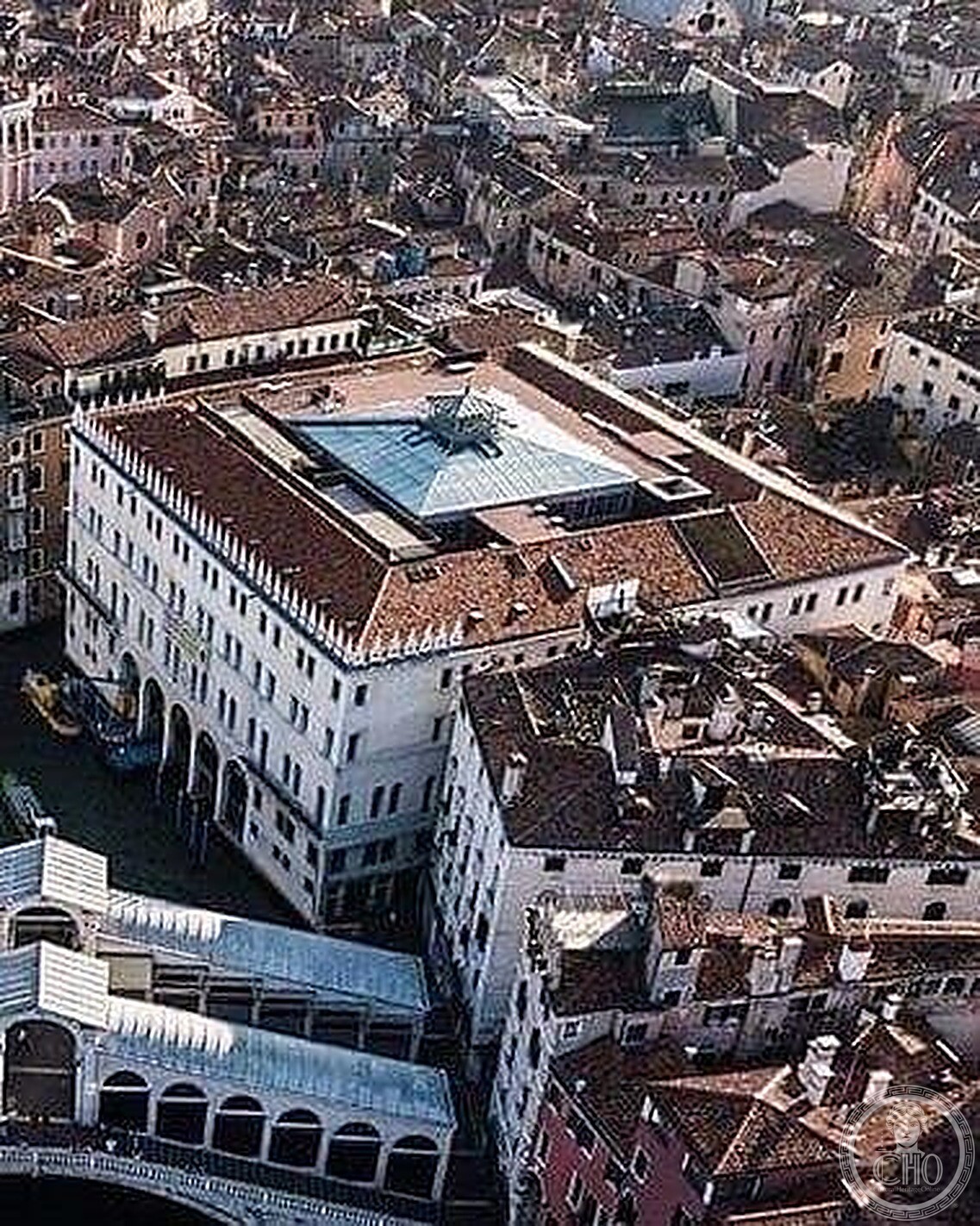
From the water the Fondaco is a square block on three levels, and it is almost aggressively plain. Five great round arches open at canal level into a portico: this is where the boats came in and the bales were landed. Above them runs a long row of round-arched windows, and above those two floors of small square openings, set symmetrically over the arcade. The roofline is crenellated, and the merlons give the building its outline against the sky from halfway down the Grand Canal. In the middle of the first floor, above the loggia, there is a carved coat of arms; at either end a small balcony.
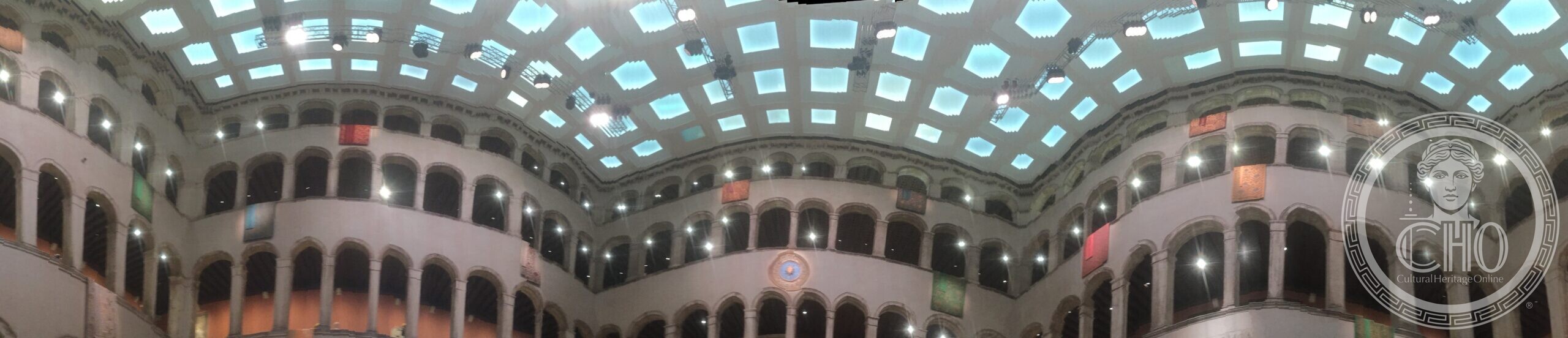
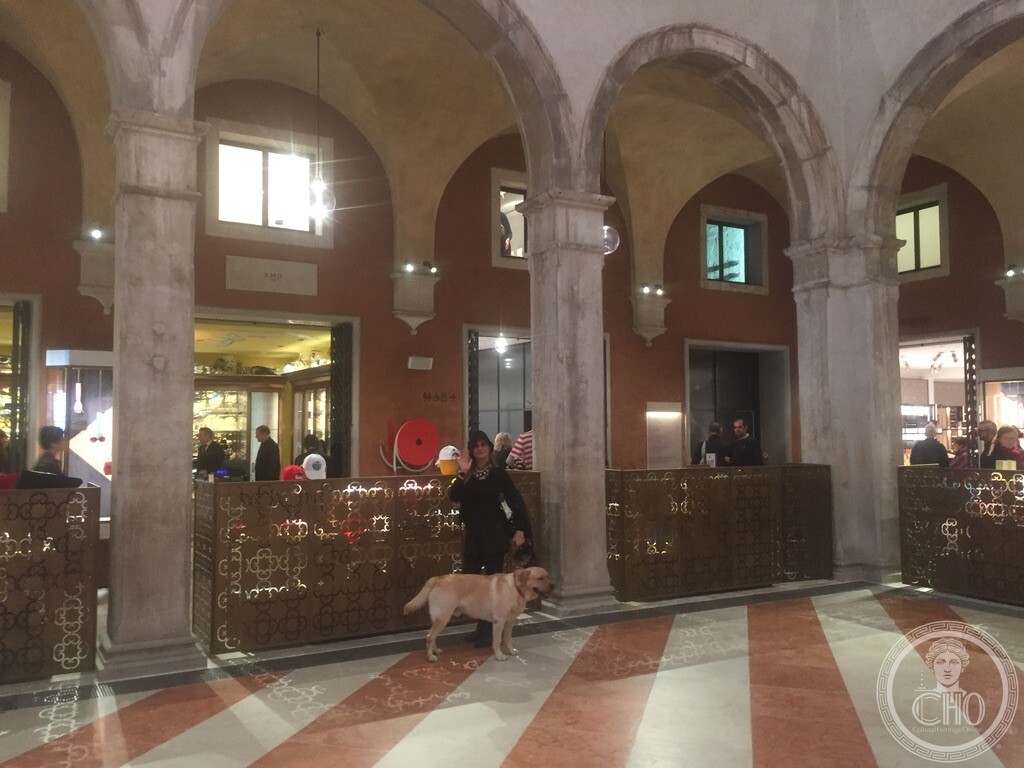
Inside, the three ranges are set around a square courtyard with the old well still in it, now roofed over in glass and steel. The detail worth looking for, if you are ever let in again, is on the stone of the columns: the merchants cut their own marks into them, to say which bay held whose goods. They are still there — the oldest surviving record of what the building was for.
The frescoes of Giorgione and Titian
Almost nothing is left of them in place. Salt, damp and lagoon air took the painted facades apart over four centuries, and from 1937 what remained was detached from the wall and moved indoors. The surviving fragments are divided between the Galleria Giorgio Franchetti at the Ca’ d’Oro and the Gallerie dell’Accademia.
Of Giorgione there remain a nude figure standing in a niche and fragments of other female figures. Of Titian there remain the Compagno della Calza, the Judith or Justice, a Battle of giants and monsters, an Allegory, and a Putto fighting a dragon. Inside the building there were once paintings by Titian, Veronese and Tintoretto; of those, practically nothing has been traced.
Gallery
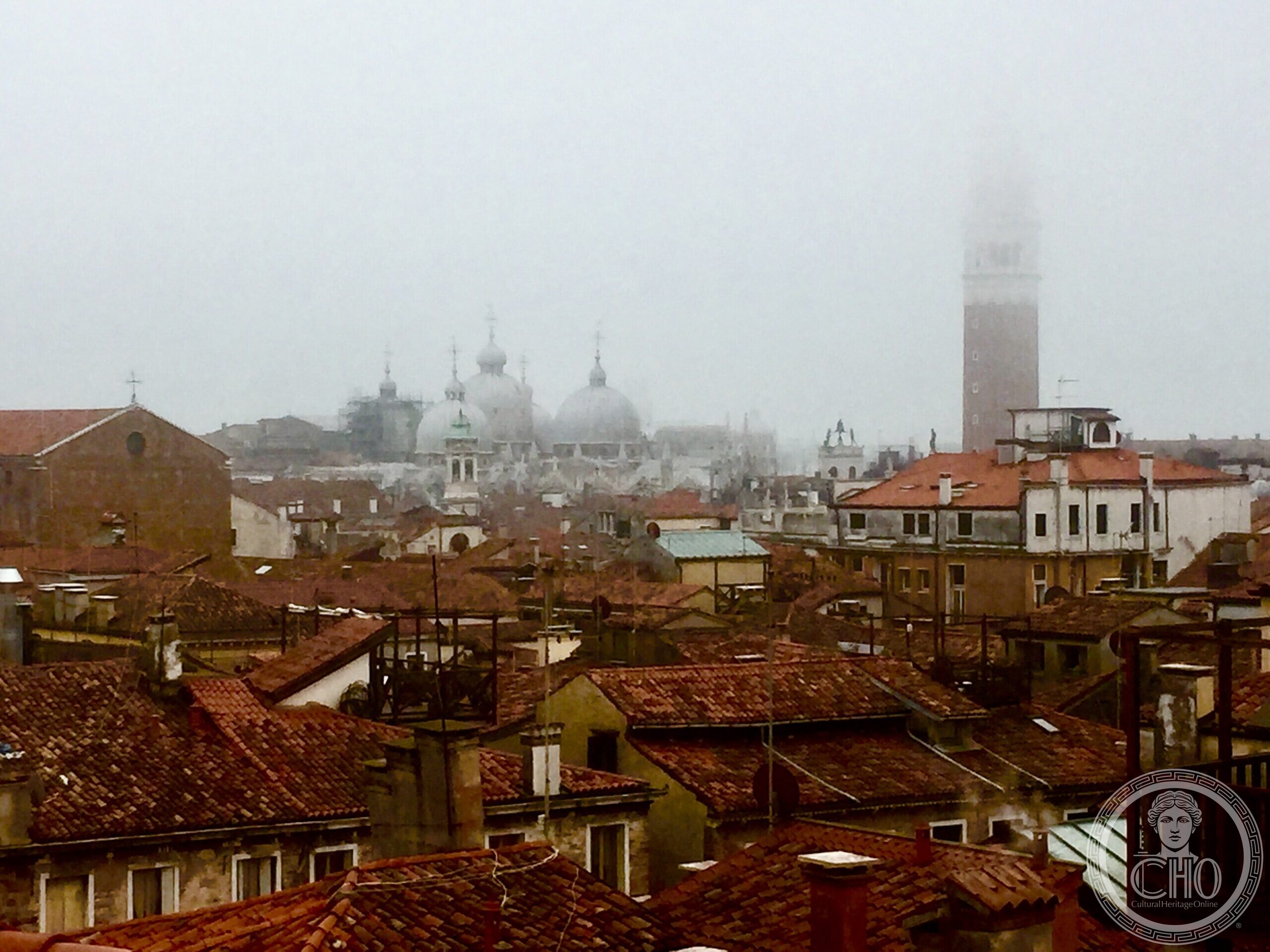
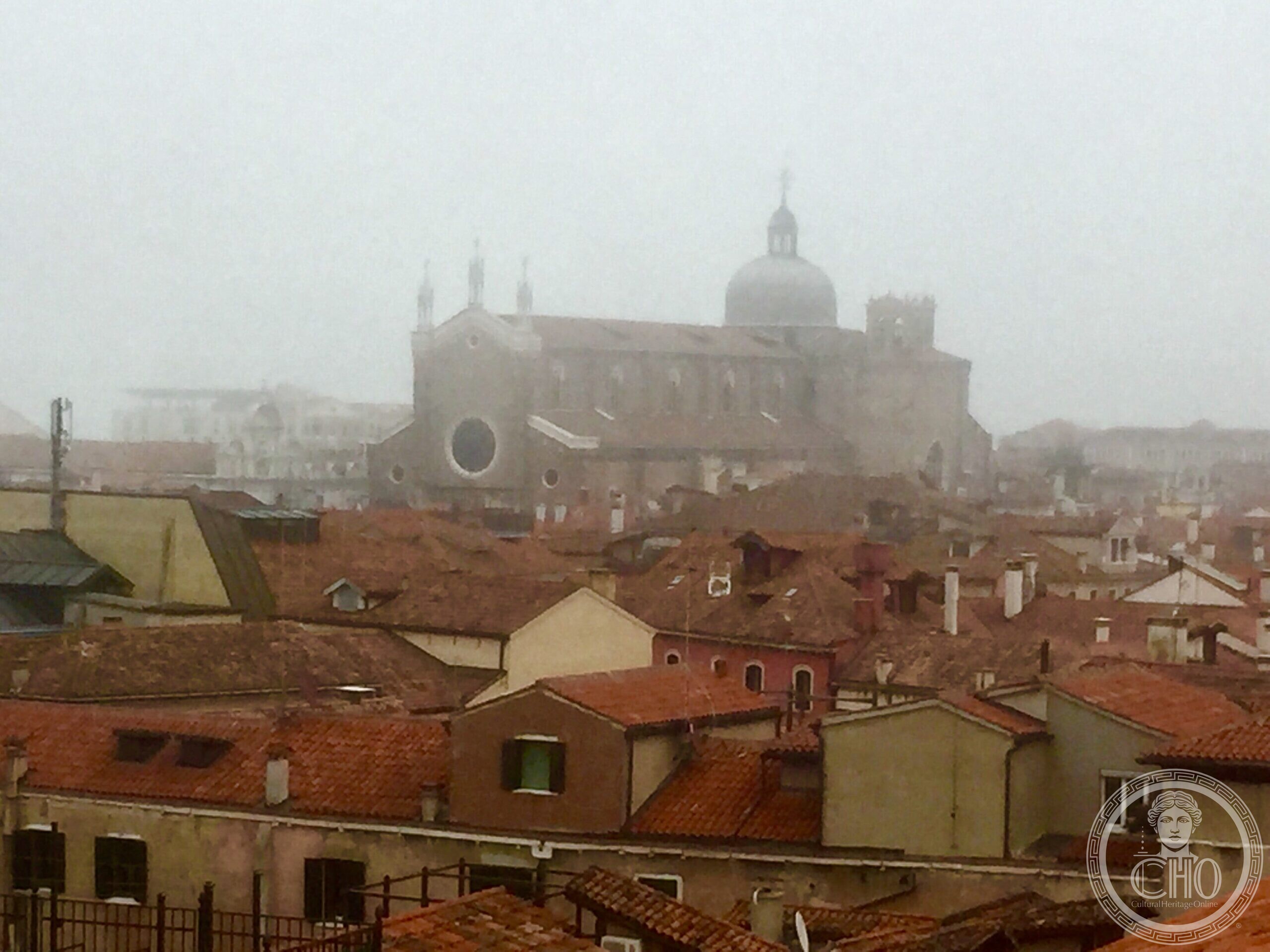
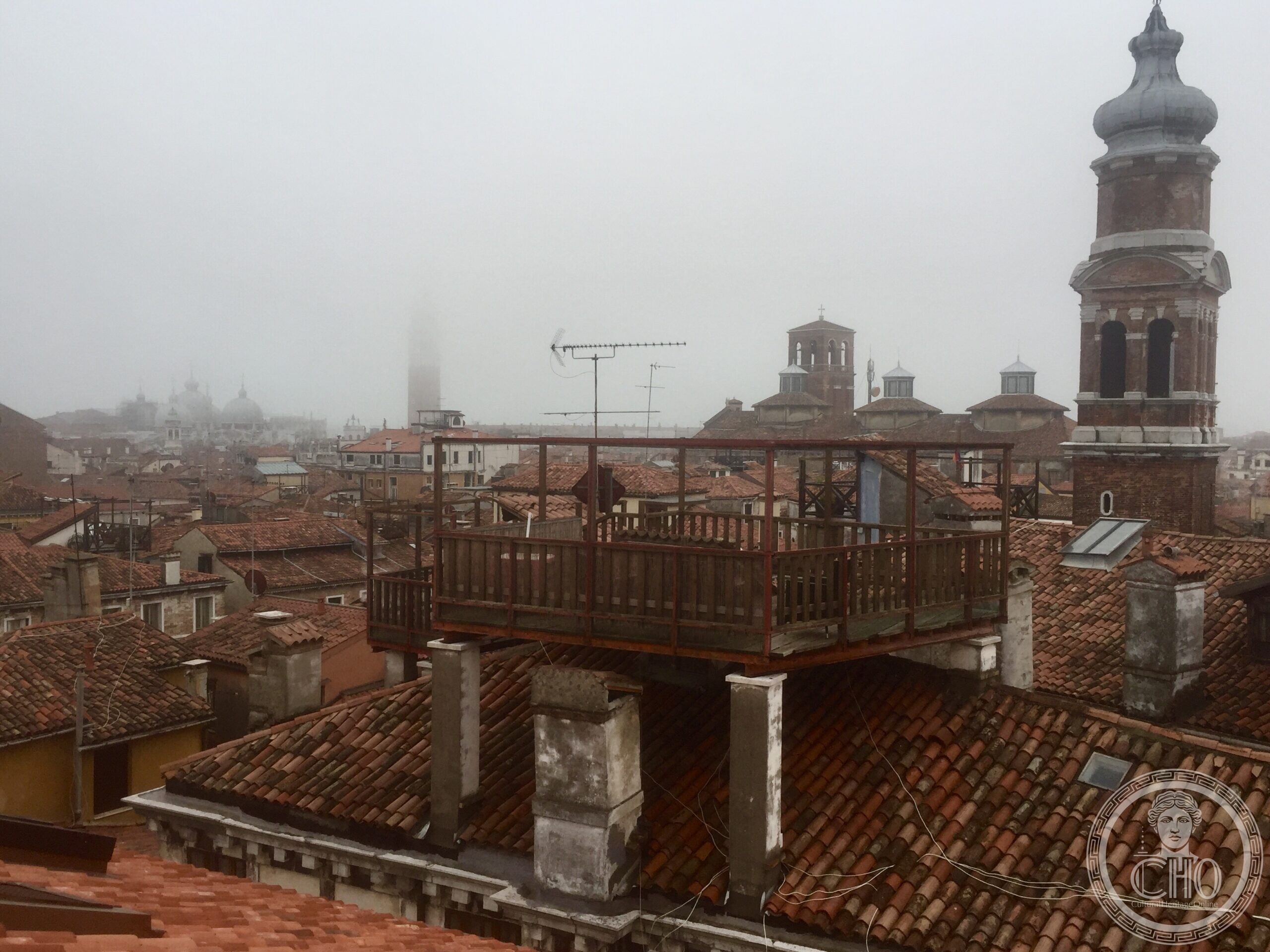
Photograph by Luigi De Marchi.
See the place
Practical information
- The building is closed to the public. It has been since 30 April 2025, and no reopening date has been announced.
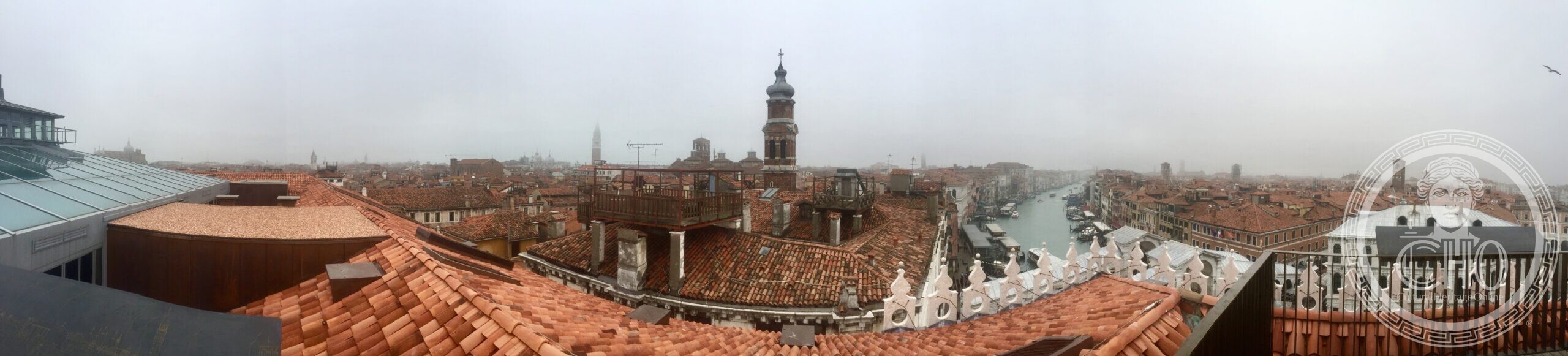
- The roof terrace is closed too. Until April 2025 it could be booked free of charge; it has not reopened, and the booking system no longer applies. Guides and listings that still describe it as a viewpoint are out of date.
- The outside can be seen at any time, and is best seen from the water or from the far bank of the Grand Canal, where the whole front is visible at once.
- The detached frescoes can be seen: at the Galleria Franchetti in the Ca’ d’Oro and at the Gallerie dell’Accademia, under their own opening hours.
Getting there
The Fondaco stands at the foot of the Rialto bridge on the San Marco side, two minutes on foot from the bridge and from the Rialto vaporetto stop. The best view of the front is from the Riva del Vin on the opposite bank, or from any boat on the Grand Canal.
Nearby
- The Rialto bridge, immediately alongside.
- The Bridge of Sighs and Piazza San Marco, a quarter of an hour on foot to the south.
- Ponte del Pagan and the bridges of the Rio Novo, the other direction, towards Piazzale Roma.
Sources
- Italian Wikipedia, Fondaco dei Tedeschi — the thirteenth-century foundation and the merchants of Nuremberg, Judenburg and Augsburg; the Fugger office; the fire of 27–28 January 1505 and the Senate’s decision to rebuild to Girolamo Tedesco’s design; the choice of fresco over marble; Dolce’s report of 1557 on Titian’s Justice; the mass of 1508; the description of the fabric, the courtyard and the well; the detachment of the frescoes from 1937 and the list of the surviving fragments; the OMA conversion and the opening of 1 October 2016.
- English Wikipedia, Fondaco dei Tedeschi — the foundation of 1228, the five-bay loggia, the appearance of the first building in Carpaccio’s Miracle of the Relic of the Cross at the Rialto Bridge, the seventy years as the headquarters of the Italian post office, the sale of 2008 to Edizione Property and the protests that followed, and the construction dates of the conversion.
- Italian press reporting of November 2024 and April–May 2025 (Pambianco, FashionNetwork, VeneziaToday, Il Gazzettino, Corriere dell’Economia) — the decision of DFS not to renew the lease, the 226 letters of dismissal, the closing to the public at six in the evening on 30 April 2025 after seven years, the closing of the whole building from 1 May, and the roof terrace not reopening.
- Wikimedia Commons — the photograph, by Freddo213, CC BY-SA 4.0.
Find it on the map
See this place and what’s around it →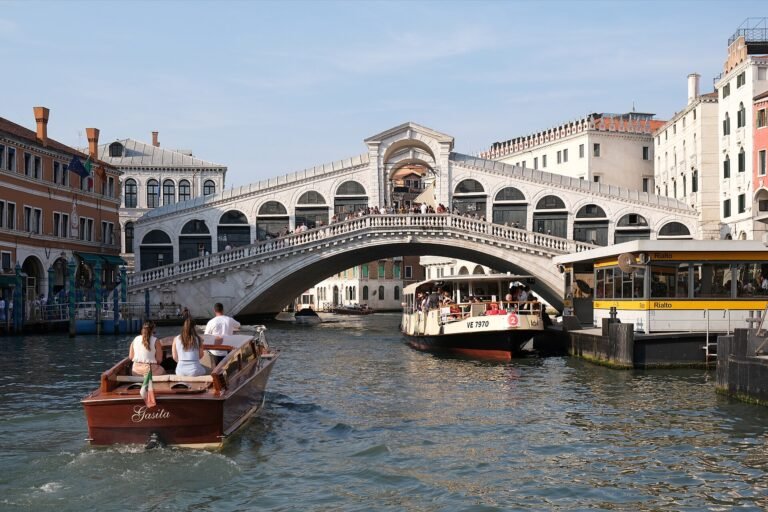

Historical events at this place (1)
📷 Become a Cultural Heritage Online photographer
Share your photos of places: they stay published under your name as the author. The more they're seen, the more you get noticed — and soon a contest will reward the most appreciated photos.
Log in or sign up free to add a photoIs this page about you?
This page is read by travellers and heritage enthusiasts who find it on Google. Tell us how you are connected to this place and we will take it from there.