
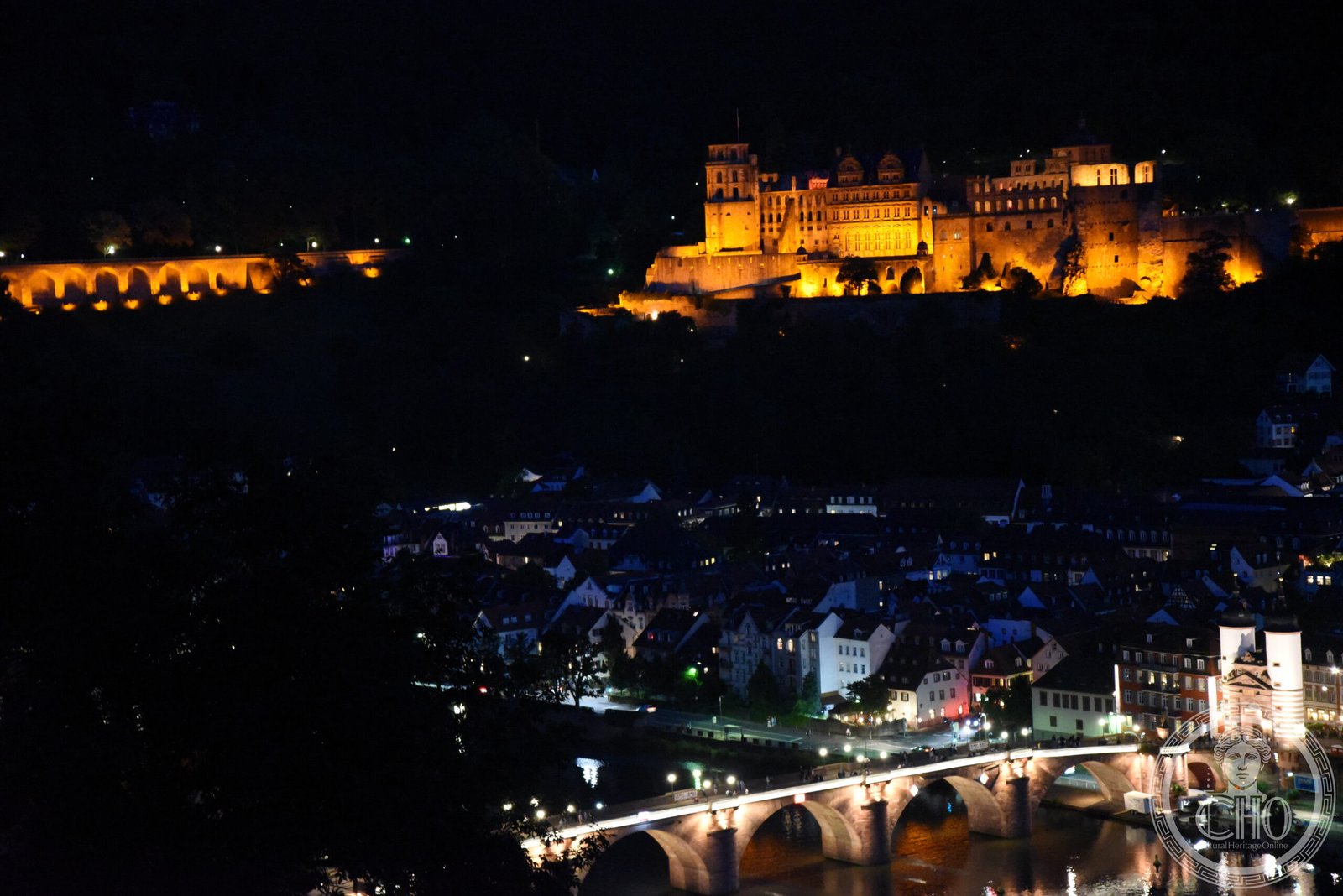
Heidelberg Castle
Heidelberg Castle is a celebrated ruined Palatine Electoral palace looming above Heidelberg on the Königstuhl hillside in Baden-Württemberg, Germany — one of the most iconic Romantic ruins in Europe and a defining image of 19th-century Romanticism.
History
Built from the 13th century onwards as the seat of the Counts Palatine of the Rhine, Heidelberg Castle was expanded into one of the finest Renaissance complexes north of the Alps by the late 16th century. French troops destroyed much of the castle in 1689 and again in 1693 during the Nine Years’ War, leaving the dramatic ruins visible today. The partially destroyed Ottheinrichsbau wing (1556–1559) represents one of the most important Renaissance facades in Germany. Romantic-era writers and painters — including Goethe, Turner, and Victor Hugo — made the castle famous across Europe, embedding it in the cultural imagination of the 19th century.
What to See
The Great Vat (Großes Fass) in the cellar holds 221,726 litres of wine — the largest wine barrel ever built — with a dancing platform on top. The terrace garden (Hortus Palatinus) offers panoramic views across the Neckar valley and Heidelberg’s old town. The Friedrich Wing interiors house the German Pharmacy Museum. The funicular railway (Bergbahn) connects the old town to the castle and continues to the Königstuhl summit.
Getting There
Heidelberg is in Baden-Württemberg, Germany, 80 km south of Frankfurt. Direct trains from Frankfurt Airport take 45 minutes. The castle is accessible by funicular from Kornmarkt in the old town, or on foot via steep stairways.
Find it on the map
See this place and what’s around it →📷 Become a Cultural Heritage Online photographer
Share your photos of places: they stay published under your name as the author. The more they're seen, the more you get noticed — and soon a contest will reward the most appreciated photos.
Log in or sign up free to add a photo