
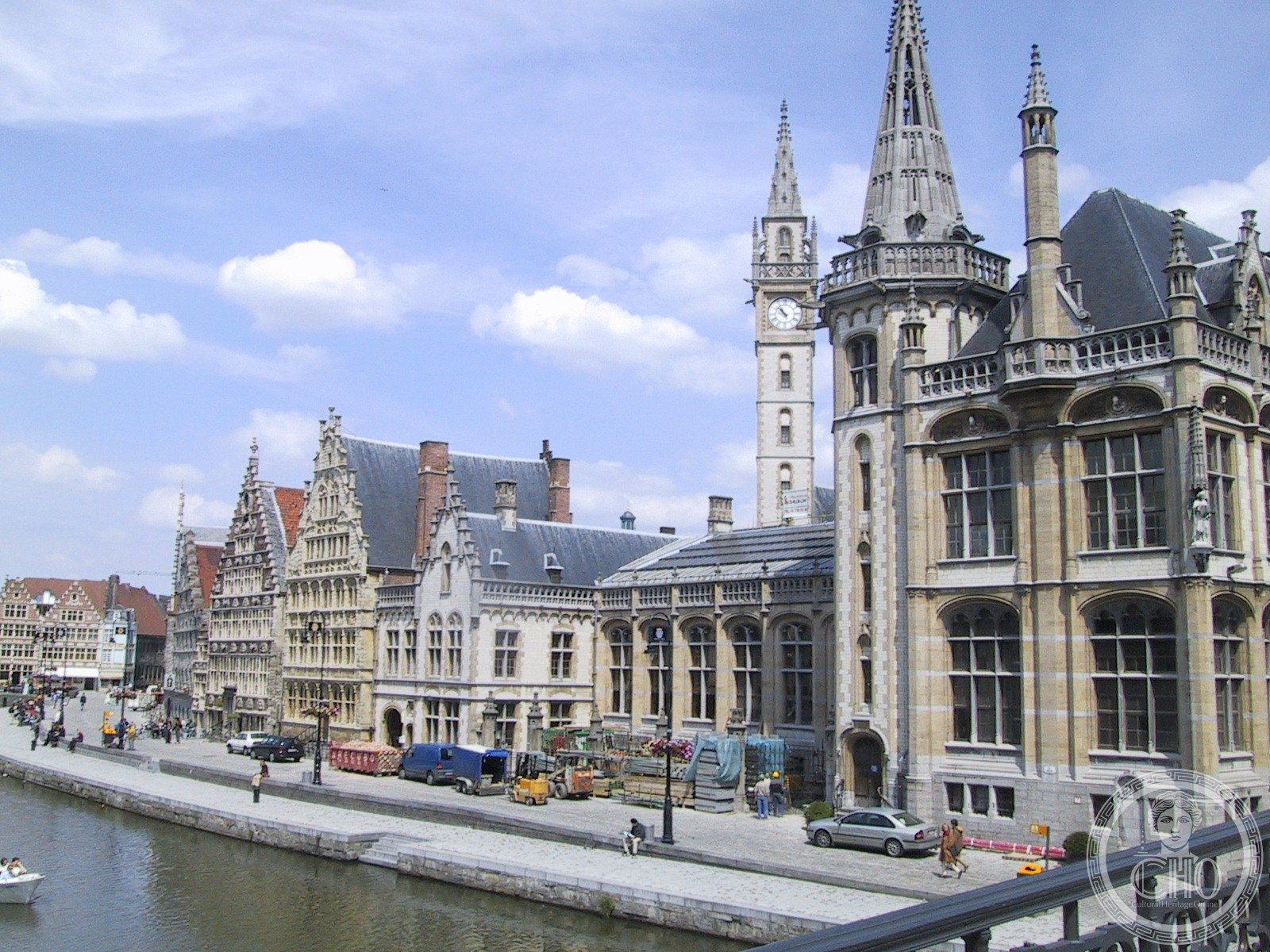
Ghent Historic Centre
Ghent is a Flemish medieval city in Belgium whose historic centre preserves a skyline of three great medieval towers, a network of waterways lined with guild-house facades, and Saint Bavo’s Cathedral, home to one of the most important paintings in Western art.
History
Founded at the confluence of the rivers Leie and Scheldt, Ghent was the largest city north of the Alps in the 13th century and one of the most powerful in medieval Europe, rivalling Paris in population. It served as the principal port for the Flemish cloth trade and was the birthplace of Holy Roman Emperor Charles V in 1500. Its strategic river position made it the largest inland port of medieval Europe. Today Ghent hosts the internationally celebrated Ghent Light Festival every three years, transforming its historic architecture into a canvas for light art.
What to See
Saint Bavo’s Cathedral (Sint-Baafskathedraal) houses the Ghent Altarpiece — Jan and Hubert van Eyck’s 1432 polyptych, considered a cornerstone of Western painting and recently restored to full glory. Gravensteen, the 1180 castle of the Counts of Flanders, stands at the heart of the city. The Graslei and Korenlei waterfronts present a continuous row of medieval and Baroque guild houses reflected in the water. The Vrijdagmarkt (Friday Market) square was the civic heart of medieval Ghent.
Getting There
Ghent (Gent) is in East Flanders, Belgium, 55 km west of Brussels and 30 km east of Bruges. Direct trains from Brussels take 30 minutes; from Bruges 25 minutes. Ghent-Sint-Pieters station is 2 km from the historic centre (tram connection).
Find it on the map
See this place and what’s around it →📷 Become a Cultural Heritage Online photographer
Share your photos of places: they stay published under your name as the author. The more they're seen, the more you get noticed — and soon a contest will reward the most appreciated photos.
Log in or sign up free to add a photo