Presented in February 2024, this examination documents how artistic and cultural works have been systematically looted throughout history by conquering nations seeking to subjugate defeated populations. Such depredations aimed to undermine the civic and moral sense of belonging tied to cultural patrimony, depriving communities of their distinctive historical memory. Over the past 250 years alone, the desire to possess works of art—symbols of civilization and cultural identity—has fueled the expansionist ambitions of conquering nations.
International Protection Framework
Following the cultural devastation caused by twentieth-century wars, the international community established the Convention for the Protection of Cultural Property in the Event of Armed Conflict at The Hague in 1954. This treaty aimed to preserve artistic patrimony from damage caused by armed conflict and was signed by 132 countries, including Italy, which ratified it in 1974. A fundamental aspect of the convention treats cultural goods as “cultural heritage of all mankind” rather than the property of any single territory. As the convention states: “Damage to cultural property, whatever people it may belong to, constitutes damage to the cultural heritage of all mankind, since each people makes a contribution to the culture of the world.”
Historical Incidents of Spoliation
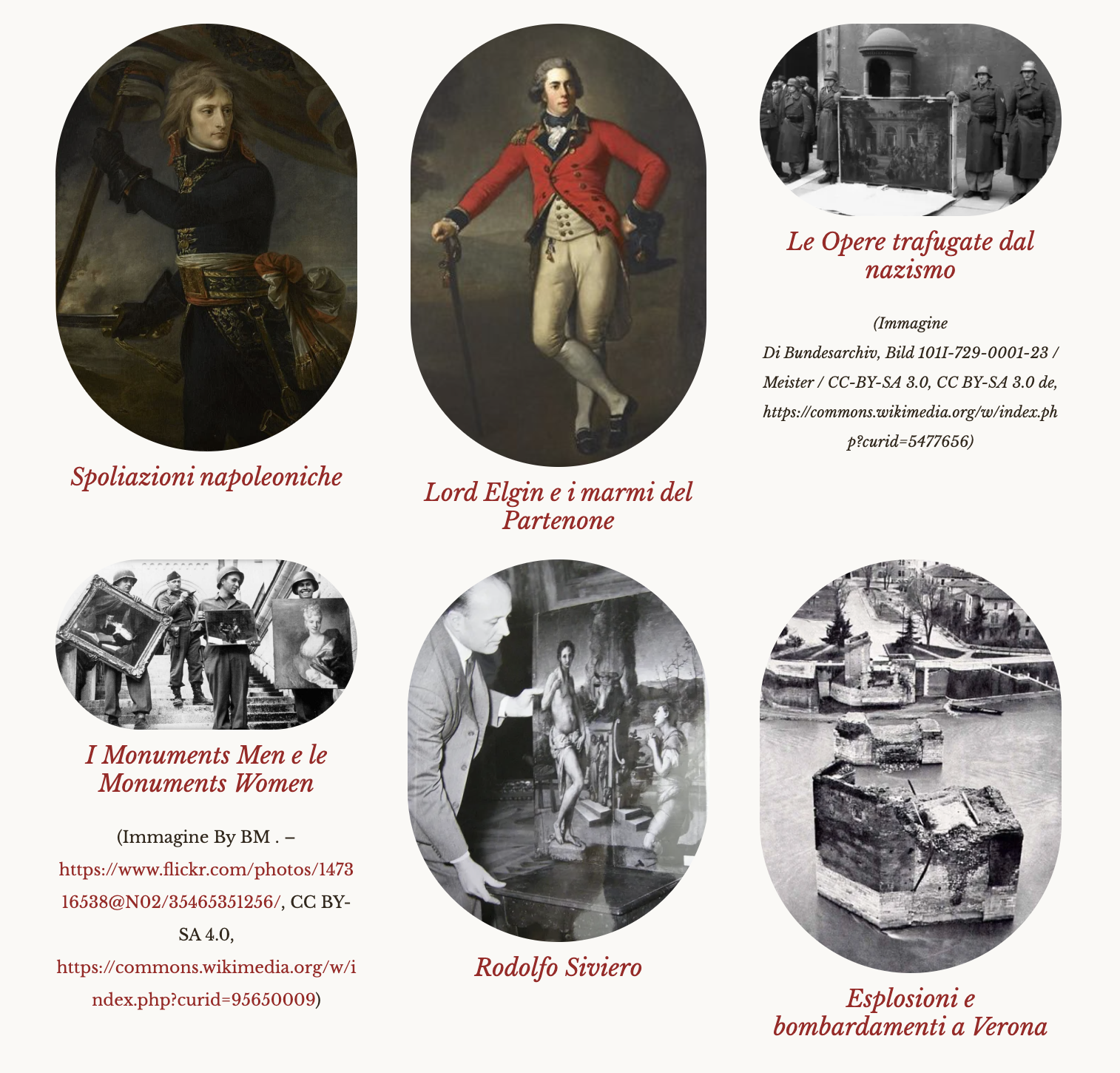
Major episodes of cultural looting include Napoleonic seizures, the removal of the Parthenon marbles by Lord Elgin, and systematic theft during World War II. The Monuments Men and Monuments Women worked to recover stolen artworks, while Italian intelligence officer Rodolfo Siviero revealed Nazi-created hideouts containing looted art. Cities including Verona suffered extensive bombardment and destruction of their artistic heritage during the Second World War.
Frequently Asked Questions
When was the Hague Convention adopted and which countries signed it?
The Convention for the Protection of Cultural Property in the Event of Armed Conflict was established in 1954 at The Hague and was signed by 132 countries, including Italy in 1974.
Why is cultural heritage considered humanity’s shared patrimony under the convention?
The convention recognizes that damage to cultural property belonging to any people constitutes damage to the cultural heritage of all mankind, since every people contributes to world culture.
Who were the Monuments Men and Monuments Women?
These were individuals who worked to recover artworks stolen during World War II, including Italian spy Rodolfo Siviero, who revealed Nazi hideouts containing looted art.