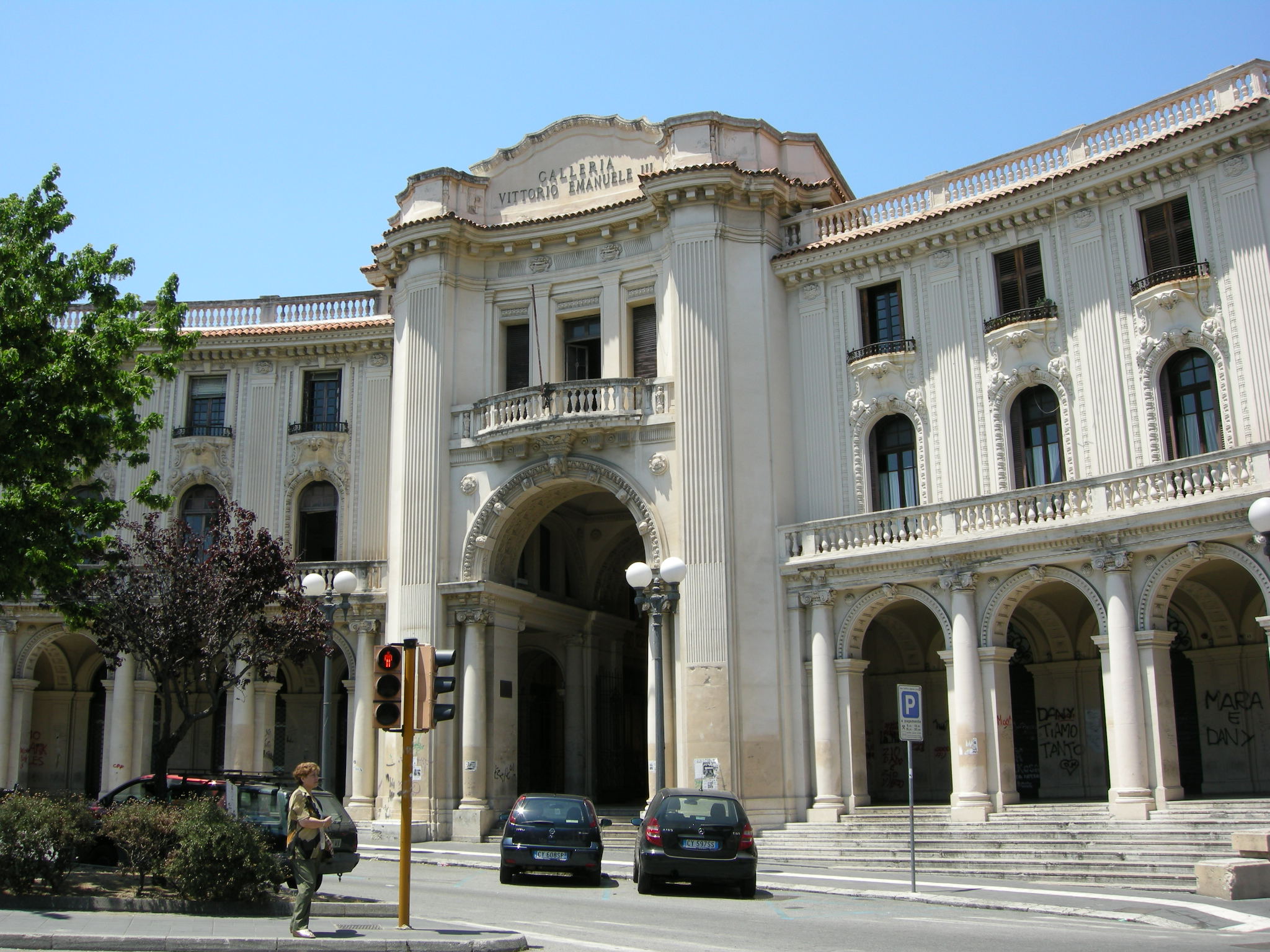
The Galleria Vittorio Emanuele III in Messina was designed by architect Camillo Pugliesi Allegra and constructed between 1924 and 1929, inaugurated on 13 August 1929 alongside the reconstructed cathedral. Located on Via Cavour and bordered by major public buildings on Piazza Antonello, the gallery represents one of the most distinctive examples of its kind in southern Italy, comparable to the Galleria Umberto I in Naples.
The structure integrates Liberty and Art Deco styles within the broader context of Messinese eclecticism-Liberty architecture. This movement emerged in the city rebuilt after the devastating earthquake of 1908. Sculptors Antonio Bonfiglio and Ettore Lovetti contributed decorative elements to the interior, drawing inspiration from eighteenth-century Sicilian design alongside Pugliesi Allegra’s architectural vision. The gallery was financed by the Società Generale Elettrica della Sicilia.
About Camillo Pugliesi Allegra
Camillo Pugliesi Allegra was a Sicilian architect active in the early twentieth century, contributing substantially to Messina’s reconstruction and modernization during the interwar period.
Details
- Architect: Camillo Pugliesi Allegra
- Construction period: 1924–1929
- Inauguration: 13 August 1929
- Location: Via Cavour, Messina, Sicily
- Architectural style: Liberty and Art Deco
- Sculptural decoration: Antonio Bonfiglio and Ettore Lovetti
On the heritage map: Galleria Vittorio Emanuele III
Frequently asked questions
Who designed the Galleria Vittorio Emanuele III in Messina?
The gallery was designed by architect Camillo Pugliesi Allegra and financed by the Società Generale Elettrica della Sicilia.
When was the gallery built and opened?
Construction took place between 1924 and 1929, with the inauguration on 13 August 1929, the same day as the reconstructed cathedral.
What architectural style does the gallery represent?
The building integrates Liberty and Art Deco styles and is considered part of Messinese eclecticism-Liberty, the architectural movement that shaped Messina’s reconstruction following the 1908 earthquake.