
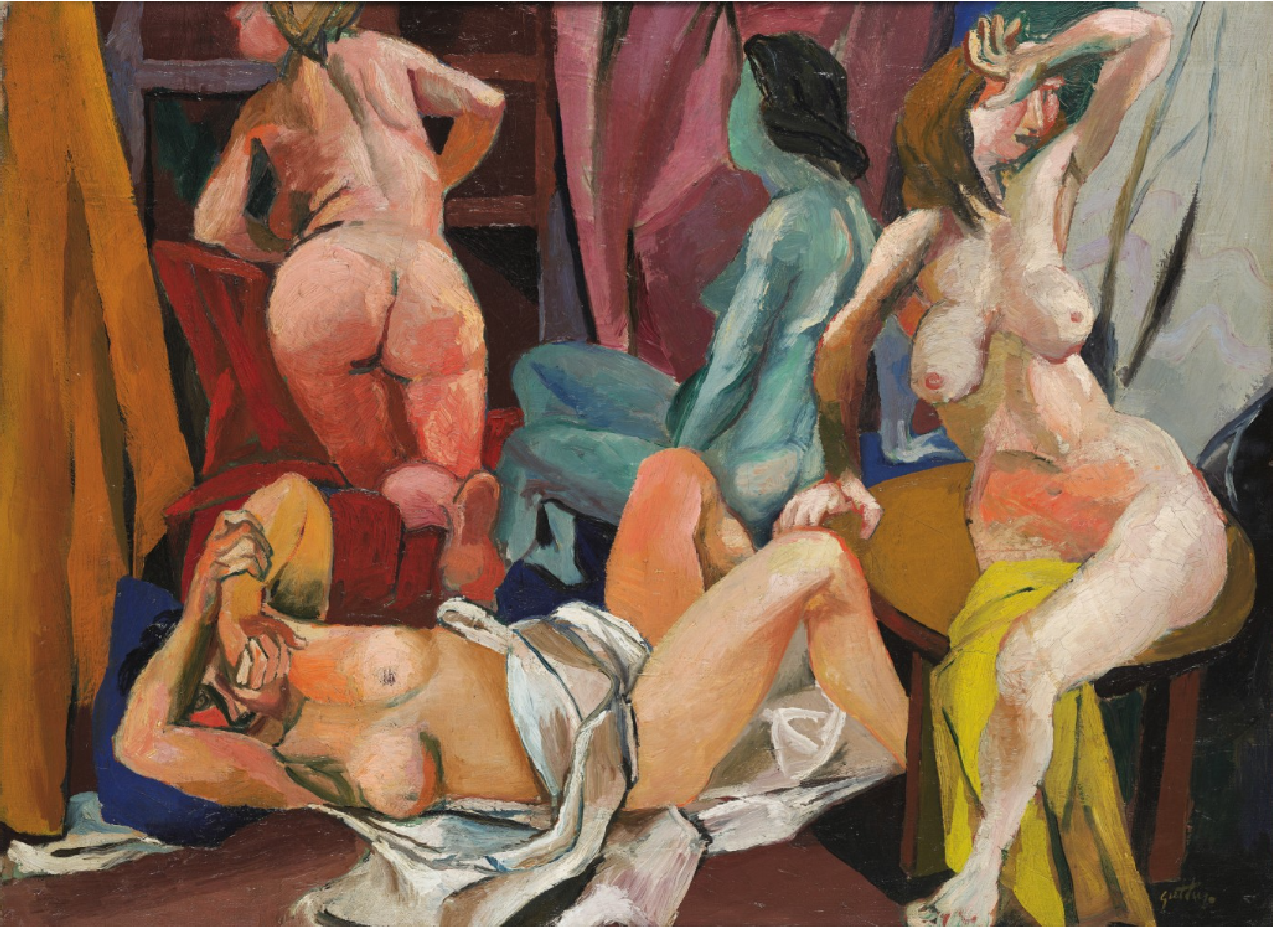
Le ragazze di Palermo is a painting by Renato Guttuso, created in 1940. The work belongs to a period in which the Italian artist was developing his distinctive approach to visual expression.
Guttuso stands among the significant figures of Italian expressionism, a movement characterized by emotional intensity and formal innovation. His artistic practice became increasingly shaped by social and political awareness, themes that would define much of his career across the twentieth century. The subject matter of Palermitan women reflects the artist’s sustained interest in depicting contemporary life and social conditions.
About Renato Guttuso
Aldo Renato Guttuso was an Italian painter and politician recognised as one of the most important Italian artists of the twentieth century. A key figure of Italian expressionism, his work is distinguished by social and political commentary. Beyond his artistic practice, Guttuso was an active member of the Italian Communist Party, serving as its senator for two legislatures between 1976 and 1983 during Enrico Berlinguer’s leadership.
Details
- Artist: Renato Guttuso
- Year: 1940
- Movement: Italian expressionism
- Subject: Sicilian life and figures
On video
Frequently asked questions
Who was Renato Guttuso?
Renato Guttuso was an Italian painter and politician considered among the most important Italian artists of the twentieth century and a key figure of Italian expressionism. He later served as a senator of the Italian Communist Party from 1976 to 1983.
What characterises Guttuso’s artistic approach?
Guttuso’s art is characterised by social and political commentary woven into his expressionist style, reflecting his engagement with contemporary life and conditions.
What does the title Le ragazze di Palermo refer to?
The title translates as The Girls of Palermo, indicating the work depicts women from Sicily, the region where Guttuso was based during this period of his career.
Sources
- S1 — Pontiggia, Elena. Il Novecento Italiano. Abscondita, 2003. ISBN 978-88-8416-048-5.
- S2 — De Fusco, Renato. Storia del design. Laterza, 2002. ISBN 978-88-420-6623-1.
Spotted an error? Write to editorial@culturalheritageonline.com and we correct it the same day.


