
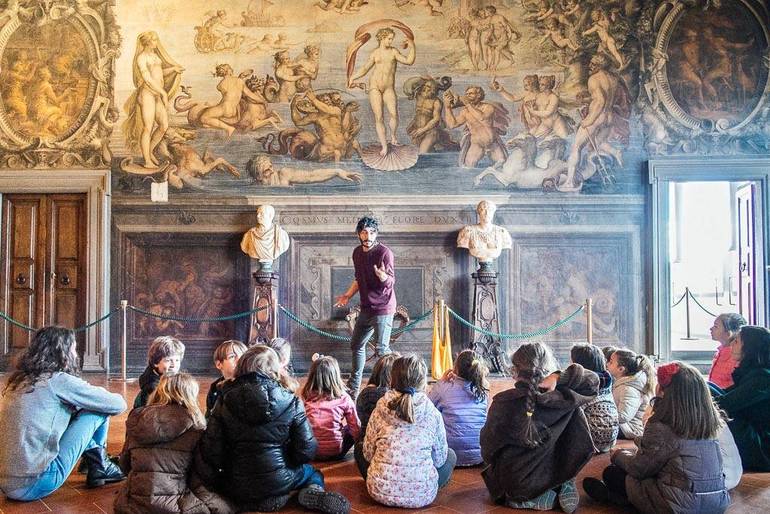
As of November 2019, Italy’s legal definition of a tourist guide and the profession’s regulatory evolution reveals a complex framework shaped by both national legislation and European Union requirements. Under Article 11 of Law 217/1983, a tourist guide is defined as anyone who professionally accompanies individuals or groups on visits to artworks, museums, galleries, and archaeological sites while explaining historical, artistic, monumental, landscape, and natural attractions.
The Evolution of Professional Definitions
The 1983 law established tourism as a professional activity distinct from amateur work, requiring guides to facilitate tourists’ engagement with cultural heritage. This foundational definition was refined in 2011 through Legislative Decree 79, which broadened the concept to encompass all tourism professions providing promotion, hospitality, assistance, and guidance services to enable tourists to better enjoy their travel and understand the places they visit. The 1983 law also identified other tourism professions alongside tourist guides: tourist interpreters, tourist escorts or couriers, professional congress organizers, nautical instructors, ski instructors, alpine guides, aspiring alpine guides or alpine porters, speleological guides, and tourist animators—with an open clause allowing for future categories of tourism professions.
From Local to National Authorization
Before 1983, tourist guides in Italy could be authorized to work only at the local level. This principle remained unchanged until 2013, when Law 97/2013 granted guides the right to work nationally across Italian territory. This shift occurred seven years after the European Services Directive came into effect. The European Commission had identified that Italian regulations requiring guides to be licensed only in their region or province of issuance conflicted with Article 10, paragraph 4, of the Services Directive, leading to an EU pre-infringement case (EU Pilot 4277/12/MARK). The Commission’s position required that a tourist guide’s certification be valid nationwide to comply with EU law.
EU Compliance and Specialized Guides
Article 3 of Law 97/2013 made tourist guide licensing valid across all of Italy. EU citizens legally established in another member state and qualified as tourist guides can provide temporary or occasional services in Italy without additional authorization. Professionals from countries that do not regulate the profession must provide certification demonstrating their professional experience. The law also allows for specialized guide credentials: the Ministry of Cultural Heritage (MIBAC) is tasked with identifying heritage sites of particular historical, artistic, or archaeological significance where guides must hold specific additional qualification, established through consultation with the Unified Conference of regions and with procedures defined by the Ministry.
On video
Frequently asked questions
What is the legal definition of a tourist guide in Italy?
Under Article 11 of Law 217/1983, a tourist guide is a professional who accompanies individuals or groups on visits to artworks, museums, galleries, and archaeological sites while explaining their historical, artistic, monumental, landscape, and natural features.
When did Italian tourist guides gain the right to work nationally?
In 2013, Law 97/2013 granted tourist guides the right to exercise their profession across all Italian territory, replacing the previous system in which guides were licensed only at the regional or provincial level where they received their credential.
Can EU citizens work as tourist guides in Italy?
Yes, EU citizens legally established in another member state and qualified as tourist guides can provide temporary or occasional services in Italy without requiring additional authorization or certification beyond their professional establishment in their home country.
Sources
- S1 — Settis, Salvatore. Italia S.p.A.. L'assalto al patrimonio culturale. Einaudi, 2002. ISBN 978-88-06-16973-2.
- S2 — Casarin, Francesco. Il marketing dei musei e delle istituzioni culturali. Il Mulino, 2019. ISBN 978-88-15-28514-0.
Spotted an error? Write to editorial@culturalheritageonline.com and we correct it the same day.


