
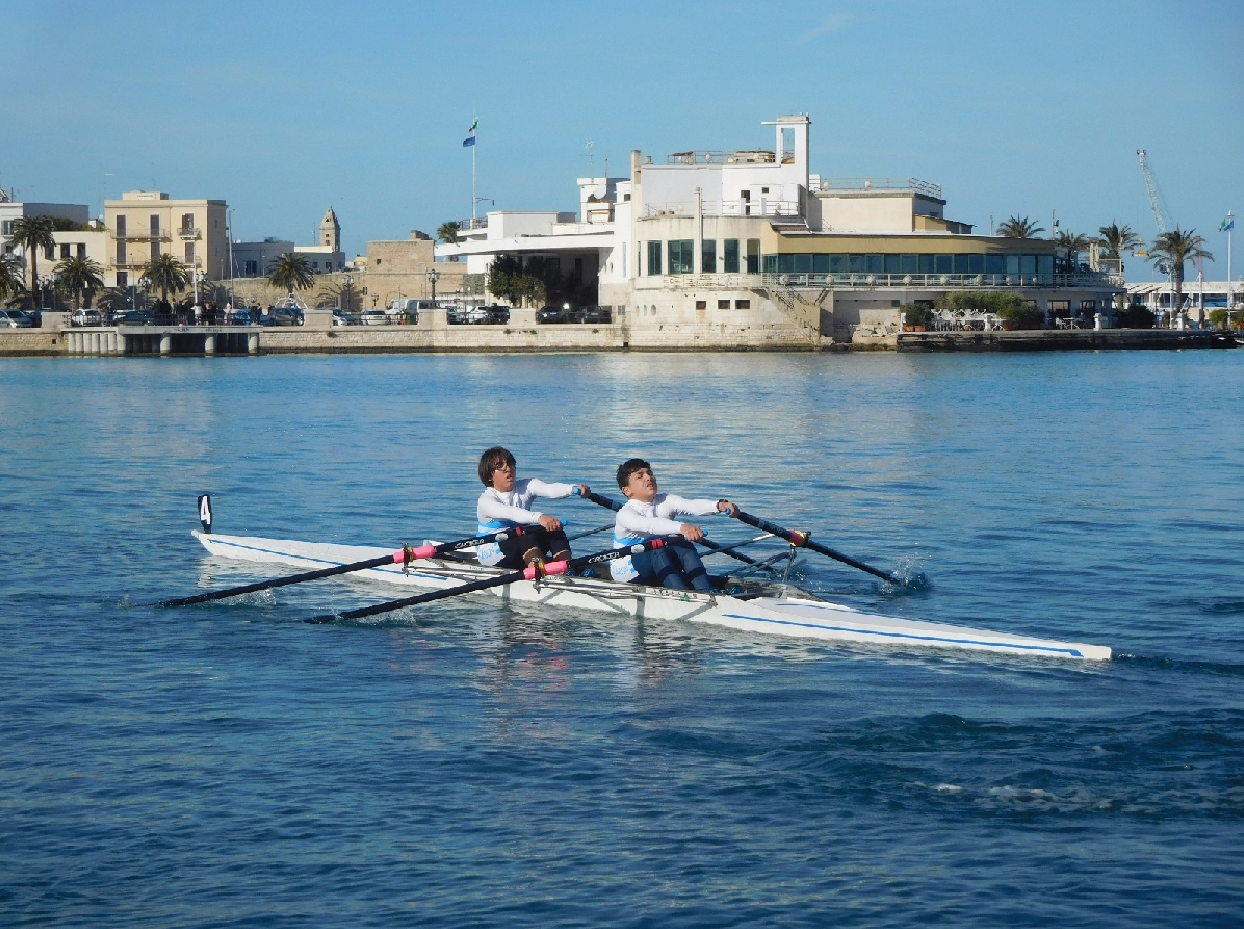
The Circolo Canottieri Barion is a rowing club in Bari, Puglia, designed by architect Saverio Dioguardi and completed in 1930. The structure represents one of Dioguardi’s works in the field of institutional and public buildings that characterised his professional output during the early twentieth century.
Dioguardi combined technical knowledge of materials and construction methods with strong design and graphic skills. Over his career, he designed public buildings, administrative offices, banks, barracks, social housing, schools and numerous funerary monuments. The Canottieri Barion stands as an example of his approach to civic architecture, a building type he pursued alongside larger monumental commissions.
About Saverio Dioguardi
Saverio Dioguardi was an Italian architect whose practice encompassed a wide range of building types. His work spanned public institutions, financial offices, military facilities and residential projects, as well as commemorative architectural works. His methodology integrated material science and structural technique with disciplined design practice.
Details
- Architect: Saverio Dioguardi
- Location: Bari, Puglia, Italy
- Year: 1930
- Building type: Rowing club
Explore more: 23 heritage places in Bari
Frequently asked questions
Who designed the Circolo Canottieri Barion?
Architect Saverio Dioguardi designed the building, which was completed in 1930.
Where is the Circolo Canottieri Barion located?
The building is situated in Bari, in the Puglia region of Italy.
What types of buildings did Dioguardi design?
Dioguardi designed public buildings, administrative offices, banks, barracks, social housing, schools and funerary monuments throughout his architectural career.
Sources
- S1 — Nicoloso, Paolo. Architetture per un'identità italiana. Einaudi, 2012. ISBN 978-88-06-19086-6.
- S2 — Ciucci, Giorgio. Gli architetti e il fascismo: architettura e città 1922-1944. Einaudi, 2002. ISBN 978-88-06-16310-5.
Spotted an error? Write to editorial@culturalheritageonline.com and we correct it the same day.


