


A Venetian confraternity headquarters adorned with Tiepolo’s visionary ceiling frescoes, housing one of Italy’s most significant collections of devotional art.
At a glance
The Scuola Grande dei Carmini is a laypeople’s confraternity dedicated to the Virgin of Mount Carmel, recognized by Venice’s ruling Council of Ten in 1597 and elevated to Grande status in 1767. Built in the seventeenth century next to the Carmelite convent church in the Dorsoduro district, it remains a masterpiece of religious patronage and artistic investment. The brotherhood—composed of citizens but excluding nobles and clergy—combined spiritual devotion with practical charity, supporting members through illness and death while providing dowries for poor girls.
History
The confraternity obtained official recognition on 22 September 1597. During the seventeenth century, the brothers commissioned architects Caustello and Longhena to design their headquarters adjacent to the Carmelite church, where the brotherhood initially held its seat. The School’s proximity to the convent reflected the enduring bond between the Carmelite Fathers and the lay confreres. Membership remained exclusively for citizens of means; nobles and religious orders were excluded. Beyond its spiritual mission, the School dispensed alms to the poor and sick, contributed to funeral expenses, and arranged marriages and monastic vocations for daughters of modest families.
What you see
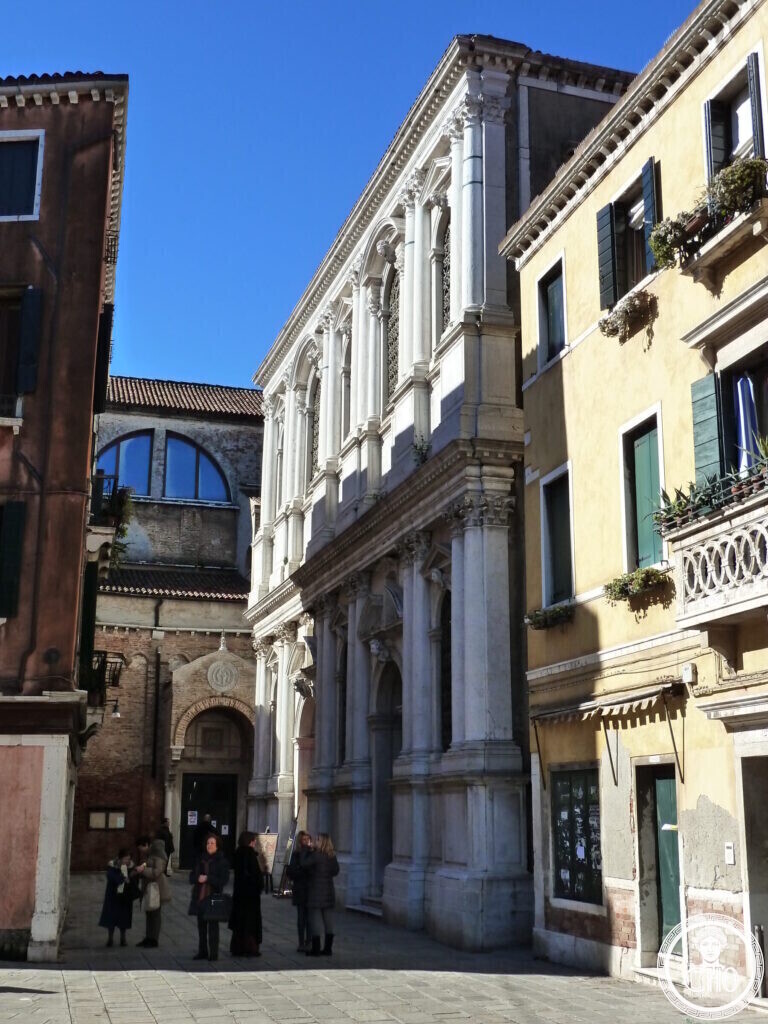
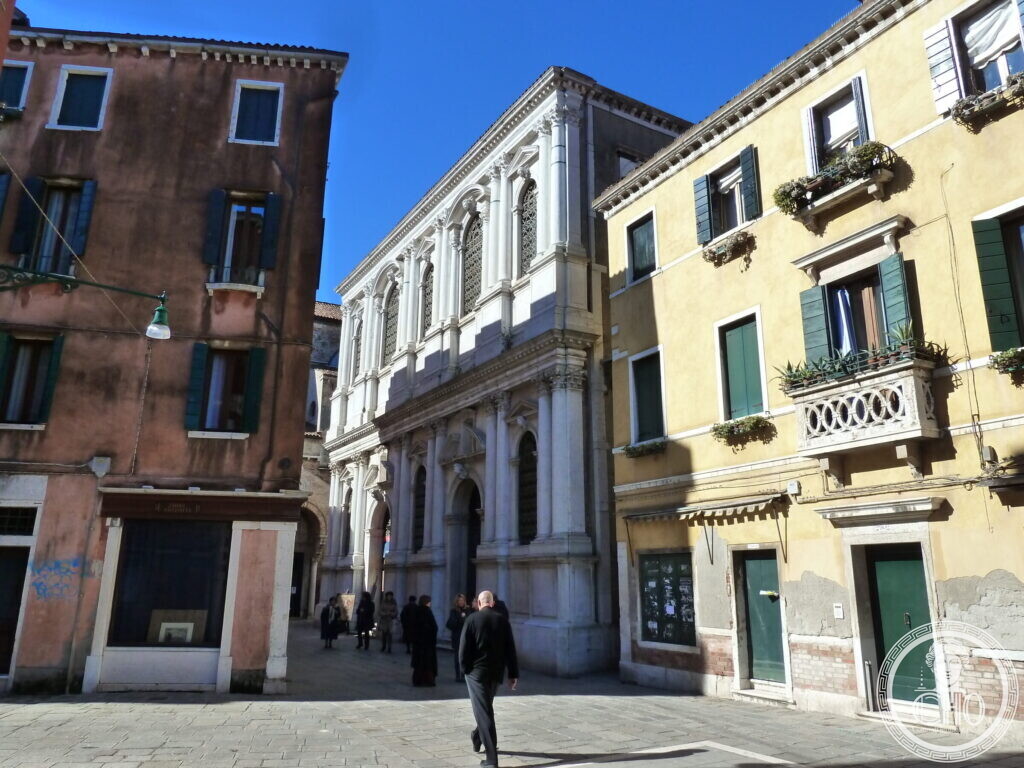
Three facades address different campos: the main south front overlooks Campo Santa Margherita, the west facade Campo dei Carmini, and the east side calle del Nonzolo. The interior preserves original antique furnishings, oil paintings, carved wooden dossal altars, and richly decorated stucco ceilings. The ground floor chapel remains a functioning sacred space. The first-floor Chapter Hall (16 by 9 metres) served as the assembly chamber where confreres approved the Guardian Grande’s proposals, the annually elected brotherhood leader.
Cultural significance
The School is best known for nine monumental ceiling canvases painted by Giambattista Tiepolo between 1739 and 1749 in the Chapter Hall. The cycle depicts theological and cardinal virtues alongside angels and cherubs bearing the scapular—the Carmelites’ devotional emblem. The composition culminates in a central masterpiece illustrating the Madonna del Carmelo bestowing the scapular upon Saint Simon Stock, a foundational moment in Carmelite spirituality. Additional treasures include Giambattista Piazzetta’s Judith and Holofernes and Padovanino’s Assumption of the Virgin, displayed in the archives and reception rooms. Together, these works exemplify eighteenth-century Venetian painting at its height.
Key facts
- Address: Dorsoduro 2616, Venice
- Coordinates: 45.434, 12.322
- Officially recognized: 22 September 1597
- Elevated to Grande: 1767
- Architects: Caustello and Longhena
- Tiepolo frescoes: 1739–1749
- Website: http://www.scuolagrandecarmini.it/
- Phone: 041 528 9420
Practical information
All rooms are open for museum visits, religious services, and cultural events. The chapel on the ground floor and Chapter Hall on the first floor remain active venues for services and gatherings. Specific hours and admission fees should be verified on the official website or by telephone.
Getting there
The Scuola is located in the Dorsoduro quarter at the intersection of Campo dei Carmini and Campo Santa Margherita. Vaporetto lines serving nearby stops include those at Accademia and Ca’ Rezzonico. From the Piazzale Roma or Stazione Santa Lucia, follow directions to Campo Santa Margherita in the southern Dorsoduro district.
Gallery
Sources & resources
- Official website: Scuola Grande dei Carmini
- Cultural Heritage Online
Find it on the map
See this place and what’s around it →📷 Become a Cultural Heritage Online photographer
Share your photos of places: they stay published under your name as the author. The more they're seen, the more you get noticed — and soon a contest will reward the most appreciated photos.
Log in or sign up free to add a photoIs this page about you?
This page is read by travellers and heritage enthusiasts who find it on Google. Tell us how you are connected to this place and we will take it from there.