
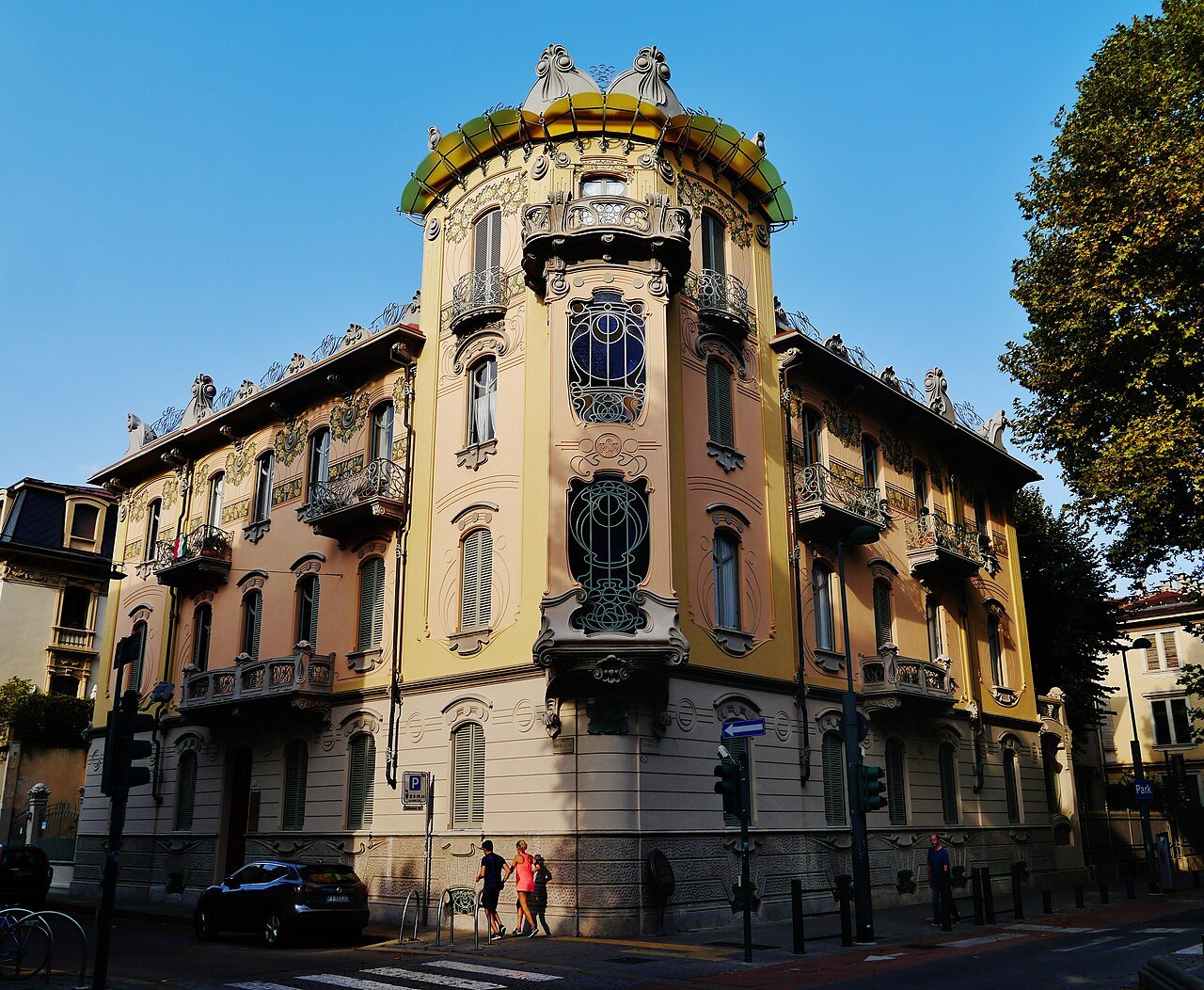
Most travellers conflate them. The label “Art Nouveau” floats over a Paris Métro entrance and a Turin villa as if both were the same gesture in the same accent. They were not. Italian Liberty arrived later than the French and Belgian movement, drew different decorative grammar, leaned residential where the French leaned civic, and stretched its end date by more than a decade. Seven specific differences follow, verified against named buildings, named architects, and named dates.
1. Year of arrival
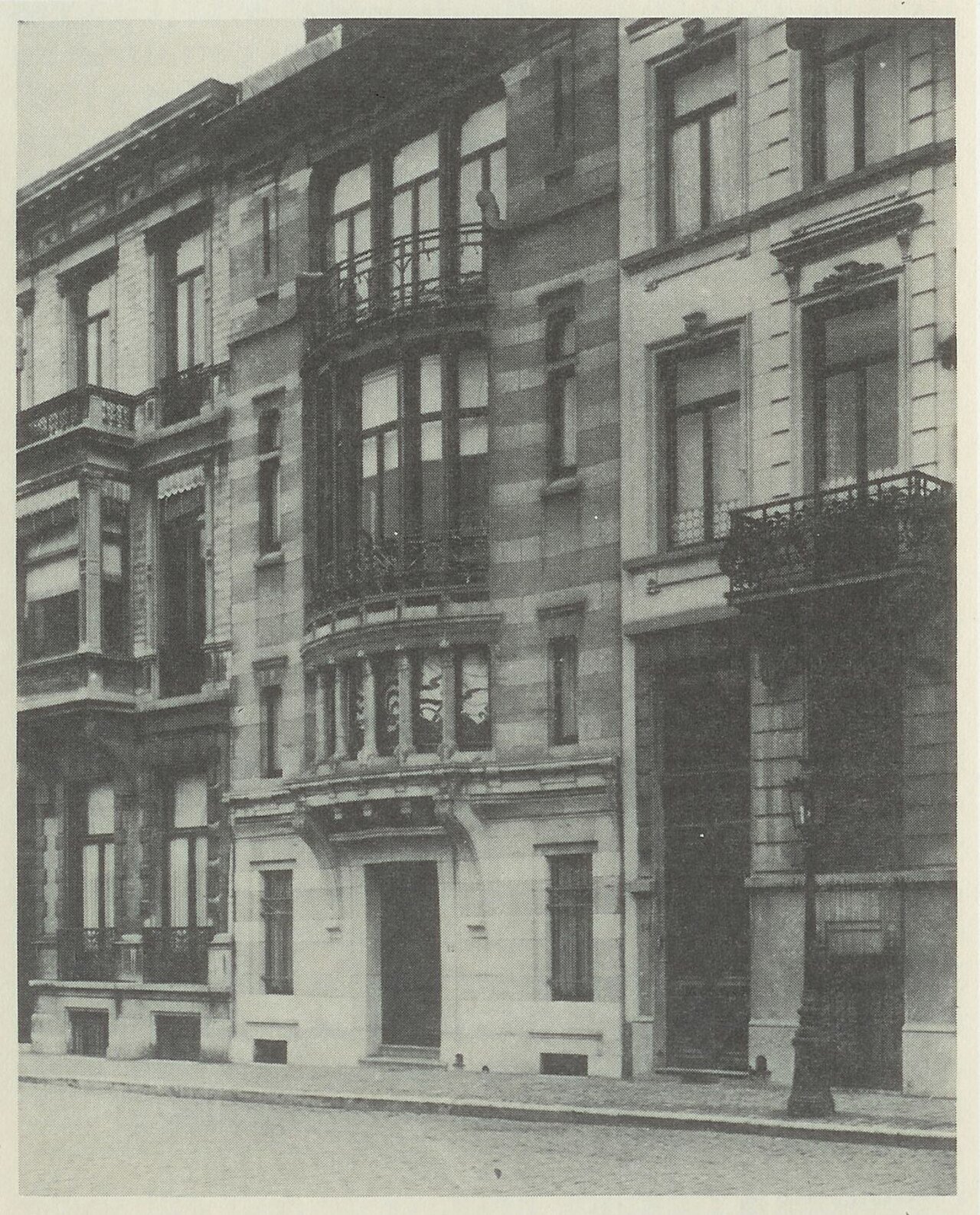
The Belgian-French Art Nouveau emerged with Victor Horta’s Hôtel Tassel in Brussels in 1893. Hector Guimard followed in Paris with Castel Béranger between 1894 and 1898. By the late 1890s the Belgian-French style was a coherent movement with built precedent and a public face.
Italian Liberty arrived later. Its conventional starting point is Ernesto Basile’s Villino Florio in Palermo (1899–1902), with the breakthrough year usually given as 1902 — the year of the Prima Esposizione Internazionale d’Arte Decorativa Moderna in Turin, which positioned Liberty as Italy’s national modern style. Italy joined the conversation roughly a decade after France and Belgium opened it.
2. Architectural anchor
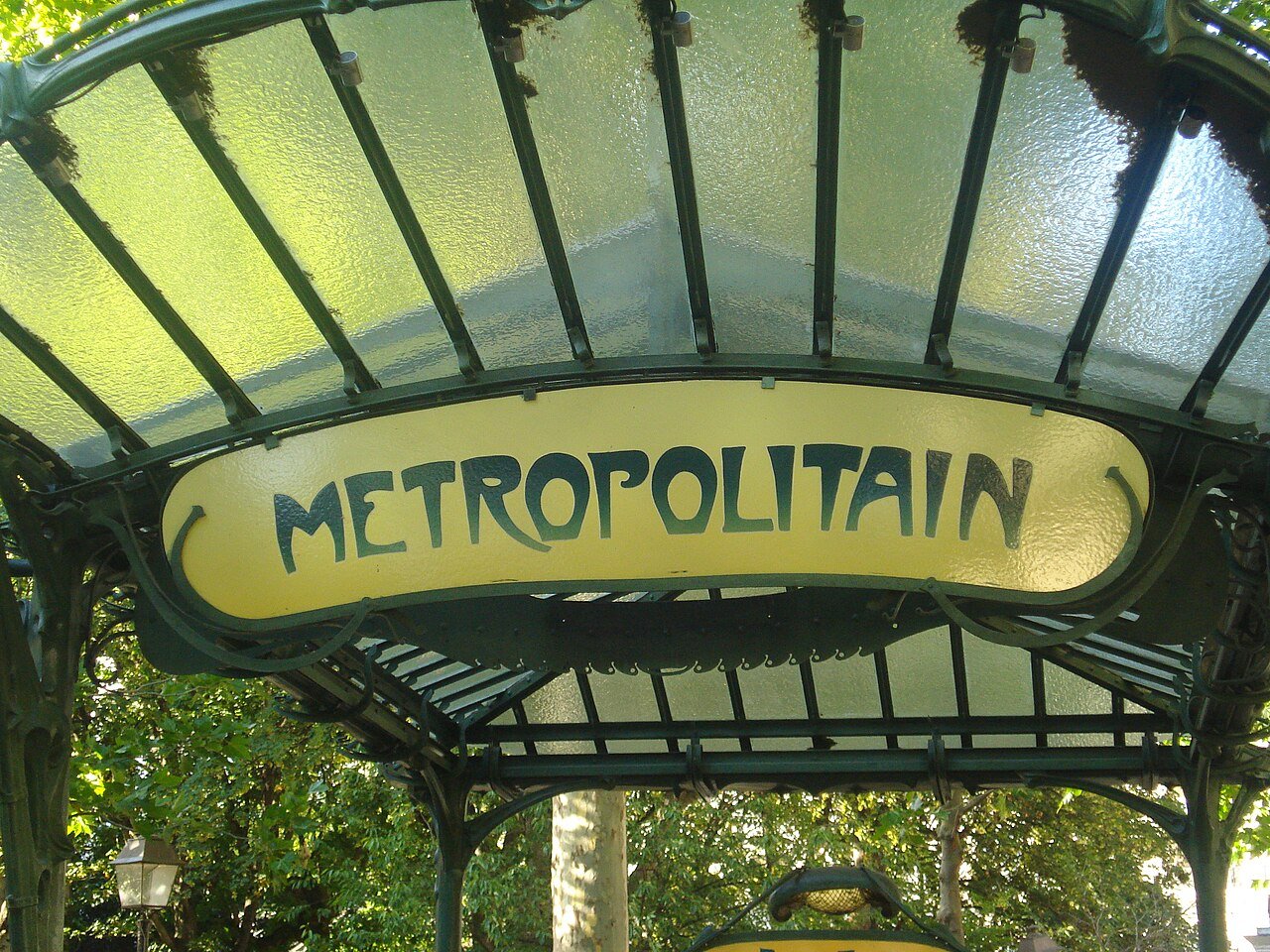
The French Art Nouveau anchor is the whiplash line: ornament that reads as a single unbroken curve, executed in iron, stone, and timber. Guimard’s Métro entrances make the case at urban scale — cast-iron tendrils that rise out of the pavement as if grown.
Italian Liberty is floral-eclectic. Polychrome stucco, brick with ceramic insets, wrought iron held against rendered surfaces — and a willingness to braid the Liberty grammar with Venetian-Gothic, Romanesque, or Norman quotations depending on the city. Italian Liberty is less interested in line purity and more interested in surface storytelling.
3. The flagship architect
Hector Guimard (1867–1942) is the French Art Nouveau face. Trained at the École des Beaux-Arts, he designed roughly fifty buildings between 1890 and 1930 plus the Métro entrances of 1900–1913: 167 installations originally, 88 still standing.
Pietro Fenoglio (1865–1927) is the Italian Liberty equivalent for Turin. Working from his Casa Fenoglio-Lafleur (1902) at Via Principi d’Acaja 11, on the corner of Corso Francia, he designed over three hundred villas and palazzi for Turin’s expanding bourgeoisie. Two architects, two cities, two styles — same generation.
4. Civic vs domestic axis
Guimard’s Paris Métro entrances of the early 1900s made French Art Nouveau a civic style: ornament for public infrastructure, paid for by the city, used by everyone. The Métro entrances at Abbesses and Porte Dauphine remain the canonical sites.
Italian Liberty was primarily residential. Casa Fenoglio-Lafleur in Turin, Palazzo Castiglioni in Milan, Villino Florio in Palermo, the Liberty villas of the Lido — these were houses, hotels, and bourgeois palazzi. Italian Liberty was a private commission style. The Italian state never adopted it.
5. Decorative vocabulary
French Art Nouveau speaks orchids, irises, and the controlled whiplash. Its surface treatment privileges line over pigment.
Italian Liberty speaks sunflowers, peacocks, irises, and the decorative ceramic insert. Galileo Chini (1873–1956), who taught decorative arts at the Accademia di Belle Arti in Florence, anchors the ceramic side of the movement; his Liberty floral panels became a national vocabulary. Italian Liberty surfaces are polychrome before they are linear.
6. The end date
French Art Nouveau effectively ended in 1914. Guimard’s later commissions are sparse, and the movement was widely considered finished by the start of the First World War.
Italian Liberty stretched. Coppedè’s Roman quarter was built between 1915 and 1927. Mainella’s Villa Hériot on Giudecca dates 1926–1929 — Liberty grammar a generation after the movement’s nominal close. Italian Liberty often blurs into early Déco, which gives the Italian case its distinctive late chapter.
7. The contemporary trace
Where can you walk the two styles today? Paris keeps Art Nouveau as a civic infrastructure trace. The Abbesses and Porte Dauphine Métro entrances by Guimard, the Castel Béranger on rue La Fontaine, Maxim’s interior — these are the surviving anchors.
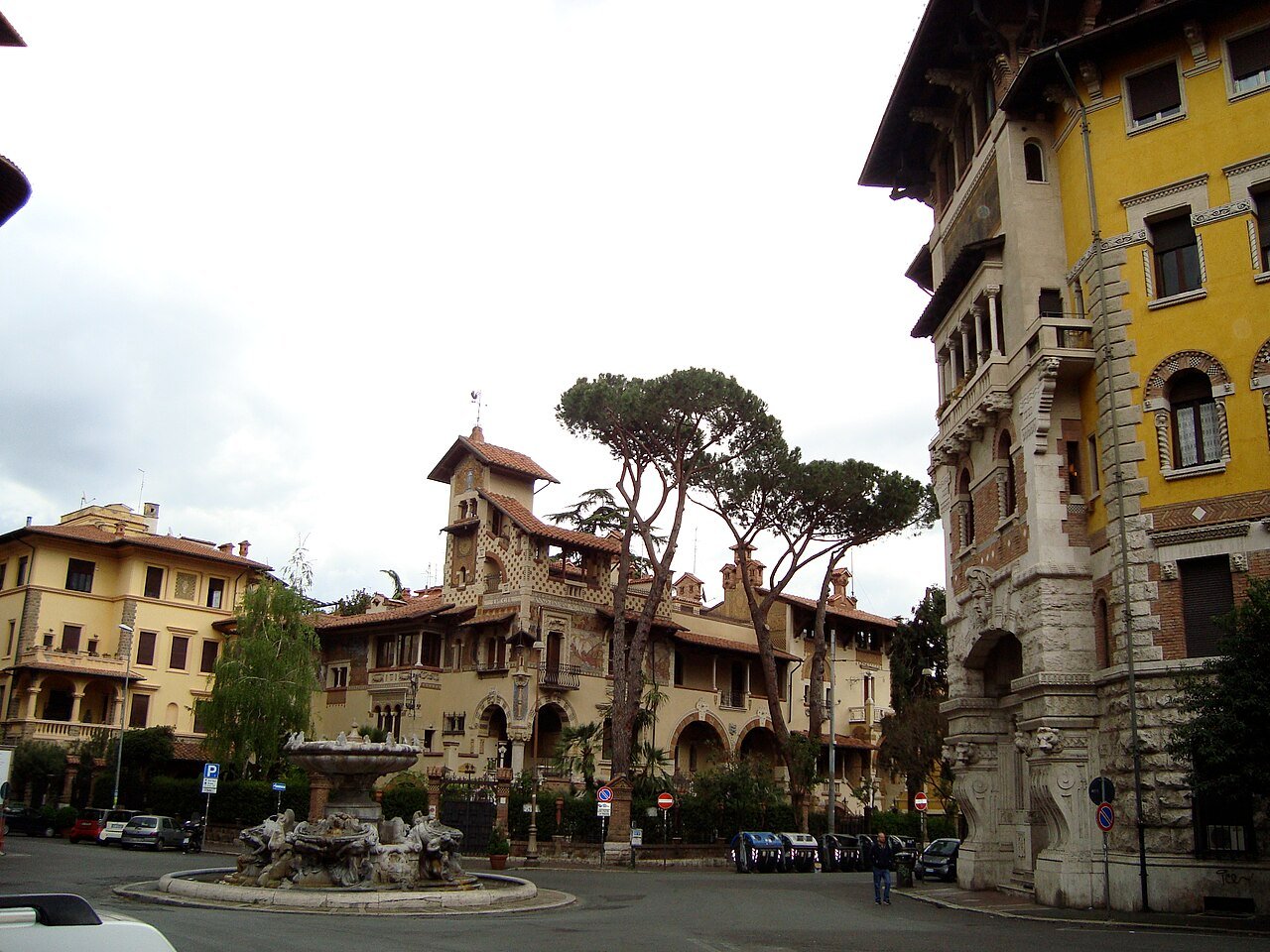
Italy keeps Liberty as a residential walk. The Quartiere Coppedè in Rome, Cit Turin around Casa Fenoglio-Lafleur, the protected villas on the Lido di Venezia, the floral palazzi of Milan around Porta Venezia, the Villino Florio in Palermo, Casa Bartoli in Trieste. The Italian Liberty walk is longer, slower, less photographed, and largely unfiltered.
Where to start
If you have already walked Paris for Guimard, walk Italy for Fenoglio, Sommaruga, Sardi, Basile, Coppedè, and Fabiani. Same generation. Different country, different climate, different commission base, different end date — different buildings. The Italian Liberty Grand Tour gives you the seven cities where the residential Liberty argument was made, in compact, walkable form.
Sources
- S1 — Bossaglia, Rossana. Il Liberty in Italia. Charta, 1997. ISBN 978-88-8158-144-3.
- S2 — Russell, Frank, ed. Art Nouveau Architecture. Rizzoli, 1979. ISBN 978-0-8478-0248-7.
Spotted an error? Write to editorial@culturalheritageonline.com and we correct it the same day.


