

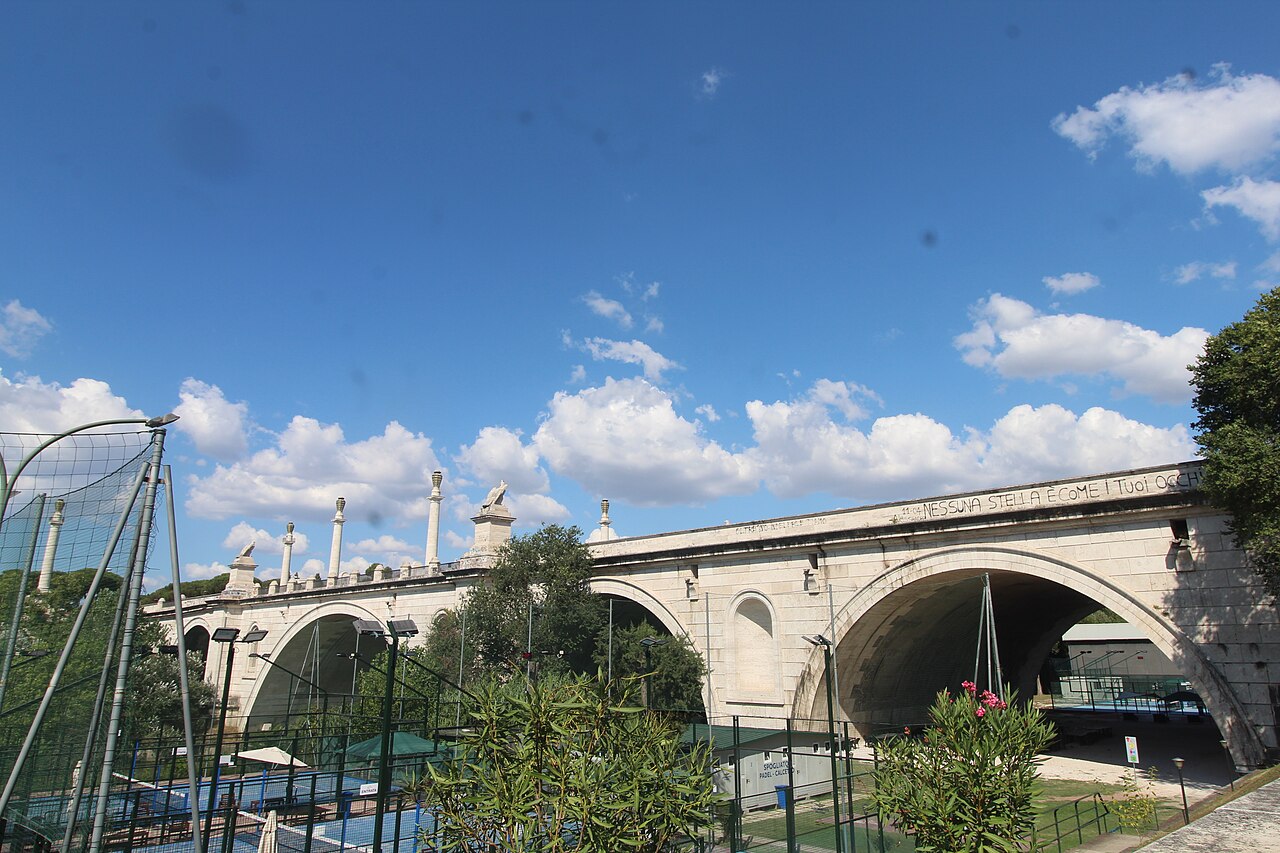
A modern bridge spanning the Tiber, begun in 1938 and completed in 1951 after wartime interruption, linking northern Roma across Corso di Francia.
At a glance
The Flaminio Bridge carries traffic along Corso di Francia across the Tiber River in northern Roma. Originally designated Ponte 28 Ottobre, the structure represents twentieth-century Italian engineering and urban infrastructure development, its completion delayed by World War II.
History
Construction began in 1938 under the direction of architect Armando Brasini and engineer Aristide Giannelli. The Second World War interrupted progress, and the bridge was not completed until 1951—thirteen years after its commencement. The original name, Ponte 28 Ottobre, was later replaced with Flaminio.
What you see
The bridge exemplifies mid-twentieth-century Italian engineering and structural design, reflecting the professional vision of Brasini and Giannelli. Its span across the Tiber facilitates major traffic flow through Roma’s northern districts.
Cultural significance
The Flaminio Bridge stands as a monument to post-war reconstruction and Italy’s renewal of infrastructure during the 1950s. Its extended construction period mirrors the nation’s recovery following military conflict.
Key facts
- Address: Corso di Francia, 00191 Roma
- Coordinates: 41.9367055, 12.4716804
- Construction began: 1938
- Completed: 1951
- Architects/Engineers: Armando Brasini (architect), Aristide Giannelli (engineer)
Practical information
The bridge is freely accessible to vehicular and pedestrian traffic. Hours of operation are not restricted; access follows normal Roma city transportation patterns. Further details are available through Roma’s municipal transportation authorities.
Getting there
The Flaminio Bridge is located on Corso di Francia in northern Roma. You can reach it by public transport or personal vehicle. Consult Roma’s transit network for optimal routing to this location.
See the place
Sources & resources
Find it on the map
See this place and what’s around it →📷 Become a Cultural Heritage Online photographer
Share your photos of places: they stay published under your name as the author. The more they're seen, the more you get noticed — and soon a contest will reward the most appreciated photos.
Log in or sign up free to add a photoIs this page about you?
This page is read by travellers and heritage enthusiasts who find it on Google. Tell us how you are connected to this place and we will take it from there.