
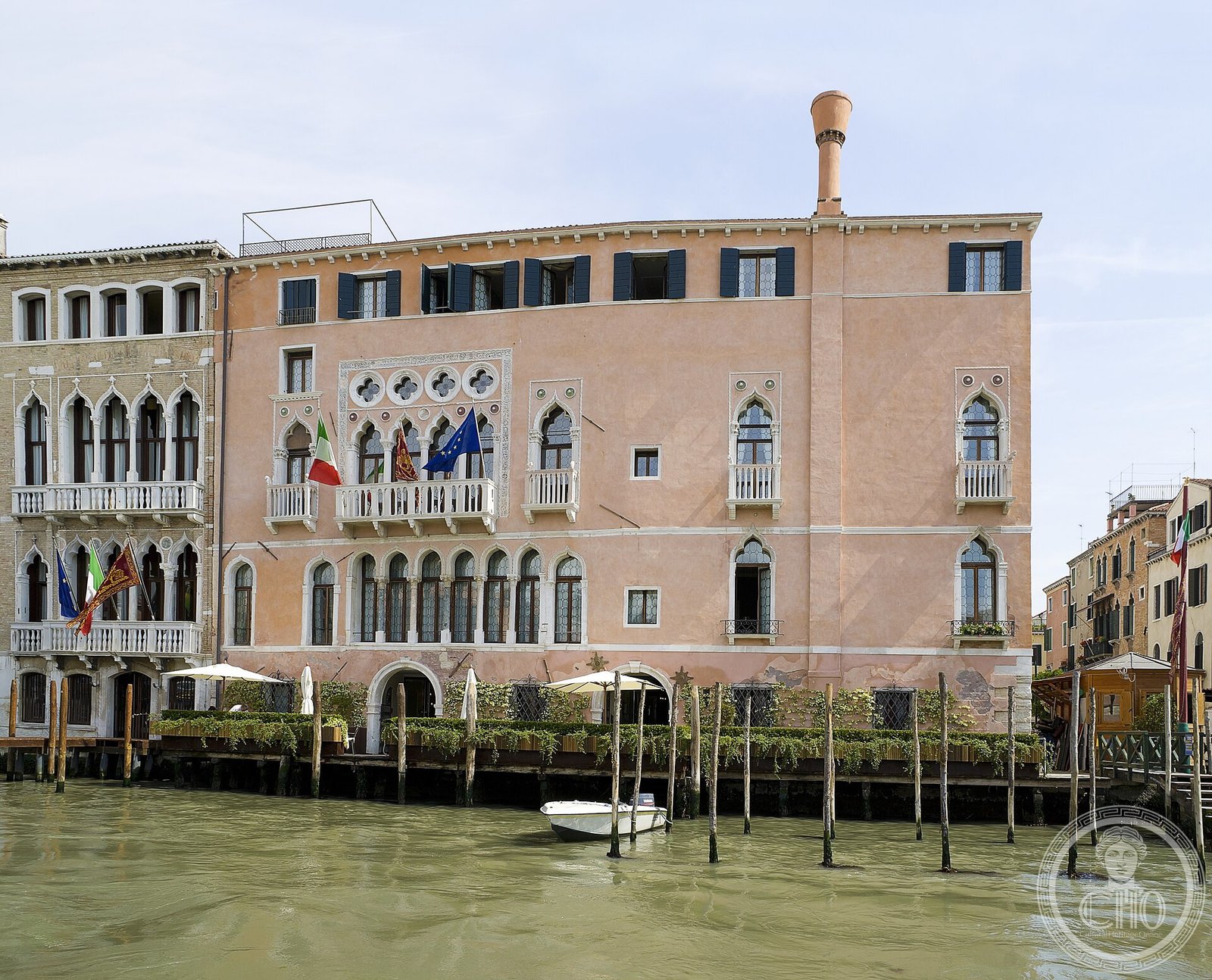
Ca’ Sagredo is a magnificent fourteenth-century Byzantine-Gothic palace standing at the corner of the Strada Nuova and Campo Santa Sofia in the sestiere of Cannaregio, Venice, with a broad façade facing the Grand Canal. Originally built for the Corner family and later acquired by the noble Sagredo dynasty, the palace passed into state ownership and was eventually converted into one of Venice’s grand historic hotels. Its piano nobile retains an exceptional suite of early eighteenth-century frescoes by Giambattista Tiepolo and Gian Antonio Fumiani, making Ca’ Sagredo one of the rare Venetian palazzi where outstanding Gothic architecture and Baroque decorative painting coexist under a single roof.
At a glance
- Type
- Gothic palazzo on the Grand Canal; now a luxury heritage hotel
- Period
- 14th century; major interior campaigns in the early 18th century
- Style
- Byzantine-Gothic Venetian palace architecture
- Location
- Campo Santa Sofia, Cannaregio, Venice, Italy · 45.4408° N, 12.3324° E
- Original patron
- Corner (Cornaro) family; subsequently the noble Sagredo family
- Notable art
- Early 18th-century frescoes attributed to Giambattista Tiepolo and Gian Antonio Fumiani
- Current use
- Luxury hotel (Ca’ Sagredo Hotel); piano nobile frescoes accessible to guests
- Address
- Campo Santa Sofia 4198/99, 30121 Venezia
Overview
Ca’ Sagredo commands one of the finest positions on the Grand Canal, with its multi-light Gothic windows opening across the water towards the Rialto. Like many of Venice’s great patrician palazzi, it layers centuries of taste and ownership: the structural bones are late Gothic, the principal rooms were redecorated in an exuberant Baroque manner during the early Settecento, and the building’s current life as a luxury hotel continues the tradition of magnificent Venetian hospitality. The palace sits adjacent to the Palazzo Giustinian Pesaro on one side and faces the Ca’ d’Oro across the canal.
History
The palace was constructed for the powerful Corner (Cornaro) family in the fourteenth century, when the Byzantine-Gothic style was at its apogee along the Grand Canal. In subsequent centuries it passed to the Sagredo family, one of Venice’s ancient patrician houses, who commissioned the elaborate fresco cycles that now constitute the building’s greatest artistic treasure. After the fall of the Venetian Republic in 1797 and the long nineteenth century of foreign rule and socioeconomic decline, the palace changed hands several times before being restored and opened as a hotel in the twentieth century.
What you see
The Grand Canal façade presents the quintessential Venetian Gothic arrangement: a ground-floor water entrance (androne) and boat dock, upper floors articulated by elegantly interlaced pointed arches in Istrian stone, and a characteristic profiling that makes the building instantly recognisable from the vaporetto or a gondola. Inside, the piano nobile staircase and principal rooms preserve remarkable Baroque ceiling and wall frescoes, with scenes of mythological and allegorical subjects painted in the warm, expansive manner associated with the Venetian Settecento. Original terrazzo floors, gilded stucco work, and period furnishings complete the ensemble.
Cultural significance
Ca’ Sagredo is listed among the most significant historic buildings of Venice and is subject to heritage protection under Italian cultural property law (Codice dei Beni Culturali). The combination of intact Gothic structure and high-quality Baroque painted decoration — including works plausibly attributed to Tiepolo, one of the greatest decorative painters of eighteenth-century Europe — makes it an exceptional document of Venetian patrician culture across four centuries. Its position on the Grand Canal, one of the world’s most intensely studied historic urban waterways, adds to its architectural and scholarly importance.
Practical information
Ca’ Sagredo operates as a luxury hotel; public access to the frescoed interiors is reserved for hotel guests. Campo Santa Sofia, the square beside the palace, is publicly accessible and offers views of the Gothic façade. For visits to the interiors, contact the hotel directly. For the adjacent Grand Canal views, the Strada Nuova and the Rialto vaporetto stops are within easy walking distance.
Getting there
Ca’ Sagredo is in the Cannaregio sestiere, approximately five minutes on foot from the Ca’ d’Oro vaporetto stop (lines 1 and 2 on the Grand Canal). From the Rialto, walk north along the Strada Nuova for about eight minutes. Water taxi access is available via the Grand Canal water door. Venice Santa Lucia railway station is approximately fifteen minutes on foot or one vaporetto stop away.
Sources & resources
See the place
Find it on the map
See this place and what’s around it →Historical events at this place (1)
📷 Become a Cultural Heritage Online photographer
Share your photos of places: they stay published under your name as the author. The more they're seen, the more you get noticed — and soon a contest will reward the most appreciated photos.
Log in or sign up free to add a photo