

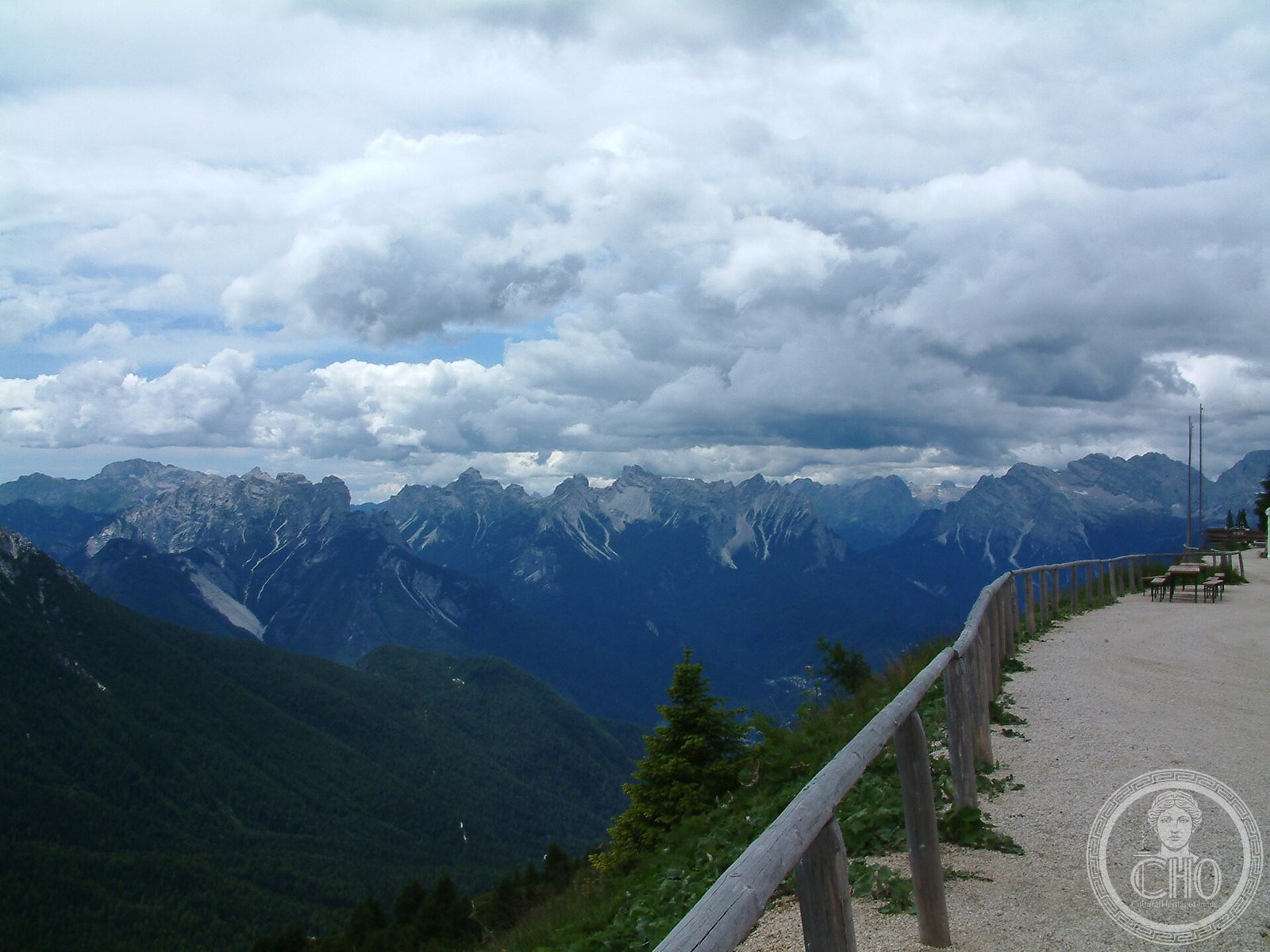
Forte Monte Rite is a high-altitude First World War fortification on the summit of Monte Rite (2,181 m) in the Dolomites, repurposed since 2002 as the Messner Mountain Museum Dolomites — part of Reinhold Messner’s network of six mountain museums in South Tyrol and Veneto. At nearly 2,200 metres above sea level it is the highest museum in the Dolomites, offering a panoramic vantage point over the Civetta, Pelmo, and Marmolada massifs while its galleries explore the mythology, exploration history, and visual culture of the Dolomite landscape.
At a glance
- Type
- Mountain museum (military fortification converted to cultural site)
- Period
- Fort built 1914–1917; converted to MMM Dolomites 2002
- Style
- Military masonry; minimalist museum intervention
- Location
- Monte Rite summit (2,181 m), Cibiana di Cadore, Province of Belluno, Veneto
- Coordinates
- 46.3840° N, 12.2542° E
Overview
MMM Dolomites occupies the summit fortification of Monte Rite, one of the most dramatic settings in the entire Messner Mountain Museum network. Founded by alpinist and explorer Reinhold Messner, the museum project was conceived as a distributed institution across six locations in the Alps, each dedicated to a different theme of humanity’s relationship with mountains. The Dolomites branch focuses on the mythological and pictorial dimension of the Dolomite peaks, which were inscribed on the UNESCO World Heritage List in 2009.
History
The fortification on Monte Rite was constructed by the Austro-Hungarian army during the First World War as part of the defensive line protecting the Piave valley. After the war the structure fell into disuse and was gradually reclaimed by mountain vegetation. In 2002 Reinhold Messner acquired the derelict fort and transformed it into a museum space, opening MMM Dolomites as the first of what would become a six-site cultural institution spread across the eastern Alps. The site preserves original military masonry while housing rotating exhibitions dedicated to the legend, art, and geology of the Dolomites.
What you see
The compact museum occupies the restored stone bunkers and galleries of the wartime fort, fitted with display cases and projection rooms. Exhibition rooms are carved into the rock or housed within reinforced concrete military chambers that have been sensitively repurposed. From the external terraces, visitors enjoy an unobstructed 360-degree panorama taking in Monte Pelmo, Monte Civetta, the Marmolada glacier, and, on clear days, the Pale di San Martino. The ascent to the museum is itself part of the experience, reachable by a scenic cable car from Cibiana di Cadore or on foot along marked alpine trails.
Cultural significance
MMM Dolomites sits at the intersection of military memory and natural heritage, repurposing a site of conflict into a space for contemplation of one of Europe’s most celebrated mountain landscapes. The Dolomites’ UNESCO status (2009) gives the museum an added layer of international relevance, and Messner’s broader MMM project is widely regarded as one of the most innovative museum concepts in contemporary Alpine culture.
Practical information
The museum is open from late June to early October (exact dates vary by season). A cable car from Cibiana di Cadore village provides access; the journey takes approximately ten minutes. Admission is charged; check the official MMM website for current prices and opening hours. The high-altitude location means weather can change rapidly — bring warm layers even in summer.
Getting there
Cibiana di Cadore is reached by car via the SS51 Alemagna road from Belluno (approximately 55 km). The nearest train station is Calalzo di Cadore on the Belluno–Calalzo line; from there take a bus or taxi to Cibiana. The cable car to the summit departs from the village centre. No public transport runs directly to the summit.
Sources & resources
Find it on the map
See this place and what’s around it →📷 Become a Cultural Heritage Online photographer
Share your photos of places: they stay published under your name as the author. The more they're seen, the more you get noticed — and soon a contest will reward the most appreciated photos.
Log in or sign up free to add a photo