
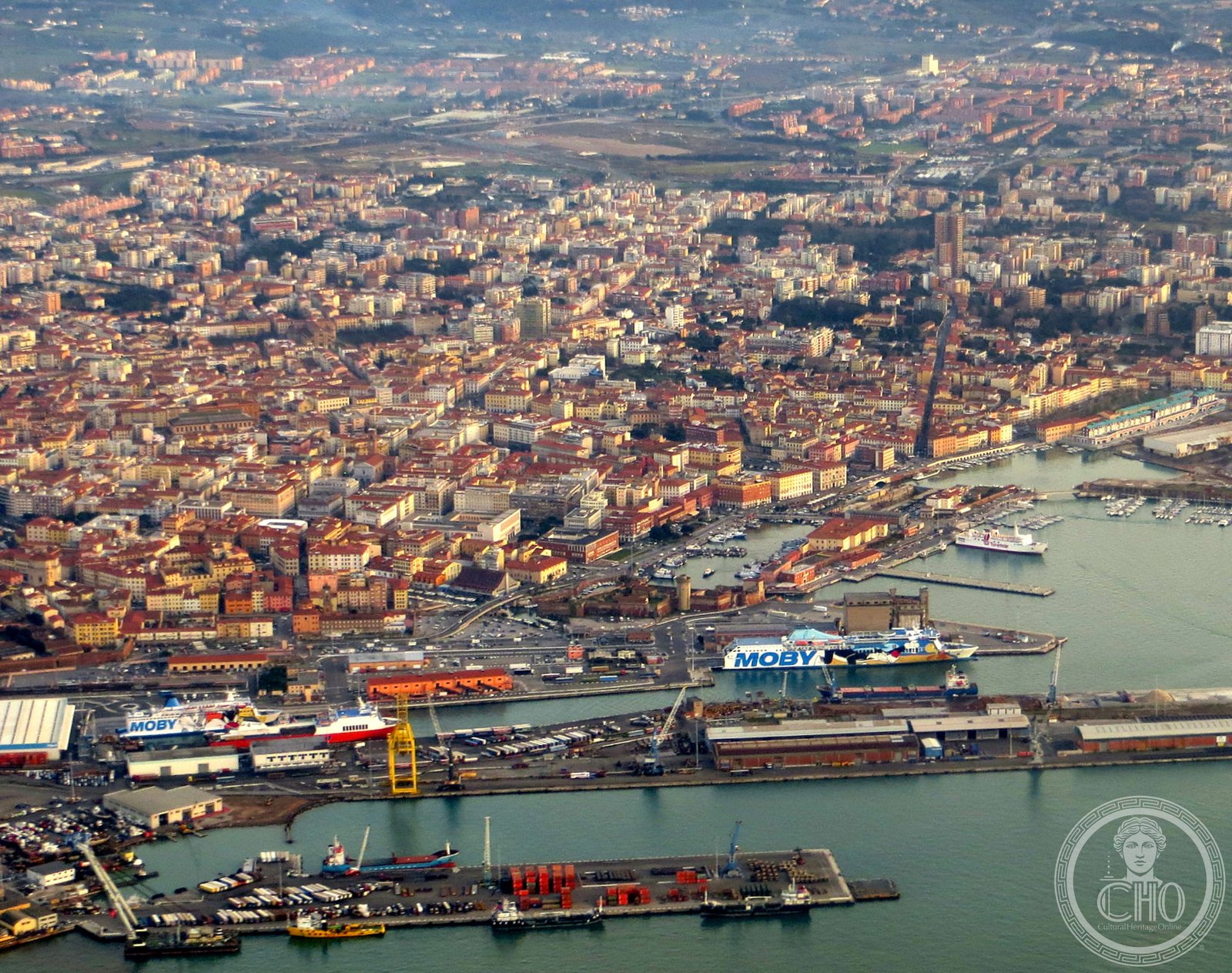
A Tuscan port city renowned for Renaissance fortifications, seafood, and a cosmopolitan heritage shaped by centuries as a free port under Medici and Lorraine rule.
At a glance
Livorno stands on Tuscany’s west coast as the region’s most modern city, blending industrial development with historical layers that survived World War II bombing. The seafront Terrazza Mascagni, lined with its distinctive checkerboard floor, anchors civic life. The 16th-century Old Fortress ramparts command the harbor above the Venezia Nuova district, where Renaissance urban planning meets maritime commerce.
History
The city’s rapid expansion began in the second half of the 16th century under Medici patronage, followed by the House of Lorraine. Its designation as a free port attracted merchants and established foreign consulates, shipping companies, and vibrant immigrant communities that defined Livorno’s multicultural character through the 19th century. Known internationally as Leghorn, Livourne, or Llievo depending on trading partners’ languages, it ranked among the world’s great cosmopolitan entrepôts.
The 19th and early 20th centuries brought industrial growth and tourism; elegant bathing establishments and spas earned Livorno the epithet “Montecatini al mare.” It became home to significant military installations, including the Naval Academy and specialized army and carabinieri units.
What you see
The Terrazza Mascagni offers a seaside promenade with theatrical white-and-black checkerboard paving—an emblem of the city’s modern identity. The Old Fortress, built in the Renaissance period, provides fortified views over the working harbor. Scattered throughout are national churches, cemeteries, palaces, and villas legacy to the foreign communities that made Livorno their home, many surviving despite wartime destruction.
Cultural significance
Livorno embodies the cosmopolitan Mediterranean port—a space where international trade shaped urban culture, architecture, and identity. The city produced notable artists and statesmen, including painter Giovanni Fattori, composer Pietro Mascagni, sculptor Amedeo Modigliani, and former President Carlo Azeglio Ciampi. The Sanctuary of Montenero, dedicated to the Madonna delle Grazie (patroness of Tuscany), anchors local devotion. Today Livorno balances its role as a modern cruise terminal with preservation of its multicultural past.
Key facts
- Address: Piazza del Municipio 1, 57123 Livorno
- Coordinates: 43.5547814, 10.3122377
- Official website: comune.livorno.it
- Phone: +39 0586 894236
Practical information
Livorno is an active port city and cruise destination with modern facilities. The waterfront and historic districts are accessible year-round. Check the official tourism website for current opening hours, events, and visitor services.
Getting there
Livorno lies on the Tuscan coast northwest of Florence. Regional trains connect it to major cities; the port handles both ferry and cruise traffic. The city center is walkable from the station and harbor areas.
See the place
Sources & resources
Find it on the map
See this place and what’s around it →Events here — now on & upcoming
- Birth Anniversary: Luigi Servolini — March 10, 190610 Mar 2027See the event →
- Death Anniversary: Luigi Servolini — September 21, 198121 Sep 2027See the event →
Historical events at this place (5)
📷 Become a Cultural Heritage Online photographer
Share your photos of places: they stay published under your name as the author. The more they're seen, the more you get noticed — and soon a contest will reward the most appreciated photos.
Log in or sign up free to add a photo